Information
Landmark: St. Stephen's CathedralCity: Hvar
Country: Croatia
Continent: Europe
St. Stephen's Cathedral, Hvar, Croatia, Europe
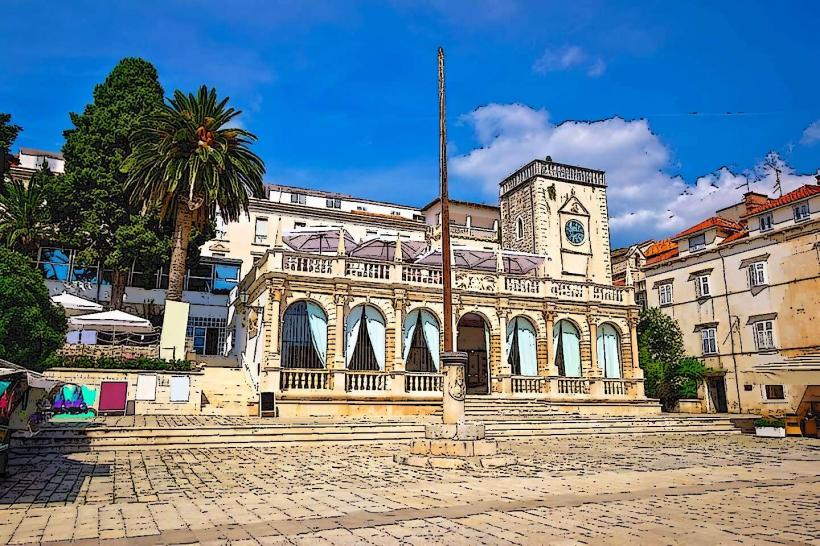
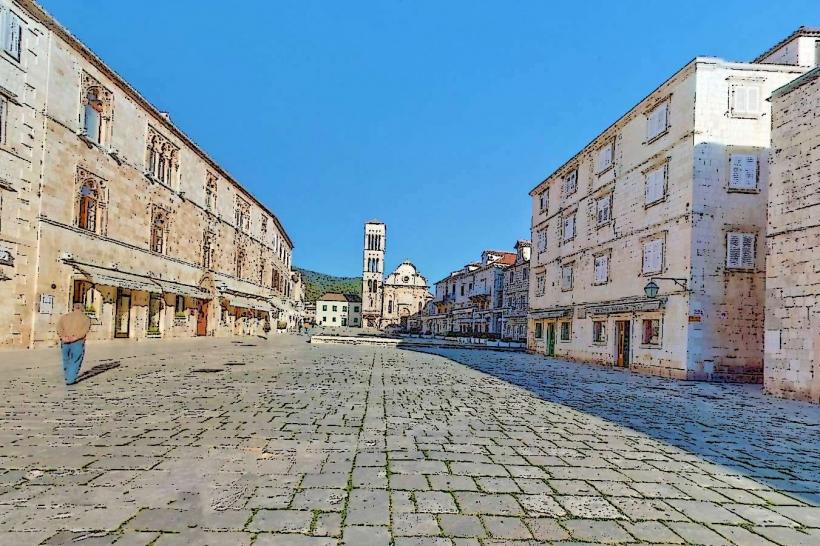
St. Stephen's Cathedral (Katedrala sv. Stjepana) is a Roman Catholic cathedral and the seat of the Bishop of Hvar. It dominates the eastern end of the main town square (Pjaca) and is a synthesis of Renaissance and Baroque architecture.
Visual Characteristics
The cathedral is a three-nave basilica constructed from white Brač stone. Its most striking feature is the four-story Renaissance bell tower, which is progressively more ornate at each level. The facade is characterized by a "trefoil" or three-lobed gable, a distinct architectural style prevalent in Dalmatia during the 16th and 17th centuries. The interior features a deep sanctuary, marble altars from the 17th and 18th centuries, and a choir with carved wooden stalls.
Location & Access Logistics
The cathedral is located at Trg svetog Stjepana 26, 21450, Hvar.
Access: It sits at the highest point of the eastern end of the pedestrian square.
Entry: Open to visitors daily, though tourist visits are restricted during mass. A separate ticket is required to view the Bishop’s Treasury.
Proximity: 0.2km from the Hvar Riva (harbor).
Historical Origin
The current structure was built on the site of a 6th-century Christian basilica and a later 12th-century Benedictine monastery. Construction of the present cathedral took place between the 16th and 18th centuries. It underwent significant expansion after the 1571 Ottoman attack, which damaged the original medieval structure. The bell tower, the work of local masters, was completed in 1550.
Key Highlights & Activities
The Bell Tower: A masterpiece of local stonemasonry, featuring a transition from simple Romanesque windows to elaborate Renaissance triforas.
The Treasury: Located in the Bishop's Palace adjacent to the cathedral, it contains 15th-century chalices, gold-embroidered vestments, and the "Hvar Polyptych" by Paolo Veneziano.
The Altars: The cathedral houses 11 altars, many featuring paintings by Venetian masters such as Palma the Younger and Stefano Celesti.
The Main Altar: Features a 17th-century marble design by Melchiorre Barthel.
Infrastructure & Amenities
The cathedral is a functioning place of worship.
Services: Daily mass is held; the schedule is posted at the main entrance.
Facilities: No restrooms inside the cathedral. Public facilities are located on the western side of the square near the Arsenal.
Connectivity: 5G signal is stable in the square but intermittent within the thick-walled interior.
Accessibility: The square leading to the cathedral is flat, but the entrance involves several stone steps.
Best Time to Visit
Photography: Mid-afternoon provides direct sunlight on the western facade, highlighting the detail of the trefoil gable and bell tower.
Atmosphere: Sunday mornings offer the chance to hear the cathedral's historic bells and witness traditional liturgical services.
Facts & Legends
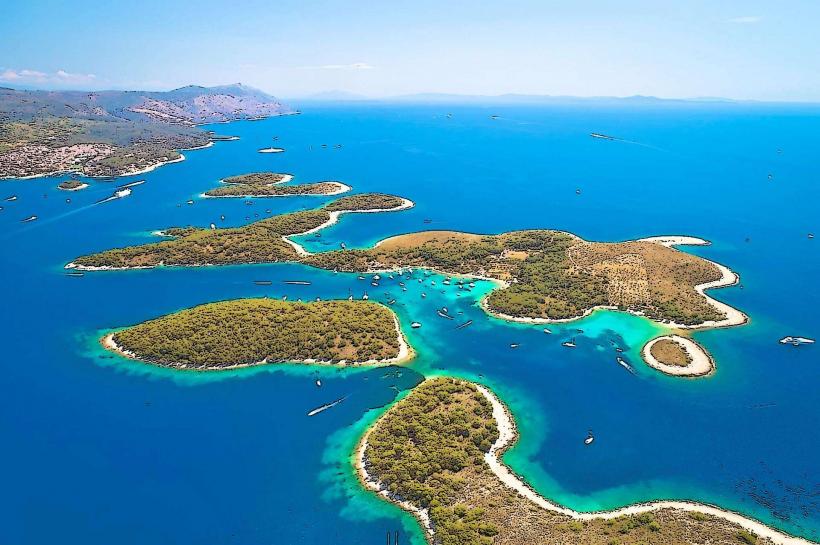
A historical oddity is that the cathedral’s facade was left relatively plain compared to other Mediterranean cathedrals of the era, reflecting the local preference for structural clarity over excessive Baroque ornamentation. Local lore suggests that the bell tower was designed to be so resonant that its tolls could be heard on the nearby Pakleni Islands to signal the return of the fishing fleet.
Nearby Landmarks
St. Stephen's Square (Pjaca) – Directly in front
Bishop's Palace – Immediately North
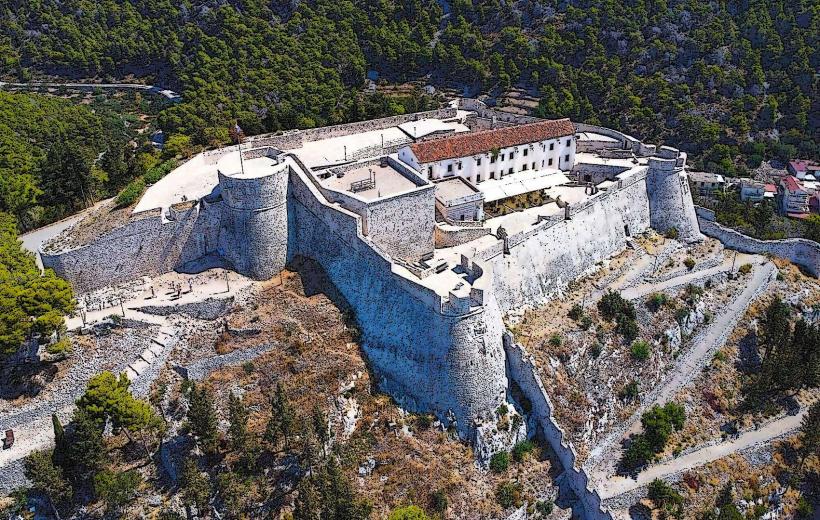
Hvar Fortress (Fortica) – 0.5km North (visible from the entrance)
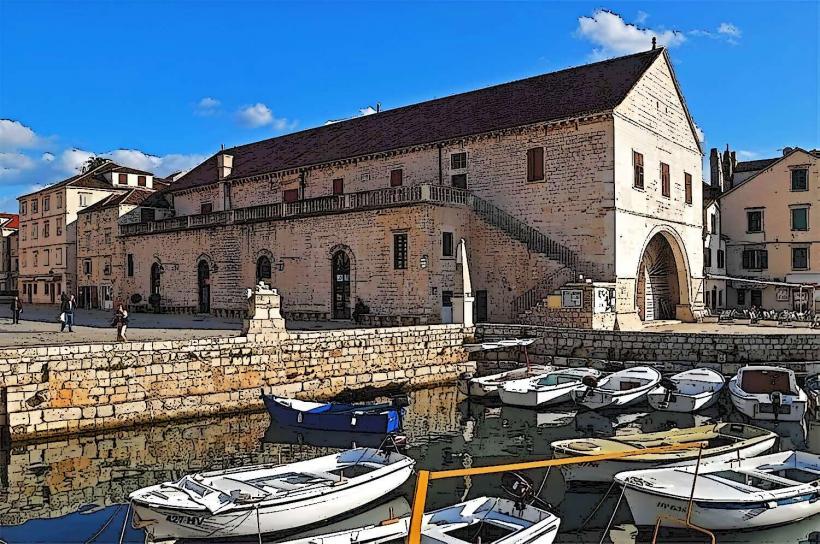
Hvar Public Theatre (Arsenal) – 0.15km West
Benedictine Convent – 0.1km North