Information
Landmark: Valle de la LunaCity: Antofagasta
Country: Chile
Continent: South America
Valle de la Luna, Antofagasta, Chile, South America
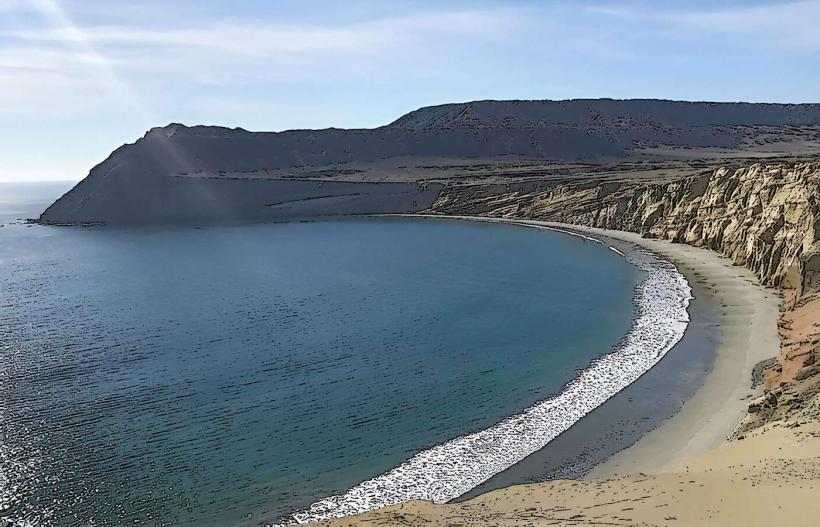
Valle de la Luna, located in the Atacama Desert near San Pedro de Atacama, Chile, is a geological formation characterized by its arid landscape and salt crusts.
Visual Characteristics
The terrain consists of salt flats, sand dunes, and rock formations composed primarily of salt, clay, and gypsum. Colors range from white and pale yellow in the salt crusts to reddish-brown and ochre in the surrounding rock and soil. The landscape features eroded canyons and sharp, crystalline salt structures.
Location & Access Logistics
Valle de la Luna is situated approximately 13 kilometers west of San Pedro de Atacama. Access is via Route B-24, a paved road. From Antofagasta, it is approximately a 3-hour drive north. Parking is available at designated areas within the park. Public transport to San Pedro de Atacama is available via bus from major Chilean cities; local tours from San Pedro are the primary means of reaching the valley.
Historical & Ecological Origin
The valley is a result of geological processes involving the evaporation of ancient lakes and the subsequent erosion by wind and salt crystallization. Its arid environment is classified as a hyperarid desert, with extremely low precipitation.
Key Highlights & Activities
Activities include hiking through the canyons, observing geological formations such as the "Mushroom" rock, and visiting the salt caves. Sunset viewing from the Cordillera de la Sal is a common activity. Photography of the unique geological features is also popular.
Infrastructure & Amenities
Restrooms are available at the park entrance. Limited shade is provided by natural rock formations. Cell phone signal is generally weak to non-existent within the valley. Food vendors are not present within the immediate vicinity of the valley; visitors should bring their own provisions.
Best Time to Visit
The best time of day for photography is during the late afternoon, approximately two hours before sunset, to capture the changing light on the salt and rock formations. The driest months, from March to December, offer the most stable weather conditions. No tide-specific considerations apply.
Facts & Legends
The valley's name, "Moon Valley," originates from its resemblance to the lunar surface, a characteristic noted by early explorers. The high salt content in the soil inhibits most plant and animal life, contributing to its stark appearance.
Nearby Landmarks
- Cordillera de la Sal (0.5km North)
- Pukará de Quitor (10km East)
- San Pedro de Atacama town center (13km East)
- Salar de Atacama (30km South)