Information
City: AbomeyCountry: Benin
Continent: Africa
Abomey, Benin, Africa
Abomey serves as the historic and spiritual heart of Benin, formerly the capital of the powerful Kingdom of Dahomey. It is located in the Zou Department, approximately 100 kilometers north of Cotonou on the Abomey Plateau.
Historical Timeline
Abomey was founded in the early 17th century by the Fon people and became the seat of the Dahomey monarchs. Under twelve successive kings from 1625 to 1900, the kingdom became one of West Africa's most formidable military powers, largely through its role in the Atlantic slave trade and its unique all-female military unit, the Dahomey Amazons. In 1892, during the French colonial conquest, King Béhanzin set fire to the city before fleeing, leading to a period of decline as the French shifted administrative focus to nearby Bohicon.
Demographics & Population
As of 2026, the population of the Abomey commune is approximately 97,000. The city remains a bastion of Fon culture and traditional Dahomey social structures. It is significantly less cosmopolitan than Cotonou, maintaining a more "earthy" and historical atmosphere.
Urban Layout & Key Districts
Centre Ville: The core of the city where the major markets, the Historical Museum, and government offices are located.
Quartier des Artisans: A district dedicated to traditional crafts, including weaving, woodcarving, and bronze casting.
Quartier de la Gare: The area surrounding the train station, serving as a local transit hub.
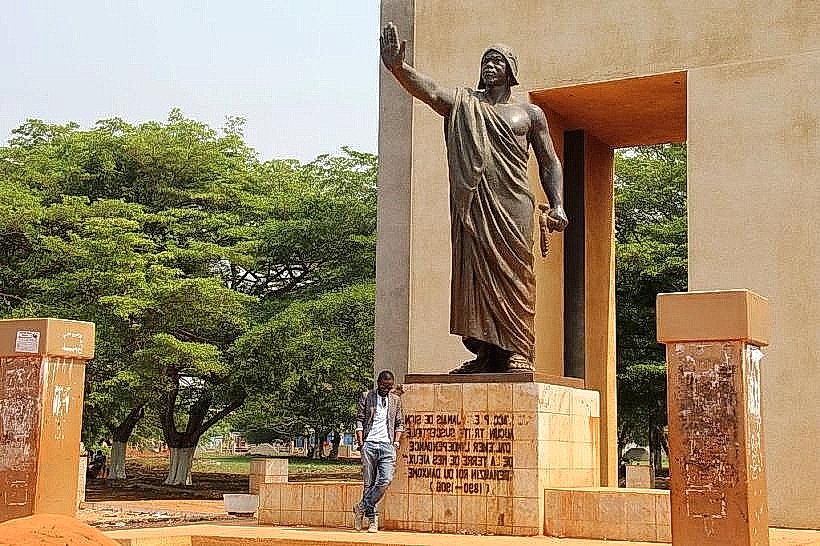
Place Goho: A major historic square at the city entrance featuring a statue of King Béhanzin.
Top City Landmarks
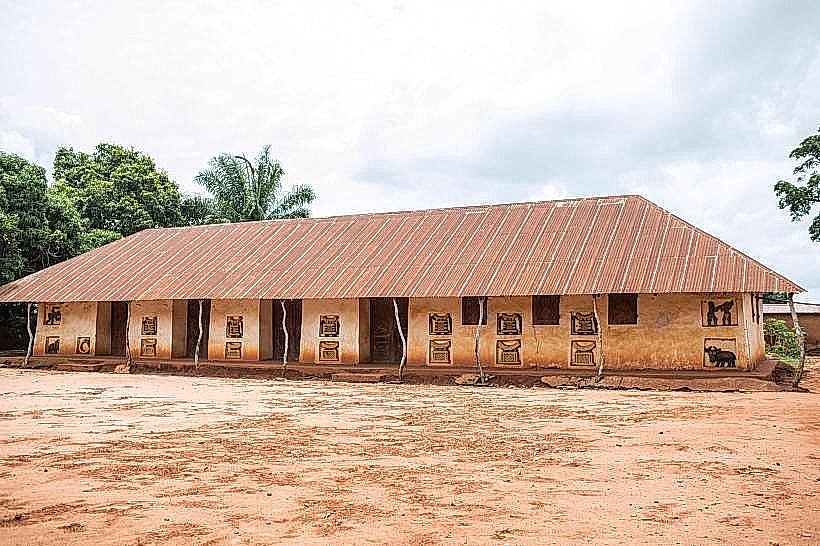
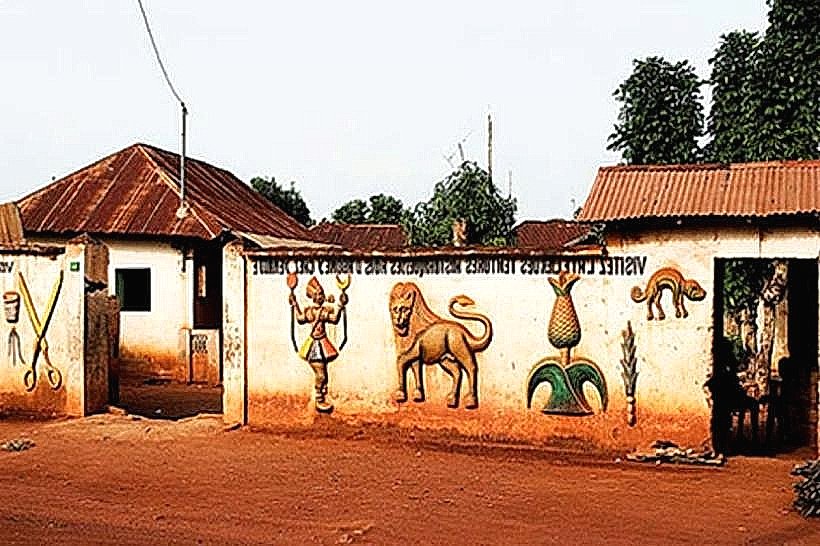
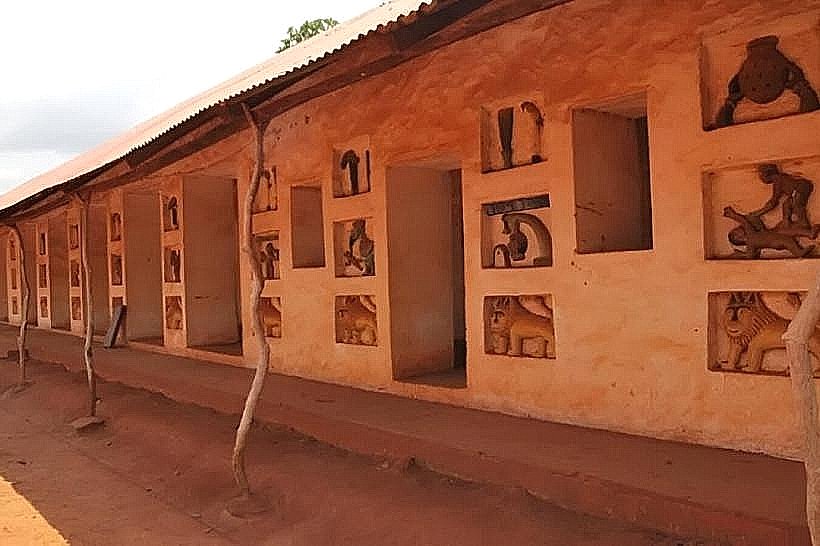
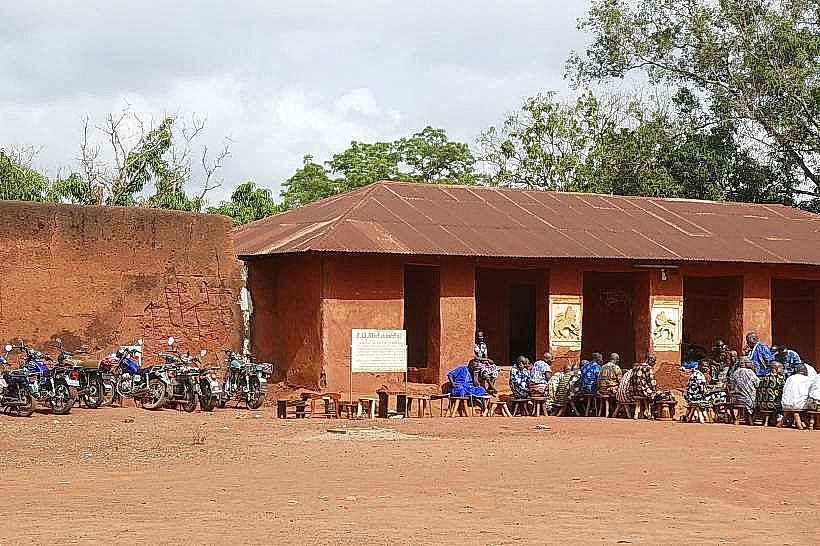
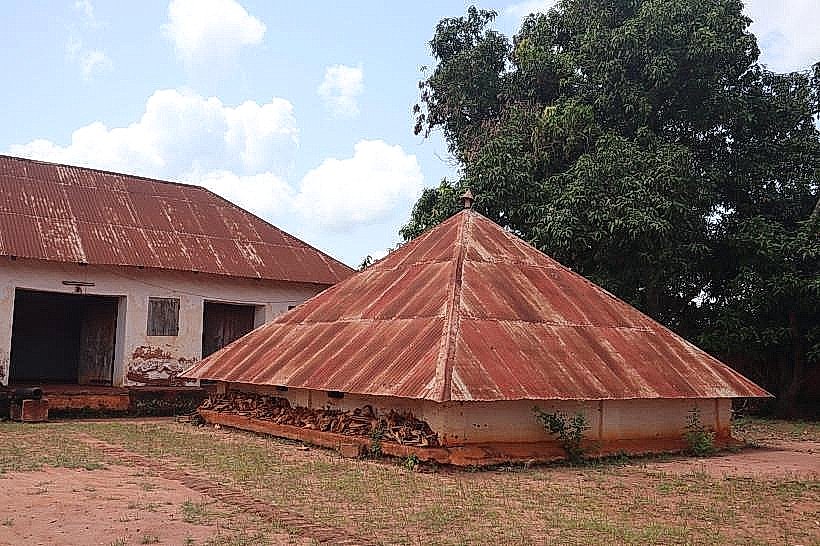
Royal Palaces of Abomey: A UNESCO World Heritage site consisting of ten palaces spread over 47 hectares. The mud-brick walls are adorned with polychrome bas-reliefs depicting the kingdom's military victories.
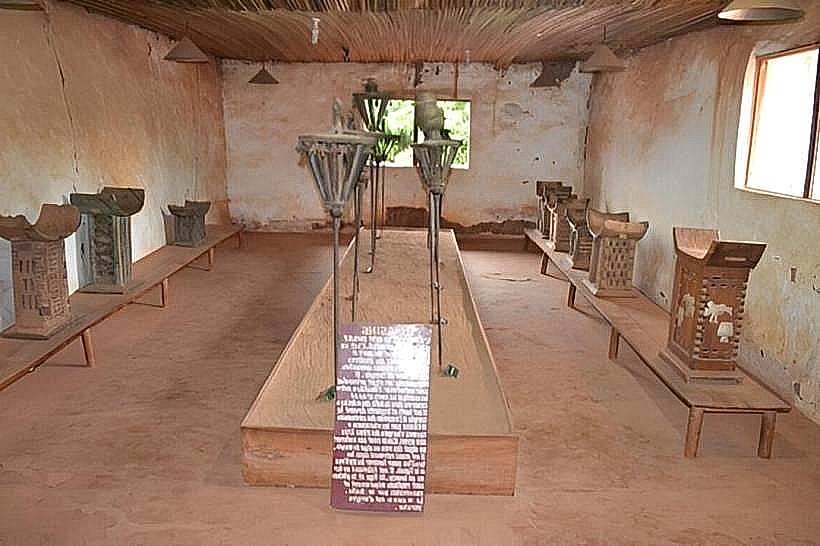
Historical Museum of Abomey: Located within the palaces of Kings Guézo and Glélé, it houses royal thrones (some mounted on human skulls), weapons, and ceremonial objects.
Place Goho: The symbolic site where King Béhanzin met French General Dodds in 1894; it remains a site of national pride.
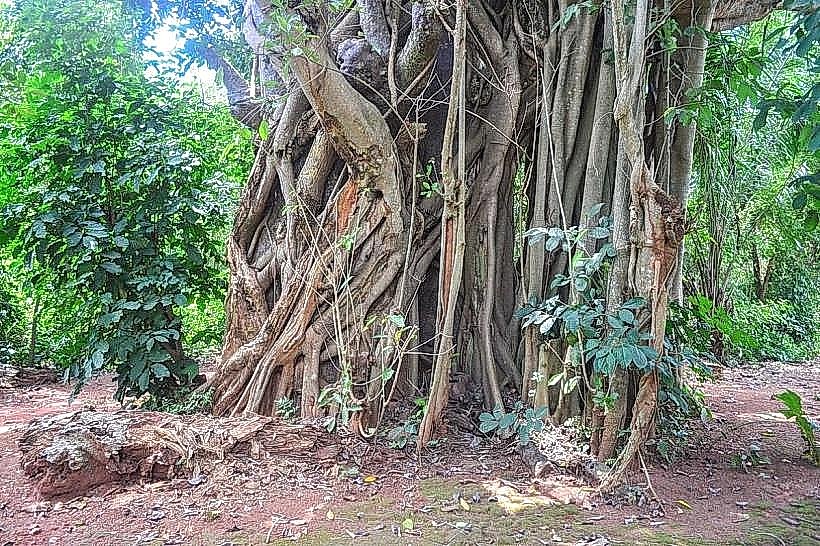
Temple of Pythons (Local variant): While Ouidah's is more famous, Abomey has its own sacred Vodun sites where pythons and other animal spirits are venerated.
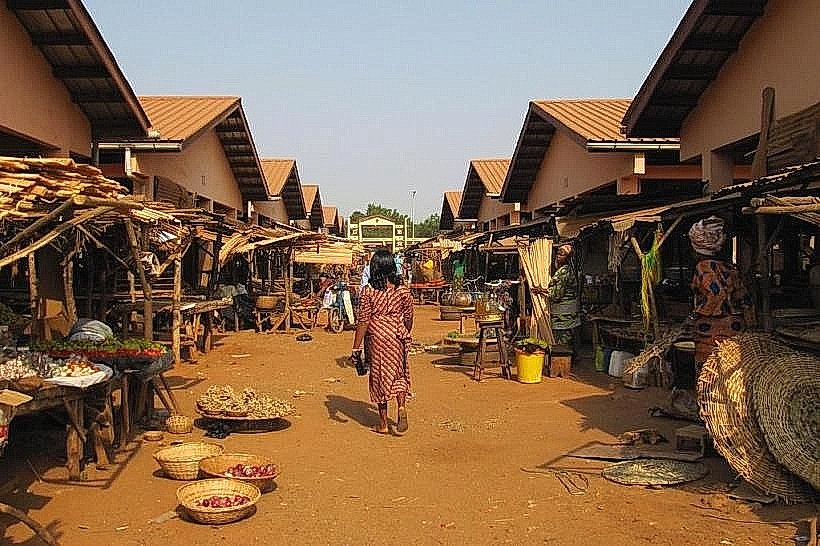
Houndjlo Market: The city's primary vibrant market for local textiles, medicinal herbs, and everyday goods.
Transportation Network
Abomey is a walkable city for those visiting the central historical sites.
Zémidjans: Motorcycle taxis are the primary mode of transport within the city.
Road: Abomey is well-connected by paved roads to Cotonou and Porto-Novo.
Rail: It is linked by rail to the coast, though service is often geared toward freight or irregular passenger schedules.
Bohicon Connection: Most long-distance travelers arrive in the neighboring city of Bohicon (9 km away), which serves as the region’s main transport junction.
Safety & "Red Zones"
Travelers should exercise a high degree of caution.
Civil Unrest: Following an attempted coup in December 2025, the political situation remains sensitive. Avoid political gatherings at Place Goho or the Prefecture.
Crime: Abomey is generally safer than Cotonou, but walking alone at night is discouraged.
Northern Risk: Do not travel to the northern departments (Atakora, Alibori) due to the extreme risk of terrorism and kidnapping.
Digital & Financial Infrastructure
Internet speeds in Abomey average 20–40 Mbps. 4G/LTE is stable in the city center. The currency is the CFA Franc (XOF).
Payments: The local economy is heavily cash-based. MTN/Moov mobile money is the standard for digital transfers.
Banking: ATMs are available near the Centre Ville, but international card acceptance is rare outside of the few higher-end hotels.
Climate & Air Quality
Tropical savanna climate. January 2026 is part of the dry season, with temperatures between 24°C and 34°C. The Harmattan winds bring Saharan dust, resulting in hazy conditions and Moderate to Unhealthy air quality (AQI 130–170).
Culture & Social Norms
Abomey is the cradle of Vodun and Fon traditions. The city is famous for its bas-reliefs and applique cloths that tell the history of the kings.
Respect: Local traditions regarding the monarchy and Vodun are strictly observed. Always ask for permission before entering shrines or taking photos.
Language: French is official, but Fon is the language of the street and heart.
Local Cost Index
1 Espresso: 1,200 XOF ($2.15)
1 Standard Lunch: 3,000 XOF ($5.45)
1 Short "Zem" Ride: 300–500 XOF ($0.55–$0.90)
1 Liter of Petrol: 650 XOF ($1.18)
Nearby Day Trips
Bohicon: The bustling commercial twin city with the subterranean village of Agongointo (9 km east).
Dassa-Zoumé: Known for its sacred hills and pilgrimage sites (90 km north).
Facts & Legends
A grim but significant historical fact is that the mud used to build the royal tombs in Abomey was allegedly mixed with the blood of sacrificed prisoners of war to strengthen the spirit of the deceased king. Legend also says the kingdom's founder, Houegbadja, decreed that "the kingdom shall always be made greater," a motto that drove centuries of expansion and architectural ambition visible in the palaces today.