Information
Landmark: Sacred Forest of AgongointoCity: Abomey
Country: Benin
Continent: Africa
Sacred Forest of Agongointo, Abomey, Benin, Africa
The Sacred Forest of Agongointo is a protected natural and cultural site located on the outskirts of Abomey, Benin.
This forest serves as a significant spiritual and historical location, preserving both natural biodiversity and cultural heritage.
Visual Characteristics
The forest is characterized by dense tropical vegetation, primarily composed of mature trees, including species like the Adansonia digitata (baobab) and various palm varieties. The undergrowth consists of ferns and shrubs. The ground is covered in leaf litter and soil. Small, seasonal streams may be present during the wet season.
Location & Access Logistics
The forest is situated approximately 3 kilometers west of the Abomey city center. Access is via the Route Nationale 1 (RN1) heading west. Turn north onto a local unpaved road approximately 2.5 km from the city limits. Parking is available at the designated entrance area, which is unpaved. Public transport to Abomey is available via intercity buses; local taxis or motorcycle taxis can then be hired for the final approach to the forest.
Historical & Ecological Origin
The Sacred Forest of Agongointo is believed to have been designated as a sacred site by the Fon people centuries ago, serving as a place of worship and refuge. Ecologically, it represents a remnant of the savanna-woodland ecosystem that once covered the region, supporting a variety of local flora and fauna.
Key Highlights & Activities
Visitors can walk designated trails through the forest. Observation of the diverse tree species is a primary activity. The site is used for traditional ceremonies, though access during these times may be restricted. Photography of the natural environment is permitted.
Infrastructure & Amenities
Basic amenities include a small, marked entrance area. There are no permanent restroom facilities. Shade is provided by the tree canopy. Cell phone signal (2G/3G) is intermittent within the forest. No food vendors are located directly within the forest; vendors are typically found in the nearby town of Abomey.
Best Time to Visit
The best time for visiting is during the dry season, from November to March, to avoid muddy conditions on the access road and trails. The early morning hours (7:00 AM - 10:00 AM) offer optimal lighting for photography due to softer sunlight filtering through the canopy.
Facts & Legends
Local tradition states that the forest is inhabited by spirits and is a place where ancestors communicate with the living. It is considered taboo to remove any plant material from the forest. A specific large baobab tree within the forest is said to be particularly sacred.
Nearby Landmarks
- Palace of the Kings of Abomey (1.5km East)
- Musée d'Histoire de d'Abomey (1.8km East)
- Abomey Historical Museum (1.8km East)
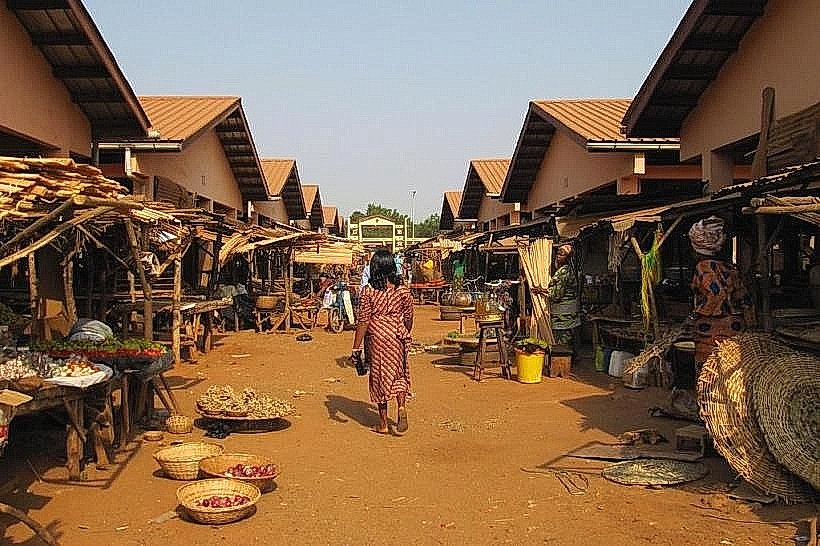
- Market of Abomey (2.5km East)