Information
City: BillingsCountry: USA Montana
Continent: North America
Billings, USA Montana, North America
Billings is the largest city in Montana and the seat of Yellowstone County. Known as the "Magic City" due to its rapid growth following the arrival of the railroad in 1882, it serves as the principal economic, medical, and retail hub for a massive multi-state region encompassing eastern Montana, northern Wyoming, and western North Dakota.
Historical Timeline
The area was originally territory for the Crow Nation. It was founded in 1882 by the Northern Pacific Railway and named after its president, Frederick H. Billings. The city’s economy was built on the intersection of agriculture (sugar beets and cattle) and the railroad. In the 20th century, the discovery of the Williston Basin and local oil reserves transformed Billings into a major energy refining center. It remains one of the few cities in the Great Plains to maintain consistent growth throughout the late 20th and early 21st centuries.
Demographics & Population
The 2026 estimated population is 120,410. The demographic is White (85.2%), Hispanic or Latino (6.8%), American Indian (4.5%), and Two or More Races (2.8%). The median age is 37.1 years. Billings functions as the primary service center for a "trade area" of over 500,000 people.
Urban Layout & Key Districts
Downtown: The historic and financial core, featuring a high density of mid-rise buildings, local breweries, and the Alberta Bair Theater.
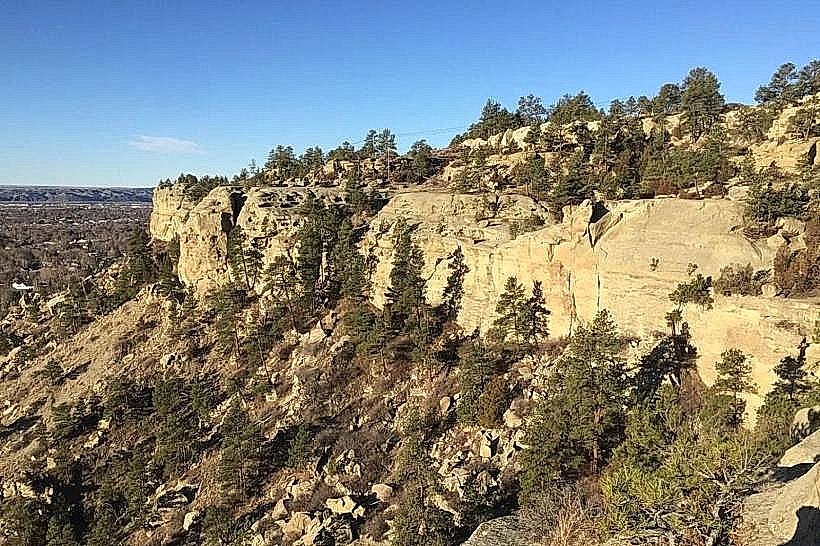
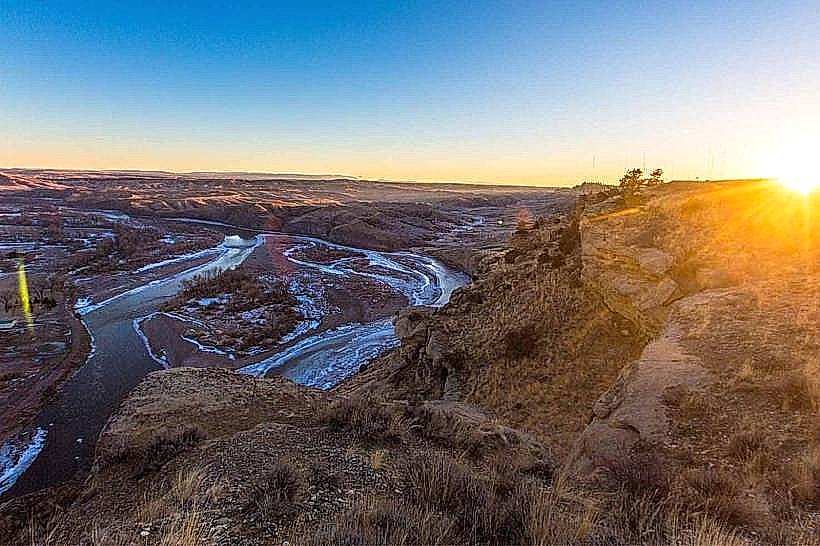
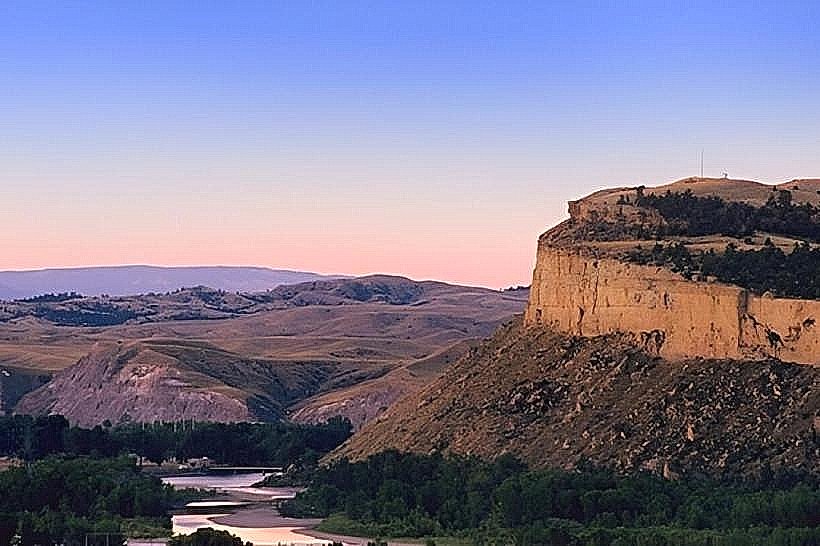
The Rimrocks (The Rims): Massive sandstone cliffs that encircle the northern and eastern sections of the city, separating the valley floor from the airport and residential highlands.
The West End: The primary growth area characterized by high-density suburban development, the Rimrock Mall, and major retail corridors along King Avenue West.
Southside: A historically industrial and working-class residential district currently undergoing gradual revitalization.
Lockwood: A large unincorporated community to the east, dominated by oil refineries and heavy industrial transport facilities.
Top City Landmarks
The Rimrocks: $70 \text{-meter}$ tall sandstone formations providing the city's most distinct geographic feature and extensive hiking/biking trails.
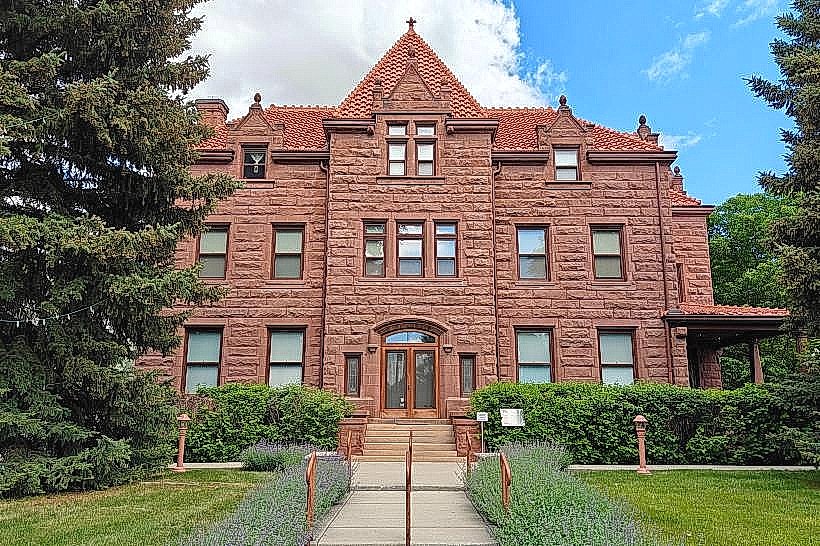
Moss Mansion: A 1903 red-stone manor designed by the architect of the Waldorf-Astoria, reflecting the city’s early wealth.
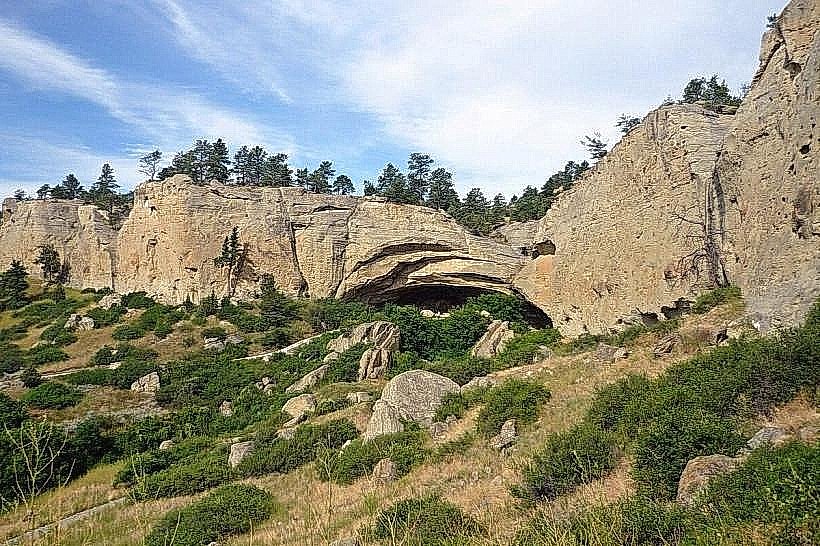
Pictograph Cave State Park: Located just south of the city, featuring three caves with prehistoric rock art dating back over 2,000 years.
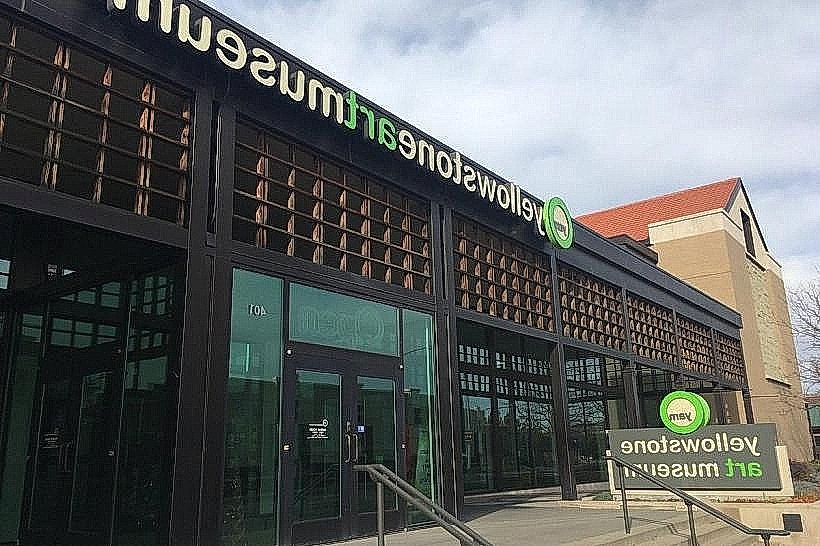
Yellowstone Art Museum (YAM): The region's premier contemporary art museum, housed in the former 1916 county jail.
ZooMontana: A $70\text{-acre}$ wildlife park and botanical garden focused on species native to the 45th parallel.
Skypoint: A modern kinetic sculpture located at the center of the downtown pedestrian intersection.
Transportation Network
Billings is the major logistics hub for the Northern Rockies. It is the junction of I-90 and I-94. MET Transit provides fixed-route bus service. Billings Logan International Airport (BIL) is the largest and busiest airport in the region, offering direct flights to major national hubs. The city is a primary division point for the BNSF Railway.
Safety & Urban Hazards
The safety level is average for a mid-sized U.S. city.
Property Crime: Rates are higher than the Montana state average, particularly in the West End retail zones and certain sections of the Southside.
Industrial Safety: The presence of three major oil refineries in the metro area necessitates specialized emergency management protocols for air quality and chemical safety.
Wildlife: Deer and the occasional mountain lion are present along the Rimrocks and in peripheral residential areas.
Digital & Financial Infrastructure
Infrastructure is top-tier for the region. Average internet speeds reach 1 Gbps via Spectrum and Lumen. As a regional financial hub, it hosts significant operations for First Interstate Bank (headquartered here). Card acceptance is 100%.
Climate & Air Quality
The climate is semi-arid. Summers are hot and dry ($14^\circ\text{C}$ to $32^\circ\text{C}$); winters are cold ($ -11^\circ\text{C}$ to $2^\circ\text{C}$), but frequently moderated by Chinook winds that can raise temperatures by $20^\circ\text{C}$ in a single day. Air quality is generally "Good," though it can be impacted by temperature inversions and refinery emissions.
Culture & Social Norms
The culture is "Western Industrial"-a mix of traditional ranching heritage, energy sector labor, and modern professional services. Tipping of 18–20% is standard. Dress code is highly casual (jeans and boots are standard in all but the most formal settings). Alcohol is sold in grocery stores; spirits are sold in state-licensed agency stores.
Accommodation Zones
West End: Stay here for modern national chains and proximity to shopping and dining.
Downtown: Stay here for historic hotels (Northern Hotel) and walkability to breweries and museums.
South Billings Blvd (I-90): Stay here for budget-friendly motels and transit convenience.
Local Cost Index
Espresso: $4.50
Standard Lunch: $15.50
Median Home Value: $385,000
Nearby Day Trips
Little Bighorn Battlefield National Monument: 105 km (1 hour).
Beartooth Highway/Red Lodge: 100 km (1.1 hours) – Access to one of the most scenic high-altitude drives in the U.S.
Yellowstone National Park (Northeast Entrance): 205 km (3 hours via Beartooth Pass).
Pompeys Pillar National Monument: 45 km (30 mins) – Features the only remaining physical evidence of the Lewis and Clark Expedition.
Facts & Legends
Billings is the only city in the U.S. that shares its name with a major geologic formation (the Billings Volcanics are nearby, though not under the city). A local legend involves "The Sacrifice Cliff," where Crow warriors reportedly rode their horses off the Rimrocks to save their people from a smallpox epidemic. Historically, the city is unique for its "Magic" growth rate, becoming the largest city in the state within just 20 years of its founding.