Information
Landmark: Antietam National BattlefieldCity: Frederick
Country: USA Maryland
Continent: North America
Antietam National Battlefield, Frederick, USA Maryland, North America
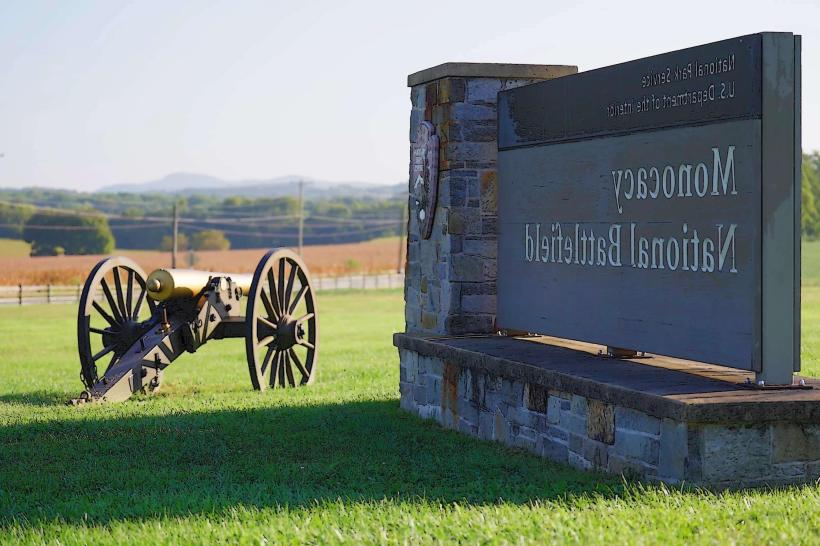
Antietam National Battlefield, located near Sharpsburg, Maryland, preserves the site of the Battle of Antietam, one of the most pivotal and bloodiest engagements of the American Civil War. Fought on September 17, 1862, it marked the bloodiest single day in American military history, with nearly 23,000 soldiers killed, wounded, or missing. The battlefield spans over 3,250 acres and is maintained by the National Park Service as a site of national remembrance and education.
Historical Context
The Battle of Antietam, also called the Battle of Sharpsburg (especially in the South), was part of Confederate General Robert E. Lee’s first invasion of the North. After victories in Virginia, Lee crossed the Potomac River into Maryland. Union forces under General George B. McClellan confronted Lee’s army near Sharpsburg. The battle ended in a tactical stalemate, but strategically it halted Lee’s advance and gave President Abraham Lincoln the confidence to issue the preliminary Emancipation Proclamation.
This decision added moral purpose to the Union cause and discouraged foreign governments (notably Britain and France) from recognizing or aiding the Confederacy.
Battlefield Layout and Key Sites
The battlefield is divided into several key zones where intense combat occurred. Each area is now preserved with trails, interpretive signs, monuments, and reconstructed features.
1. The Cornfield
Scene of intense early morning fighting between Union I Corps and Confederate forces under Stonewall Jackson.
Control of this area changed hands multiple times in just a few hours.
The Cornfield Trail (1.25 miles) lets visitors walk through this killing field where thousands fell in a short span of time.
2. Bloody Lane (Sunken Road)
A farm road that became a natural trench for Confederate defenders.
Union troops attacked in waves, eventually breaking the Confederate line.
The area earned its grim nickname due to the massive number of bodies that filled the lane.
The Bloody Lane Trail (1.6 miles) includes Mumma Farm and Roulette Farm, both of which were caught in the crossfire.
3. Burnside Bridge
A stone arch bridge over Antietam Creek where Union General Ambrose Burnside's troops faced fierce resistance from a small Confederate force on the heights above.
The Confederates held off multiple attacks before being overwhelmed late in the day.
The bridge is preserved and can be visited via the Final Attack Trail (1.7 miles) and Snavely Ford Trail (1.8 miles).
4. Dunker Church
A simple white church near the center of the battlefield that became a rallying point and was repeatedly shelled.
It served as a field hospital after the battle.
A reconstructed version now stands on the site and is part of the short, paved Antietam Remembered Trail (0.25 miles).
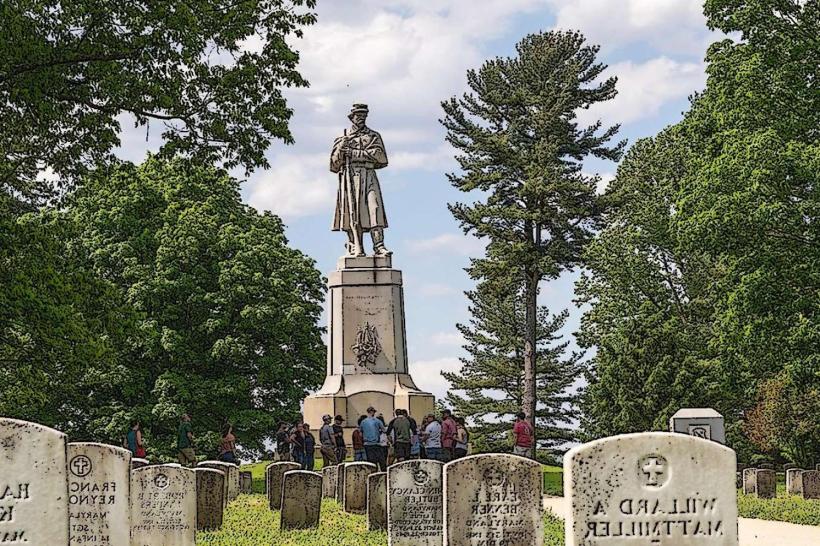
5. Antietam National Cemetery
Dedicated in 1867, this cemetery contains the graves of more than 4,700 Union soldiers.
Confederates were buried elsewhere due to postwar tensions.
The prominent statue "The American Volunteer" watches over the grounds, symbolizing sacrifice and duty.
Trails and Exploration
Antietam features nearly 9 miles of hiking trails, each tied to specific battlefield sectors. The terrain is largely unchanged since 1862, with original farm fields, stone walls, fences, and woodlots giving a strong sense of time and place. Highlights include:
West Woods Trail (0.9 miles): Follows one of the most chaotic parts of the morning fighting.
Three Farms Trail (1.6 miles): Crosses the properties of farms central to the battle.
Union Advance Trail (1.0 mile): Details Union movements toward Sharpsburg.
Sherrick Farm Trail (1.3 miles): Offers views of Confederate retreat routes.
Visitor Center and Interpretation
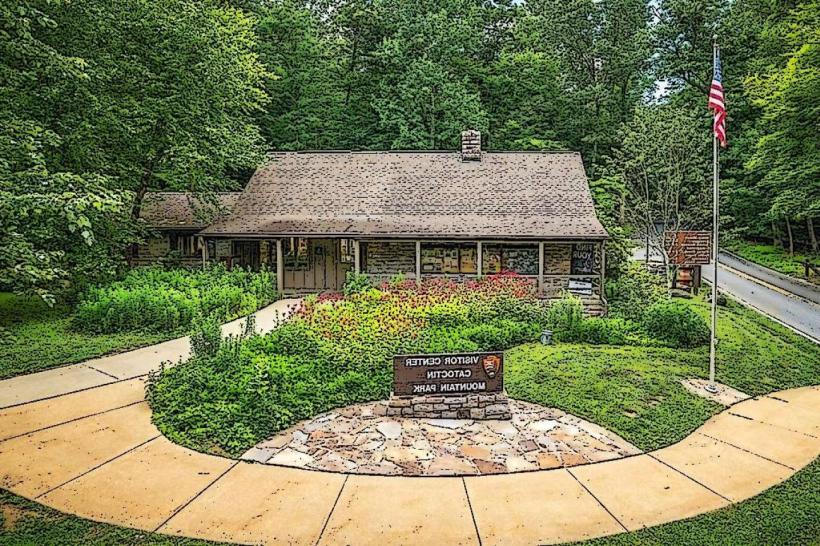
The Antietam Visitor Center, located on the battlefield, offers:
A powerful 26-minute orientation film narrated by James Earl Jones.
Exhibits on Civil War tactics, uniforms, weapons, and personal stories.
Ranger talks and interpretive programs.
A bookstore with detailed battlefield guides, maps, and historical materials.
From the visitor center, you can begin a self-guided 8.5-mile auto tour of 11 marked stops with parking and interpretive signs.
Special Programs and Events
Living History Weekends: During summer and major anniversaries, volunteers in full Civil War attire offer musket and artillery demonstrations.
Ranger-led Hikes and Talks: Deep dives into battlefield events, soldier experiences, and medical care.
Memorial Illumination: Held in early December, this signature event lights 23,000 candles-one for each casualty-across the battlefield. It is a solemn and visually stunning tribute.
Junior Ranger Program: Designed for children and families to explore the battlefield with interactive activities.
Natural Features and Preservation
Despite its bloody past, Antietam is today a place of peace, rural beauty, and ecological importance. The landscape includes:
Woodlands, farm fields, stone walls, and rippling creeks.
Restored 19th-century orchards and fences that match Civil War-era maps.
The park is also a habitat for birds and small mammals and is part of broader Chesapeake watershed protection efforts.
Accessibility and Amenities
Most major trails have gravel or paved sections; Bloody Lane and the Visitor Center trails are wheelchair accessible.
Pets are allowed but must be leashed.
Bicycles are allowed on paved roads; horseback riding is permitted in designated areas.
Restrooms, water fountains, and shaded picnic areas are available throughout the park.
Directions and Hours
Location: Sharpsburg, Maryland, off MD Route 34, near Hagerstown and the Potomac River.
Hours: Battlefield grounds open daily from dawn to dusk. Visitor Center open 9 AM – 5 PM (closed Thanksgiving, Christmas, New Year’s Day).
Fees: $10/person (ages 17+), $20/vehicle. Pass valid for 3 consecutive days.
Legacy
Antietam is not just a battlefield-it is a symbol of sacrifice, struggle, and transformation. The Union’s ability to stop Lee's advance and Lincoln’s subsequent Emancipation Proclamation made this battle a turning point. The landscape, carefully preserved and interpreted, allows modern visitors to grasp the enormous cost of the Civil War and the fragility of democracy in crisis.
Walking Antietam is walking the edge between death and deliverance-a place where history changed course in a single day.