Information
Landmark: Basilica of Saint ServatiusCity: Maastricht
Country: Netherlands
Continent: Europe
Basilica of Saint Servatius, Maastricht, Netherlands, Europe
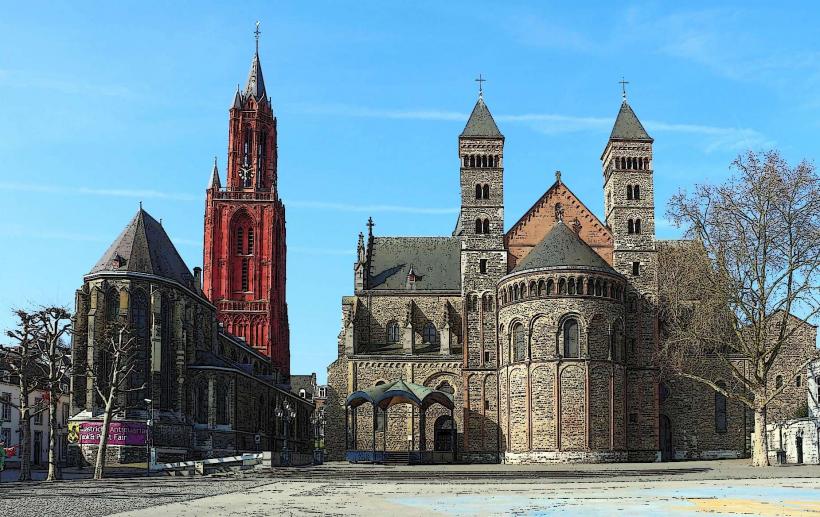
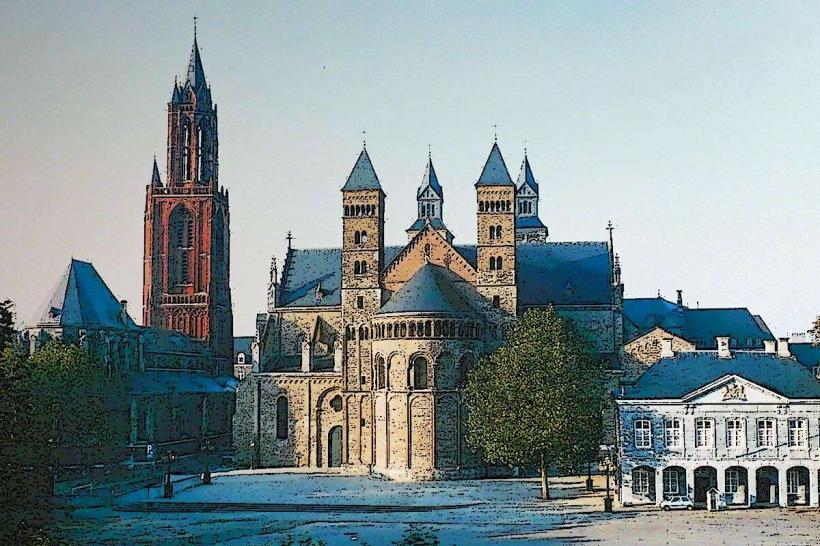
The Basilica of Saint Servatius is a Romanesque cross-basilica situated in the historic center of Maastricht. It is constructed over the burial site of Saint Servatius, the city's patron saint and the first bishop of the Netherlands, making it the oldest existing church in the country.
Visual Characteristics
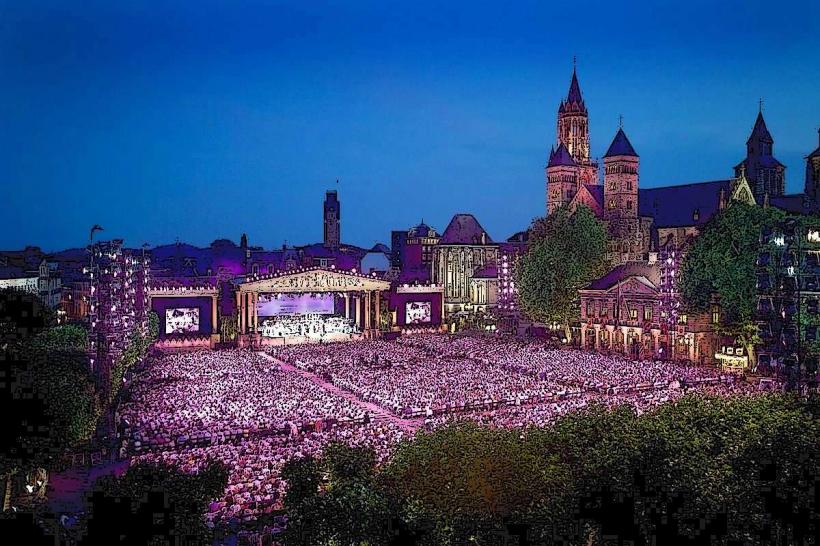
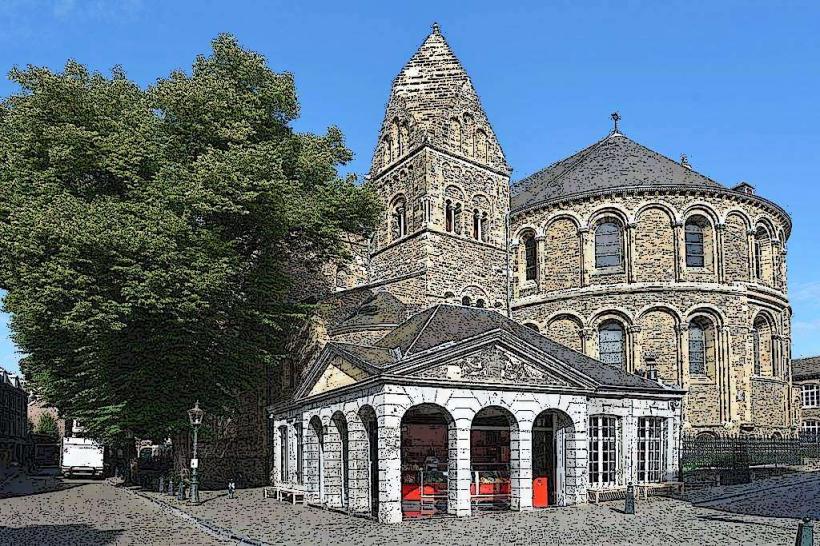
The basilica is primarily Romanesque in style, built from carboniferous sandstone and marl. It features a massive westwork with two towers and a significant eastern choir with an apse and dwarf gallery. The interior consists of a three-aisled nave with Gothic vaults added in the 13th century. A notable architectural feature is the Bergportaal (South Portal), which displays a transition from late Romanesque to early Gothic sculpture dating to approximately 1180–1215.
Location & Access Logistics
The basilica is located at Keizer Karelplein 3, backing onto the Vrijthof Square. It is approximately 1.1km west of Maastricht Central Station, reachable on foot or via Arriva bus lines 3, 4, or 7. Primary car parking is available at the Q-Park Vrijthof underground garage located directly adjacent to the square. The site is accessible for visitors with disabilities, featuring ramps and elevators, though the surrounding historic streets are paved with uneven cobblestones.
Historical & Ecological Origin
The current structure, largely built during the 11th and 12th centuries, is the fourth church on this site. The original 4th-century memorial chapel was replaced by a stone church in 570, followed by a larger pilgrimage church in the 7th century. The building has survived multiple desecrations, including being used as a horse stable by French revolutionaries in 1797, before being restored as a place of worship in 1837.
Key Highlights & Activities
The Treasury (Schatkamer) is a primary attraction, housing the Noodkist (Reliquary Shrine of St. Servatius), a 12th-century masterpiece of Mosan gold work. Other highlights include the Reliquary Bust of St. Servatius (containing his skull), his ceremonial key, and a vast collection of medieval silk textiles and ivories. Visitors can also access the 6th-century crypt containing the saint's original grave.
Infrastructure & Amenities
The basilica includes a public courtyard and a museum shop. Restrooms are available within the treasury complex. 5G cellular coverage is stable in the exterior areas and Vrijthof square, though it may be restricted inside the thick stone masonry of the crypts. Food and beverage services are concentrated at the numerous cafe terraces directly bordering the basilica on the Vrijthof.
Best Time to Visit
The basilica is open Monday through Saturday (10:00–17:00) and Sunday (11:30–17:00). For photography, the early morning provides golden hour light on the westwork towers and fewer crowds in the Vrijthof. The "Pilgrimage of Relics" (Heiligdomsvaart) occurs once every seven years, during which the Reliquary Shrine is carried through the city streets.
Facts & Legends
According to tradition, the "Key of Saint Servatius" was given to him by Saint Peter in a vision in Rome; this silver-gilt key remains one of the church's most sacred artifacts. The basilica is one of the few churches to hold the status of basilica minor, a title granted by the Pope in 1985 to recognize its historical and liturgical significance.
Nearby Landmarks
Saint John's Church (Sint-Janskerk) (0.01km West) - Known for its 79-meter red tower.
Vrijthof Square (0.05km East) - The city’s main cultural plaza.
Dominicanen Bookstore (0.2km East) - A bookstore located inside a 13th-century church.
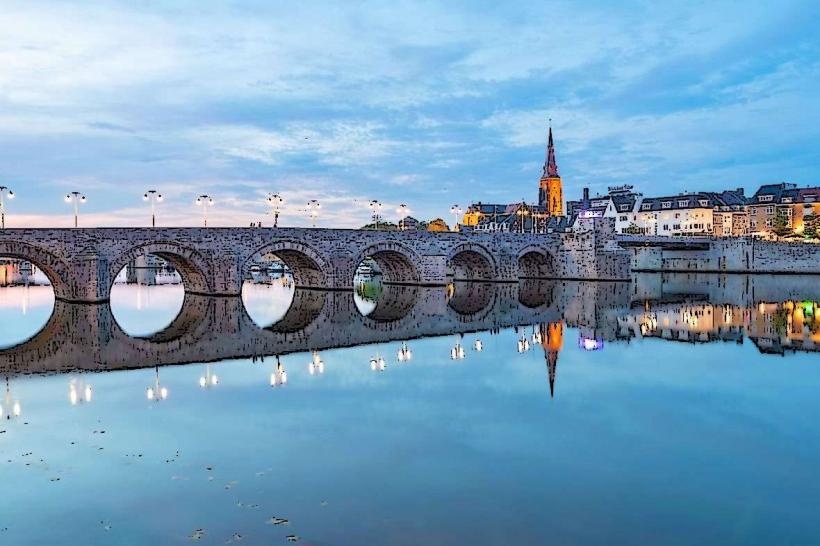
Saint Servatius Bridge (Sint Servaasbrug) (0.6km East) - The oldest stone bridge in the Netherlands.
Museum aan het Vrijthof (0.1km South) - A local history and art museum.