Information
Landmark: Black Necked Crane Visitor CenterCity: Wangdue Phodrang
Country: Bhutan
Continent: Asia
Black Necked Crane Visitor Center, Wangdue Phodrang, Bhutan, Asia
The Black Necked Crane Visitor Centre is located in the Phobjikha Valley, near the town of Wangdue Phodrang, Bhutan. It serves as an information hub and observation point for the migratory Black-necked Cranes.
Visual Characteristics
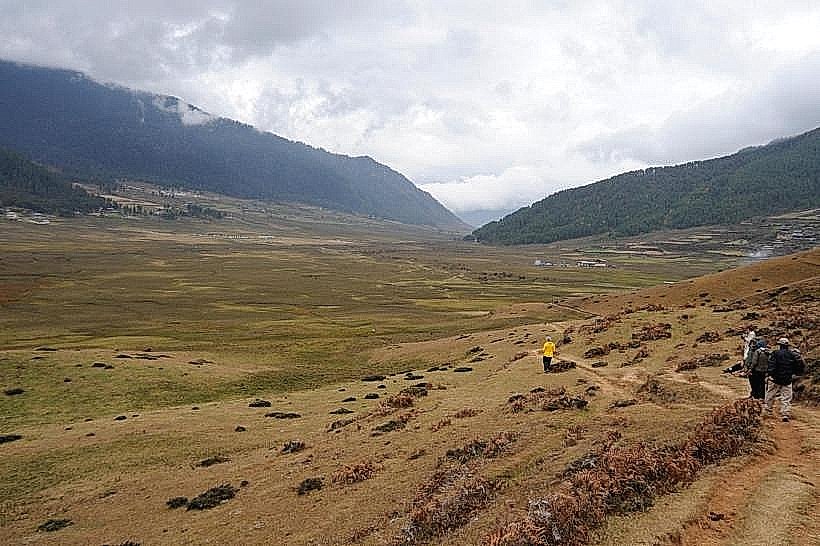
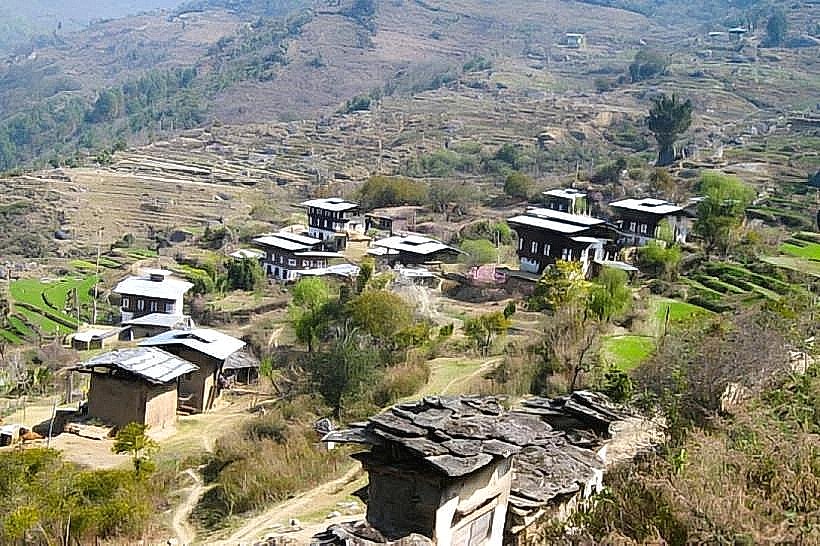
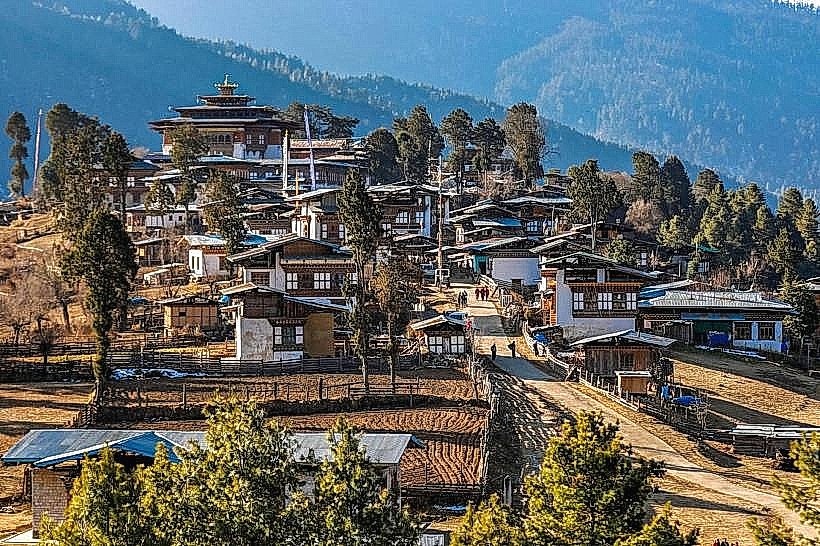
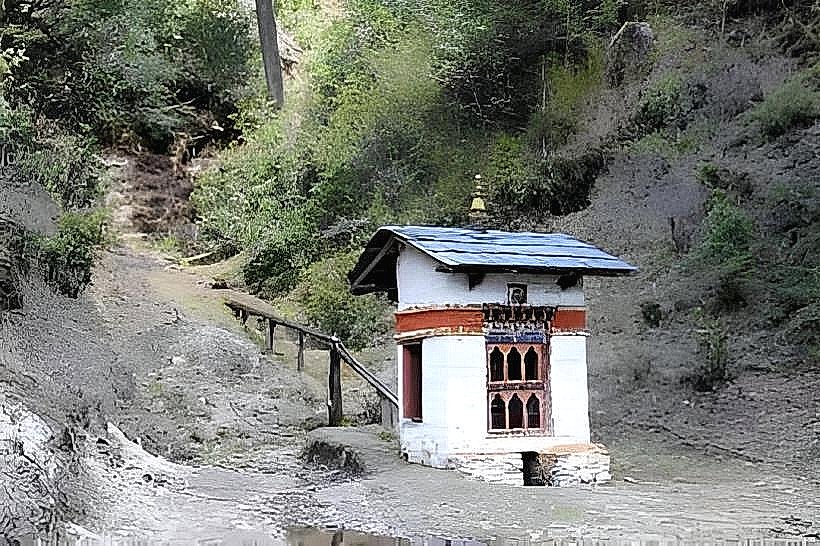
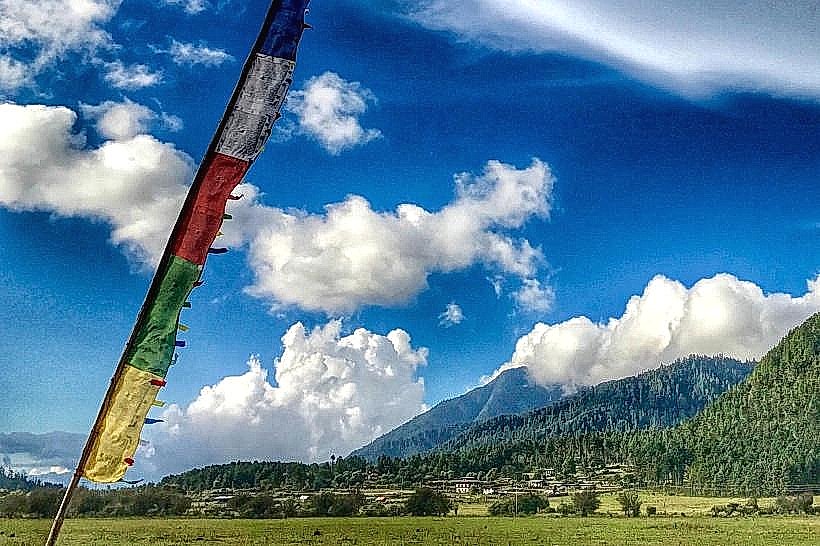
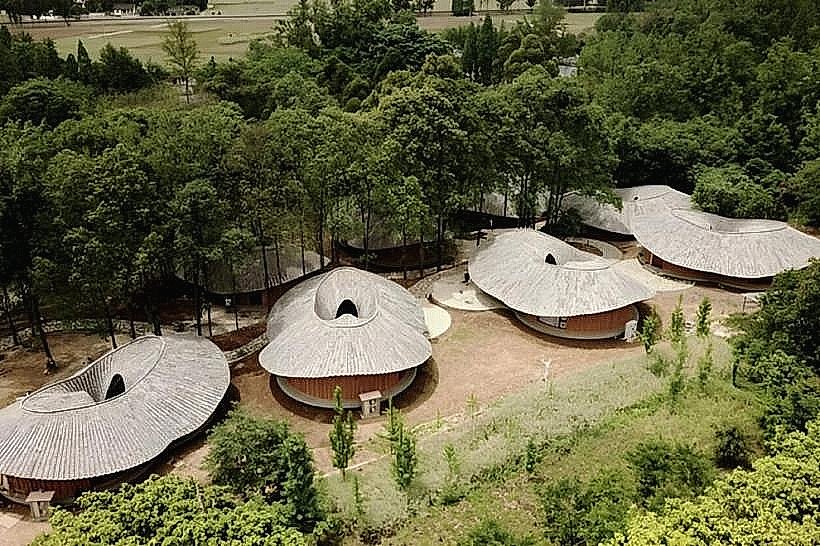
The visitor center is a low-profile structure constructed primarily from local timber and stone. Its design incorporates traditional Bhutanese architectural elements, including sloped roofs and exposed wooden beams. The exterior is finished in natural wood tones and grey stone. The surrounding landscape is characterized by open marshland and rolling hills covered in pine forests and rhododendron bushes.
Location & Access Logistics
The center is situated approximately 15 kilometers west of Wangdue Phodrang town. Access is via the paved national highway (Amo Chhu Road) leading into the Phobjikha Valley. The turn-off to the visitor center is clearly signposted. Ample parking is available on-site. Public transport options are limited; private vehicles or taxis are the most practical means of reaching the location.
Historical & Ecological Origin
The visitor center was established to educate the public about the Black-necked Cranes (Grus nigricollis) and their wintering grounds. The Phobjikha Valley is a Ramsar site, recognized for its ecological importance. The cranes migrate annually from the Tibetan Plateau to this valley between late October and March, seeking milder temperatures and feeding grounds. The valley's ecosystem is a mix of wetland, grassland, and forest.
Key Highlights & Activities
Visitors can observe the Black-necked Cranes from designated viewing platforms, particularly during the morning and late afternoon. Informational exhibits detail the cranes' biology, migration patterns, and conservation status. Guided walks along marked trails in the valley are available, offering opportunities for birdwatching and appreciating the local flora. Educational programs are sometimes offered.
Infrastructure & Amenities
Restrooms are available on-site. Limited shaded areas are provided by the visitor center building and some natural tree cover. Cell phone signal (4G) is generally available but can be intermittent. There are no on-site food vendors; visitors should plan to bring their own provisions or dine in Wangdue Phodrang or nearby villages.
Best Time to Visit
The optimal period for observing the Black-necked Cranes is from November to February. The best time of day for viewing is typically early morning (7:00 AM - 9:00 AM) and late afternoon (4:00 PM - 6:00 PM) when the cranes are most active. The valley experiences its coldest temperatures during these months, so warm clothing is recommended.
Facts & Legends
Local folklore suggests that the Black-necked Cranes are messengers from the heavens, and their arrival signifies good fortune. A specific tip for visitors is to use binoculars for detailed observation of the cranes' behavior without disturbing them. The valley floor is a protected area, and visitors are advised to stay on designated paths.
Nearby Landmarks
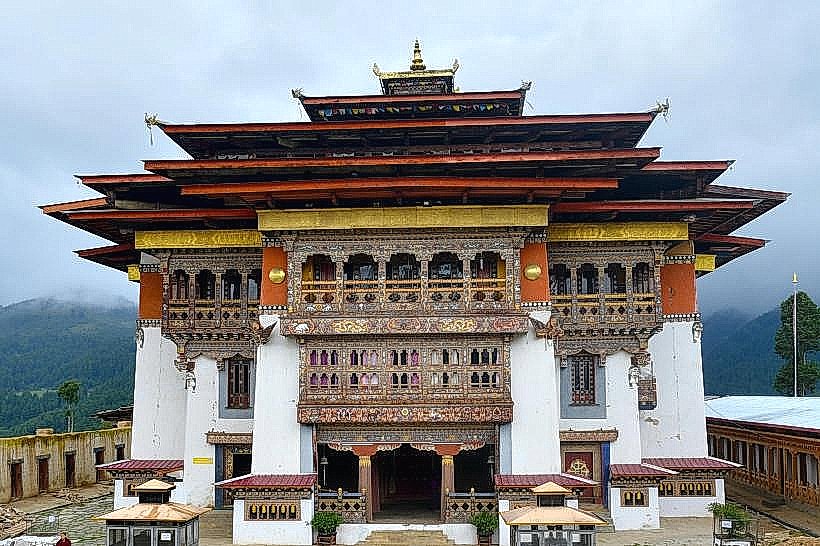
- Gangtey Monastery (0.8km Northwest)
- Phobjikha Nature Trail (1.2km Southwest)
- Khewang Lhakhang (3.5km East)
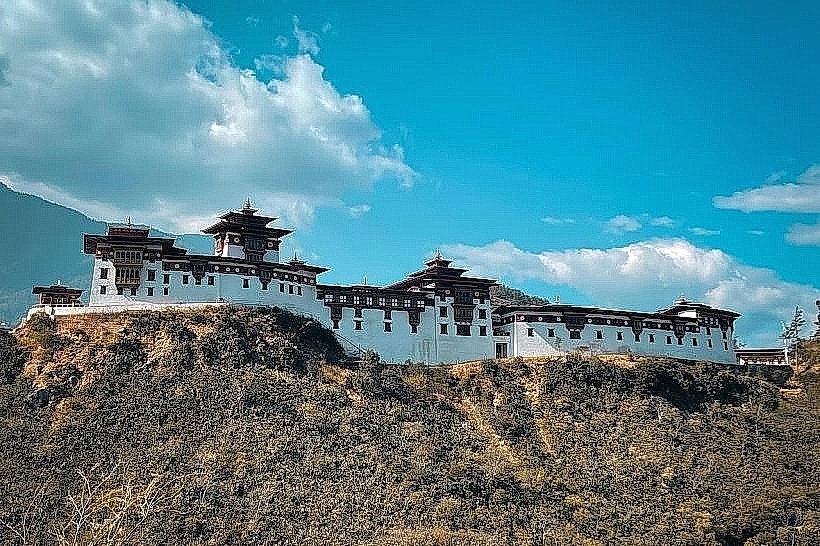
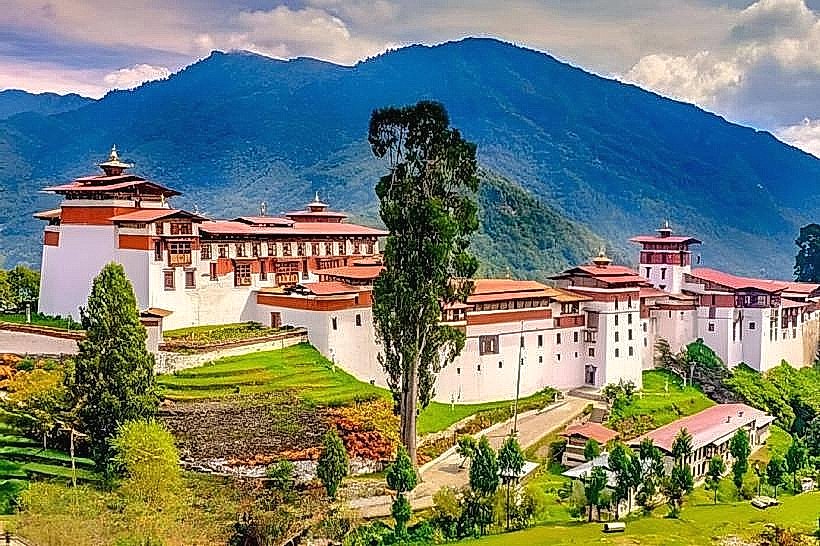
- Wangdue Phodrang Dzong (15km West)