Information
Landmark: Cathedral of the Immaculate ConceptionCity: Port of Spain
Country: Trinidad and Tobago
Continent: North America
Cathedral of the Immaculate Conception, Port of Spain, Trinidad and Tobago, North America
The Cathedral of the Immaculate Conception is a Roman Catholic cathedral located in Port of Spain, Trinidad and Tobago.
It serves as the seat of the Roman Catholic Archdiocese of Port of Spain.
Visual Characteristics
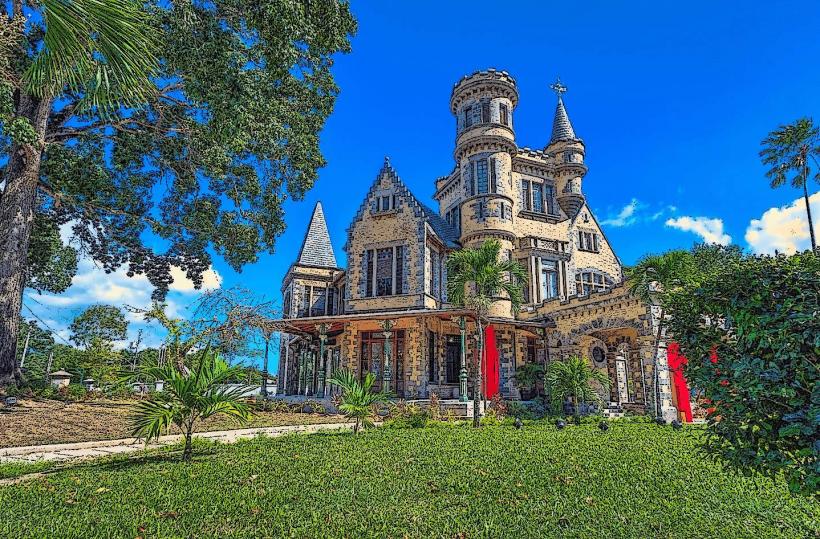
The cathedral is constructed primarily of red brick with white stone accents. It features a prominent central tower and two smaller flanking towers. The architectural style is predominantly Gothic Revival, characterized by pointed arches, ribbed vaults, and stained-glass windows. The main facade is symmetrical, with a large rose window above the entrance.
Location & Access Logistics
The cathedral is situated at the intersection of Independence Square and Abercromby Street in downtown Port of Spain. It is approximately 0.5km south of the city center. Limited street parking is available in the vicinity, and it is advisable to utilize nearby commercial parking garages. Public transport, including numerous bus routes serving Independence Square, provides direct access.
Historical & Ecological Origin
The current structure was built between 1816 and 1832, replacing an earlier church. It was consecrated in 1832 and elevated to a cathedral in 1855. The architect was John Philip. The original purpose was to serve as the principal Roman Catholic church for the colony.
Key Highlights & Activities
Visitors can observe the interior architecture, including the nave, chancel, and altar. The stained-glass windows depict various biblical scenes. Photography is permitted within the cathedral. Services are held regularly.
Infrastructure & Amenities
Restrooms are available within the cathedral complex. Limited shaded areas are present around the exterior. Cell phone signal (4G/5G) is generally strong in this urban area. Food vendors and restaurants are located on nearby streets, particularly along Independence Square.
Best Time to Visit
For interior photography, the late morning or early afternoon provides optimal natural light through the stained-glass windows. The cathedral is accessible year-round during daylight hours, with reduced hours on Sundays and public holidays.
Facts & Legends
A notable historical detail is that the cathedral was built on land originally designated for a market square. Local lore suggests that the original bell, cast in France, was lost at sea during its transport to Trinidad.
Nearby Landmarks
- Red House (Parliament Building) - 0.3km North
- Magnificent Seven Estates - 1.5km West
- National Museum and Art Gallery - 1.2km West
- Brian Lara Promenade - 0.4km North
- Holy Trinity Cathedral - 0.6km Northwest