Information
Landmark: Dimmuborgir Lava FieldsCity: Akureyri
Country: Iceland
Continent: Europe
Dimmuborgir Lava Fields, Akureyri, Iceland, Europe
Dimmuborgir Lava Fields is a natural geological formation characterized by unusually shaped lava pillars and rock formations. It is situated east of Lake Mývatn, approximately 80 kilometers east of Akureyri, Iceland.
Visual Characteristics
The site consists of dark grey and black volcanic rock formations, primarily basalt, rising from the ground. These formations include towering pillars, arches, and caves, often described as resembling a "dark castle" due to their irregular and dramatic shapes. The lava structures vary in height, with some reaching several meters. The ground is covered with sparse vegetation, including mosses, lichens, and dwarf birch, which provide a contrast to the dark rock.
Location & Access Logistics
Dimmuborgir is located off Route 848, which encircles Lake Mývatn. From Akureyri, visitors typically take Route 1 (the Ring Road) east for approximately 70 kilometers, then turn onto Route 848. The site is approximately 80 kilometers east of Akureyri. A designated parking area is available directly at the entrance to the lava fields. Public transport options are limited; most visitors arrive by private vehicle or organized tour buses.
Historical & Ecological Origin
The Dimmuborgir Lava Fields formed approximately 2,300 years ago during a large volcanic eruption from the Þrengslaborgir and Lúdentsborgir craters. As lava flowed over a shallow lake, the water boiled, creating steam pillars that rose through the molten rock. When the lava cooled and solidified around these steam vents, the resulting structures were left standing after the surrounding, less stable lava collapsed and eroded. This process created the unique pillar and arch formations observed today.
Key Highlights & Activities
Visitors can explore the lava fields via several marked hiking trails, ranging from short, accessible loops to longer routes. Specific formations to observe include Kirkjan (The Church), a large, arch-shaped cave, and various intricate lava pillars. Photography is a primary activity, capturing the unique geological features. Information boards along the trails provide details about the formations and local folklore.
Infrastructure & Amenities
Restroom facilities are available near the main parking area and visitor center. Shade is limited, primarily provided by the larger lava formations themselves. Cell phone signal (4G/5G) is generally available in the area, though coverage can vary. A small café and souvenir shop are located adjacent to the parking lot, offering refreshments and light snacks.
Best Time to Visit
The best time to visit Dimmuborgir is during the summer months, from June to August, when the weather is milder and trails are clear of snow. For photography, early morning or late evening provides softer light, enhancing the textures and shadows of the lava formations. There are no specific high/low tide requirements as it is an inland site.
Facts & Legends
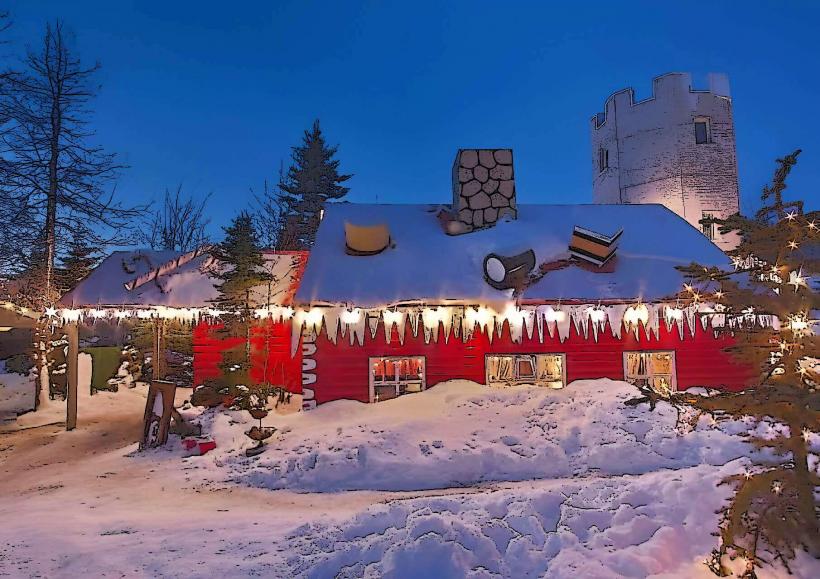
According to Icelandic folklore, Dimmuborgir is believed to be the home of trolls and the Yule Lads (Jólasveinarnir), thirteen mischievous figures who visit homes in the days leading up to Christmas. It is also said to be a gateway to the underworld, with the large arch of Kirkjan serving as a portal to hell.
Nearby Landmarks
- Lake Mývatn: 0.5km West
- Grjótagjá Cave: 2km South
- Hverfjall Crater: 3km South-East
- Mývatn Nature Baths: 5km West
- Skútustaðagígar Pseudocraters: 8km South-West