Information
Landmark: Mikluš PrisonCity: Kosice
Country: Slovakia
Continent: Europe
Mikluš Prison, Kosice, Slovakia, Europe
Mikluš Prison is a museum of medieval justice located in a former prison complex in the Old Town of Košice, Slovakia. It consists of two connected 15th-century Gothic townhouses that were converted into a municipal jail and torture chamber in the early 17th century.
Visual Characteristics
The complex retains its medieval character with thick stone and brick walls, sturdy wooden doorways, and small, barred windows. The architectural style is predominantly Gothic, evidenced by its vaulted ceilings and narrow, irregular floor plans. The exterior has a weathered stucco finish in muted ochre and grey tones, fitting the somber nature of the site.
Location & Access Logistics
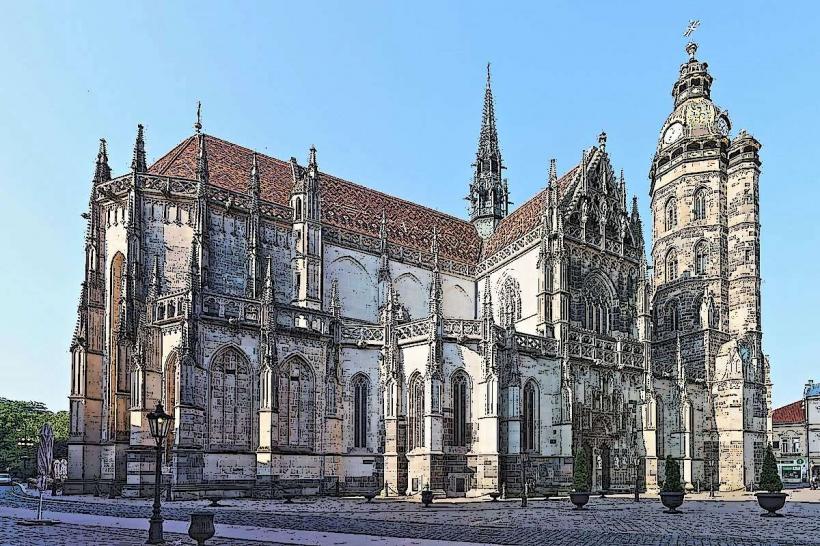
The museum is located at Pri Miklušovej väznici 10, situated in the northeastern part of the historic center. It is approximately 0.4km northeast of St. Elisabeth Cathedral.
Public Transport: The nearest tram stop is "Námestie Maratónu mieru" (Lines 2, 4, 6, 9), located 0.5km to the north.
Parking: As it is within the pedestrianized Old Town, direct vehicle access is unavailable. The nearest public parking is on Hrnčiarska Street or at the nearby East Slovak Museum parking areas.
Access: It is part of the "Alley of Crafts" (Hrnčiarska ulica) tour circuit.
Historical & Ecological Origin
The two original houses were built in the first half of the 15th century and initially served as residential dwellings and a potter's workshop. In 1618, the city authorities purchased and merged the buildings to establish a city prison. It remained in continuous use as a jail until 1909. Between 1940 and 1942, it underwent a full reconstruction to serve as a museum under the East Slovak Museum.
Key Highlights & Activities
The museum offers a "dark history" tour through original prison cells, including the "black cell" for high-risk prisoners and a well-preserved torture chamber featuring period execution devices. Visitors can also see the executioner's apartment and an exhibition on the city's trade and guild history, which is installed in some of the upper cells.
Infrastructure & Amenities
The facility is a historical structure with limited modern modifications; steep, narrow stairs may restrict accessibility for those with mobility issues.
Restrooms: Available for visitors within the museum complex.
Shade: The interior cells are naturally cool and shaded due to the thick stone walls.
Signal: Reliable 4G/5G cellular signal is available in the courtyard and street, though it may drop inside the deeper underground chambers.
Food: No food services on-site; however, the surrounding Hrnčiarska Street (Crafts Alley) features several traditional cafes and bakeries.
Best Time to Visit
The museum is open Tuesday through Saturday, 9:00 AM – 5:00 PM. Weekday mornings are optimal for avoiding school groups. October is a popular time due to "dark tourism" interest around the Košice Peace Marathon events.
Facts & Legends
Local lore centers on the "Mikluš" name, often attributed to a particularly cruel 17th-century executioner, though historical records suggest it may simply be a localized surname associated with the site. A technical highlight is the original 15th-century ceramic potter's kiln found during excavations, proving the building's domestic origins before its grim conversion.
Nearby Landmarks
Executioner’s Bastion (Katova bašta) – 0.05km East
Calvinist Church – 0.1km South
Hrnčiarska Street (Alley of Crafts) – 0.1km West
East Slovak Museum (Main Building) – 0.5km North
Jakab’s Palace – 0.4km Southeast