Information
Landmark: Museo de la RevoluciónCity: Havana
Country: Cuba
Continent: North America
Museo de la Revolución, Havana, Cuba, North America
Overview
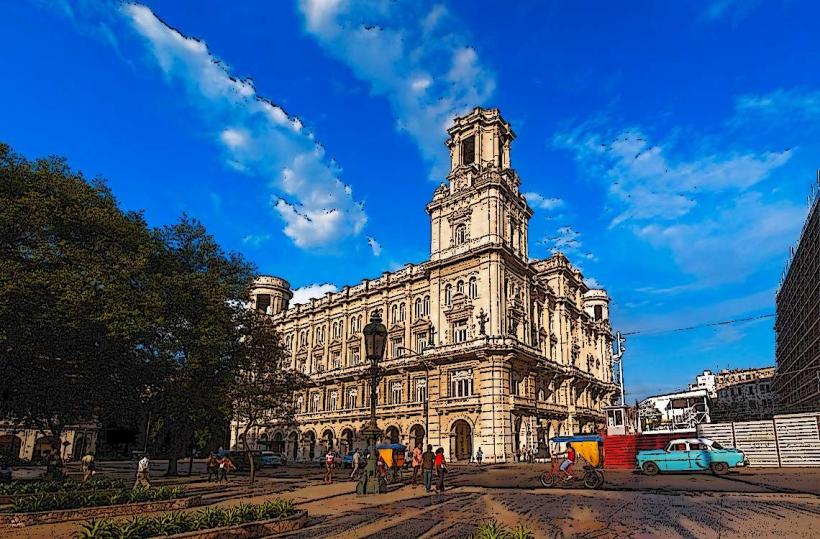
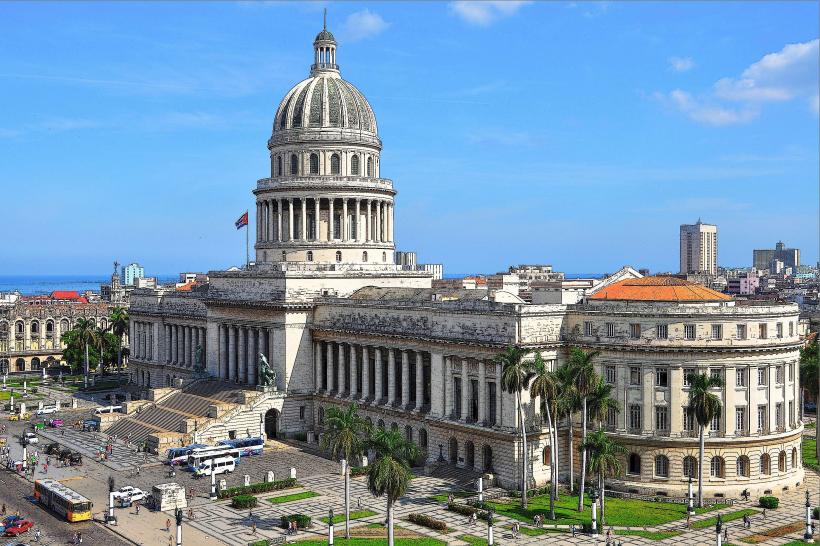
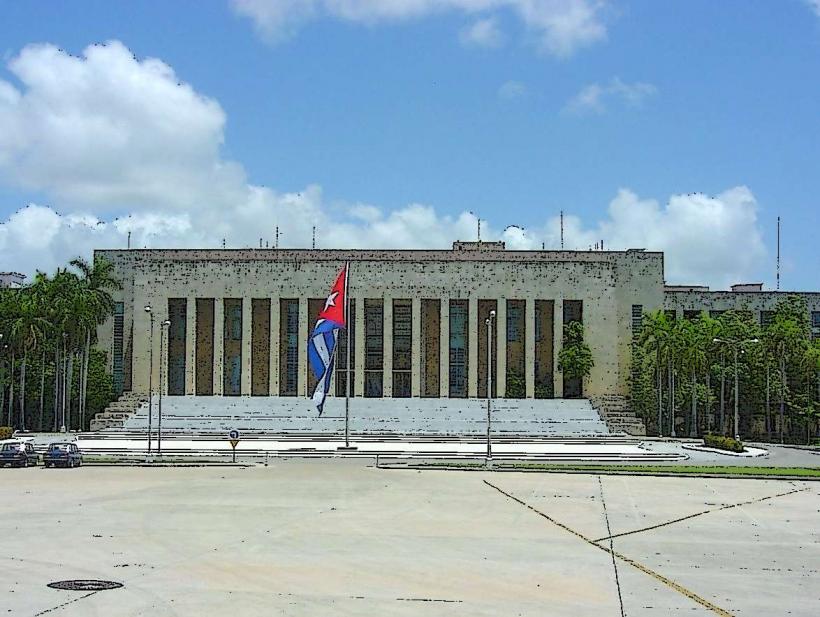
In Havana, the Museo de la Revolución stands as one of Cuba’s most significant museums, telling the story of the Cuban Revolution and the political struggles that toppled Batista’s dictatorship, with artifacts like bullet-pocked walls bearing witness to the fight, to boot in the heart of Havana, inside the grand historic Presidential Palace with its cool marble floors, the museum guides visitors through Cuba’s revolutionary history and into the pivotal moments that forged the nation’s modern identity, roughly It appears, Here’s a closer gaze at the Museo de la Revolución: the grand white-columned building began life as the Palacio Presidencial, built under President Gerardo Machado in the early 1900s, also until the Cuban Revolution, the palace housed Cuba’s president-his home upstairs, his office just beyond a set of tall carved doors.Funny enough, Cuban architect Justo Felipe Cárdenas designed the Presidential Palace, finishing the grand white-stone building in 1920, what’s more the building mixes baroque flair with neoclassical grace, its grand columns rising toward a dome and intricate carvings that quietly proclaim the prestige of the Cuban presidency.In the years before the revolution, the building stood as a clear emblem of the nation’s political power, its tall stone columns casting long afternoon shadows across the square, as a result when Fulgencio Batista seized power in the late 1950s, he turned the palace into his government’s seat, its marble halls echoing with hurried footsteps and tense voices.Armed guards patrolled the building’s entrances, and its looming presence stood as a stark symbol of Batista’s authoritarian rule, turning it into a key flashpoint during the Cuban Revolution, therefore after the Cuban Revolution in 1959, the palace’s marble halls echoed with current purpose, opening as a museum devoted to the revolutionary struggle, fairly Truthfully, They renamed it the Museo de la Revolución, and in 1967 the doors swung open to the public, what’s more today, the museum stands as proof of the revolution’s triumph, while also safeguarding its story and inviting visitors to learn about Cuba’s turbulent path to change.Inside the Museo de la Revolución, glass cases and faded photographs tell the story of the Cuban Revolution-from its tense early days and the gunfire at the Moncada Barracks, to the perilous Granma voyage, the clash at the Bay of Pigs, and finally Fidel Castro’s triumph over Batista’s regime, and on the ground floor, you’ll find displays tracing the Cuban Revolution’s early days, beginning with the tense, treacherous fight against Batista’s dictatorship.Visitors can browse through letters yellowed with age, faded photographs, and keepsakes once owned by Fidel Castro, Che Guevara, Raúl Castro, and others who shaped the revolution, along with the account spotlights key moments like the 1953 Moncada Barracks attack, when gunfire cracked through the humid night and the revolutionary struggle began, generally At the Museo de la Revolución, one of the standout treasures is the Granma yacht, displayed outside in its own open-air enclosure just steps from the main building, meanwhile in 1956, this boat ferried Fidel Castro, Che Guevara, and a modest band of revolutionaries from Mexico across rough seas to Cuba, where they began their guerrilla war against Batista’s regime, fairly The Granma yacht stands as a national emblem of the revolution, a reminder of the daring voyage that set out to free the Cuban people, furthermore the museum’s Cuban Revolution exhibits fill several rooms, each bringing to life the decisive battles and hard–won victories that shaped its triumph.It features artifacts from the Sierra Maestra campaign, the rebels’ gritty guerrilla tactics, and the Battle of Santa Clara, where Batista’s forces met their final defeat, alternatively visitors can explore vivid accounts of international support and Che Guevara’s efforts-like his tireless work in the Cuban countryside-along with the stories of other influential figures.One of the museum’s most striking exhibits dives into the Bay of Pigs Invasion of 1961, when Cuban exiles, backed by the CIA, landed on Cuba’s shore in a failed bid to topple the revolutionary government, besides the museum walks you through the tense days before the invasion, the botched bid to topple Castro, and the roar of Cuban forces driving the attackers back, roughly Interestingly, Weapons, uniforms, and other traces of the conflict sit on display, their worn fabric and scratched metal telling their own story, on top of that all through the museum, visitors run across bold political posters and striking revolutionary art, some with colors so vivid they almost glow.Created in the heat of the revolution, these artworks hold a vital venue in Cuba’s cultural history, like vivid brushstrokes frozen in time, after that many of the posters pulse with bold political messages, driving home ideas of unity, justice, and defiance against imperialism-like dazzling red fists raised high on a crowded street corner.Frankly, The museum displays Fidel Castro’s worn military cap, Che Guevara’s weathered journal, and other possessions of revolutionary leaders, giving visitors a close, almost personal glimpse into their lives and the part they played in shaping the nation’s future, in conjunction with you’ll also find exhibits on other revolutionary figures-Camilo Cienfuegos, Juan Almeida, and Raúl Castro-with photos, worn uniforms, and stories that bring their contributions to the revolution to life.Before it opened as a museum, the Palacio Presidencial was home to Cuba’s presidents, with marble floors and grand halls that still show off its striking architecture and thoughtful layout, at the same time the Grand Staircase sweeps upward to the upper floors, where rows of offices once bustled with government officials shuffling papers and stamping documents, mildly Inside the palace, marble floors gleam underfoot, stained-glass windows scatter colored light across the walls, and ornate chandeliers glitter overhead, capturing the grandeur of the pre-revolutionary era, subsequently in the Offices of the President, certain rooms still wear their original decor-a polished mahogany desk here, a faded velvet chair there-quietly reminding visitors that this was once the heart of Batista’s power.Honestly, These offices remain just as they were, complete with mid-century desks and the chrome lamps that once lit stacks of paper in the 1950s, as a result the Museo de la Revolución isn’t just a locale to learn about the Cuban Revolution-it stands as a proud emblem of Cuban identity, a reminder of the people’s hard-won victory echoing in its marble halls.For many Cubans, the museum stands as a point of national pride, honoring the triumph over imperialism and oppression while underscoring Cuba’s hard‑won sovereignty and independence, consequently the museum stands as a powerful symbol of national pride, helping shape the story Cuba tells about itself after the revolution, from faded battle flags to the scent of aged wood in its galleries.The exhibits honor the courage and grit of the Cuban people, while underscoring how deeply socialism and resistance to imperialism shape life on the island-even in the faded murals along Havana’s streets, likewise the museum drives home the spirit of the Cuban Revolution, celebrating self-determination and pushing back against foreign control, much like the bold slogans painted in glowing red across its walls, more or less It also highlights Cuba’s identity as a socialist state, along with the lasting imprint of Fidel Castro and the revolution he sparked, still felt in the faded murals along Havana’s streets, then the Museo de la Revolución runs guided tours in Spanish, and sometimes in English-you might hear a guide’s voice echoing through the high-ceilinged halls.
Author: Tourist Landmarks
Date: 2025-09-11