Information
Landmark: Old Stone Fort State Archaeological ParkCity: Nashville
Country: USA Tennessee
Continent: North America
Old Stone Fort State Archaeological Park, Nashville, USA Tennessee, North America
Old Stone Fort State Archaeological Park, located near Manchester in Coffee County, Tennessee, is a remarkable prehistoric site centered around a massive stone enclosure built by Native American peoples during the Middle Woodland period, roughly between 100 BCE and 500 CE. The park combines significant archaeological, cultural, and natural features, making it one of Tennessee’s most important prehistoric landmarks and a destination offering both historical insight and outdoor recreation.
1. Historical and Archaeological Significance
The Stone Enclosure: The defining feature of the park is the Old Stone Fort itself-an ancient ceremonial enclosure constructed by indigenous peoples known as the McFarland and Owl Hollow cultures during the Middle Woodland era. It is a monumental earthwork built with undressed stacked stones covered by earth and soil, forming walls originally estimated to be four to six feet tall. The walls extend approximately 4,600 feet in length when the original structure was continuous.
Purpose: Unlike defensive forts built for warfare, the Old Stone Fort’s structure, location, and design strongly suggest it served ceremonial and ritual purposes. The entrance to the enclosure is architecturally complex, featuring a large ditch and parallel walls that form a cul-de-sac-possibly used for ritual gatherings or processions.
Construction Phases: Archaeological excavations during the 1960s and 1970s by the University of Tennessee revealed that the fort was constructed gradually over several centuries. Radiocarbon dating places its building between approximately 80 A.D. and 550 A.D. These layers correspond to different cultural phases and indicate a long-term communal effort involving multiple generations.
Cultural Connections: The Old Stone Fort shares characteristics with other Hopewellian culture earthworks, such as those in Ohio, indicating a broader network of Native American societies engaged in ceremonial earthwork construction and possibly sharing astronomical knowledge. The orientation of the entrance toward the summer solstice sunrise supports the idea that the site had astronomical or calendrical significance.
2. Natural Setting
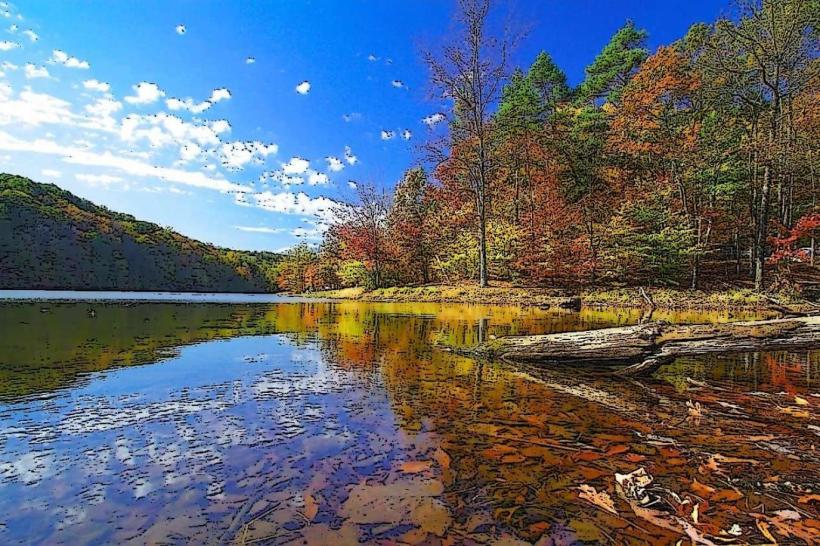
Geographical Location: The park is uniquely situated at the confluence of the Duck River and the Little Duck River, where these waterways create scenic cliffs, bluffs, and waterfalls. This natural setting amplifies the sacred and impressive nature of the site for its builders.
Waterfalls and Rock Formations: The rivers have sculpted the landscape with dramatic cascades and stone formations. These natural features complement the ancient earthworks, providing a visually stunning backdrop that merges cultural heritage with natural beauty.
3. Visitor Experience and Facilities
Hiking Trails: The park offers around 3.5 miles of well-maintained hiking trails. The highlight is the Enclosure Trail, a 1.25-mile loop that allows visitors to walk around the stone earthworks, providing close-up views of the walls, entrance features, and the surrounding landscape. Additional trails venture into the surrounding forested areas, riverbanks, and scenic overlooks.
Camping Facilities: Old Stone Fort State Archaeological Park has a campground with 51 sites equipped with water and electrical hookups, accommodating RVs and tents. Facilities include restrooms with showers and a dump station available during peak seasons. Campsites are available on a first-come, first-served basis with a two-week stay limit.
Fishing and Boating: The Duck River and its tributaries offer opportunities for freshwater fishing with species like largemouth bass, catfish, and sunfish. Canoeing and kayaking on the river and adjacent lake provide recreational water access in a peaceful natural setting.
4. Museum and Educational Programming
Interpretive Museum: Located near the entrance to the Enclosure Trail, the park’s museum provides detailed exhibits on the history and archaeology of the Old Stone Fort, including artifacts recovered from the site such as tools, pottery, and remnants of daily life. The museum interprets the culture and beliefs of the Middle Woodland peoples who built the enclosure.
Educational Programs: The park offers guided tours and educational events aimed at school groups, families, and adult learners. These programs cover archaeological methods, Native American history, cultural traditions, and the natural environment. Seasonal programs and workshops are often available, particularly during weekends in the summer.
5. Archaeological Importance
The Old Stone Fort has been the focus of extensive scientific study, contributing valuable knowledge about prehistoric indigenous cultures in the Southeast. The construction techniques, gradual build phases, and site layout have provided insights into the ceremonial life and social organization of Middle Woodland peoples.
The site’s alignment with solstice sunrises adds to growing evidence that Native American earthworks often integrated astronomical observations into their design.
6. Practical Information
Location: 732 Stone Fort Drive, Manchester, Tennessee 37355.
Operating Hours: The park grounds and trails are open daily from dawn to dusk. The museum is open from 8:00 a.m. to 4:30 p.m. daily.
Admission: There is no admission fee; entry to the park and museum is free to the public.
Facilities: Parking areas, picnic shelters, restrooms, camping sites, and trail signage are available for visitors.
Summary
Old Stone Fort State Archaeological Park is a vital preservation of one of Tennessee’s most important prehistoric earthworks. The park combines rich archaeological heritage with stunning natural landscapes, offering visitors a chance to explore ancient Native American ceremonial architecture set amidst beautiful river gorges and waterfalls. Its educational programs, hiking trails, and camping facilities provide a comprehensive and engaging experience, making it an essential destination for those interested in early indigenous culture, archaeology, and outdoor recreation.