Information
Landmark: Pinacoteca AmbrosianaCity: Milan
Country: Italy
Continent: Europe
Pinacoteca Ambrosiana, Milan, Italy, Europe
Overview
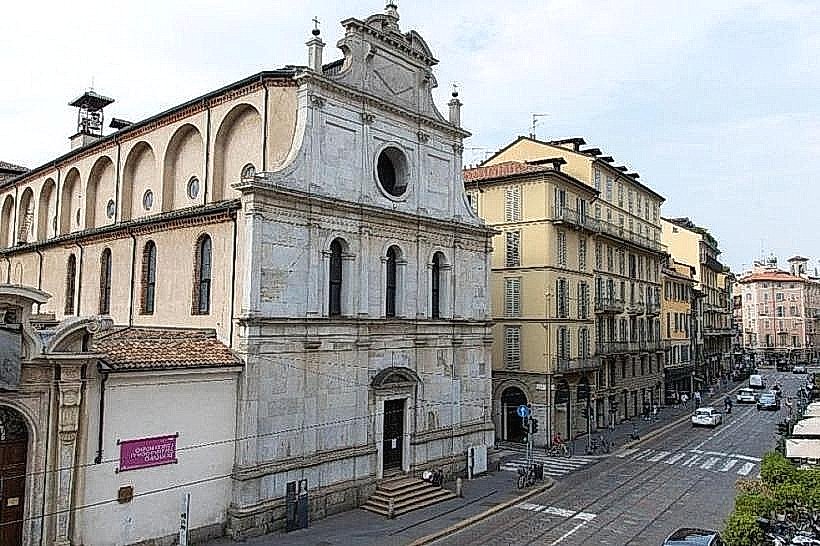
In the heart of Milan, the Pinacoteca Ambrosiana stands among the city’s most treasured museums, home to luminous Renaissance and Baroque masterpieces and shelves lined with centuries-timeworn manuscripts, leather-bound books, and rare antique texts, simultaneously the gallery belongs to the Ambrosian Library, founded in 1607 by Cardinal Federico Borromeo, who once walked its echoing marble halls, roughly Frankly, In Milan, it’s a landmark of culture, celebrated for its art collection-especially the vivid, centuries-heritage paintings that draw visitors in, in conjunction with first.Founded in 1618 by Cardinal Federico Borromeo, the Pinacoteca Ambrosiana aimed to spark Milan’s intellectual and cultural life, much like a warm light spilling from a library window into the evening streets, meanwhile the Cardinal built it to hold his vast trove of paintings, manuscripts, and books-shelves heavy with leather-bound volumes-and to keep them guarded while opening them to the public.From the beginning, the Ambrosian Library and the Pinacoteca worked hand in hand, each devoted to spreading knowledge and fostering scholarship, moreover borromeo began the museum’s collection with pieces he bought himself, later joined by generous gifts from wealthy patrons, relatively The Pinacoteca sits in a Renaissance-style building of warm stone, connected directly to the Ambrosian Library, furthermore a modest but graceful facade welcomes visitors to the museum, leading into airy galleries lined with classical arches, generally Just steps from the Piazza del Duomo in Milan’s bustling center, the building’s design captures the refined elegance of the late Renaissance, besides inside, the Pinacoteca Ambrosiana holds a remarkable trove of paintings, sketches, and sculptures by some of the Renaissance and Baroque era’s greatest masters.Among the collection’s highlights is Leonardo da Vinci’s *Codex Atlanticus*, a celebrated volume packed with his sketches and notes-ink lines tracing everything from flying machines to curling script in the margins, in addition this manuscript holds sketches, crisp scientific diagrams, and handwritten notes exploring subjects from engineering to anatomy to the star-studded reaches of astronomy.The Pinacoteca Ambrosiana houses a large part of the codex, its faded ink and delicate pages counted among the museum’s most prized treasures."The Musician" by Leonardo da Vinci: This portrait is attributed to Leonardo da Vinci and is considered one of the most necessary works in the collection, after that leonardo da Vinci’s *The Musician*-a portrait he’s believed to have painted-stands as one of the collection’s crown jewels, its subject’s dim eyes seeming to follow you across the room, moderately It shows a young man clutching a polished lute, likely meant to depict someone of noble rank, at the same time soft light melts into shadow in the painting, a quiet haze that shows da Vinci’s flawless command of sfumato.The museum also proudly displays Caravaggio’s *Basket of Fruit* (1599), a still life so vivid you can almost feel the grape skins, and one of the earliest examples of Baroque realism."The Madonna with Child" by Bramantino: Another significant piece in the collection is a Madonna and Child painting by Bramantino, a leading Milanese painter of the Renaissance, also caravaggio’s painting is famous for its meticulous detail and the way the fruit seems almost real, each grape catching a glint of light against the deep shadow."The Wedding at Cana" by Paolo Veronese: The museum is home to a study of Paolo Veronese's famous painting "The Wedding at Cana," which depicts a biblical scene of the wedding feast in Cana where Jesus performed his first miracle.Another highlight of the collection is Bramantino’s *Madonna with Child*, a tender Renaissance portrait by Milan’s celebrated master, where the infant’s minute hand seems to reach right out of the frame, then the work shows clear echoes of Leonardo da Vinci’s style, along with the rich, earthy tones of Lombard painting traditions, partially At the museum, you can spot a detailed study of Paolo Veronese’s “The Wedding at Cana,” a vivid scene of a bustling wedding feast in Cana where Jesus, amid clinking cups and radiant fabrics, performed his first miracle, not only that this painting stands as a prime example of the Venetian Renaissance, with colors that glow like sunlight on water.Number four, consequently the Ambrosian Library ranks among Italy’s most treasured archives, housing fragile parchment manuscripts, early printed volumes, and rare historical works that fill its oak-shelved rooms.Many pieces fill the museum’s galleries, offering visitors a window into the vibrant world of Renaissance scholars-the ink on ancient manuscripts still faintly brown with age, to boot alongside its paintings, the Pinacoteca Ambrosiana also houses an impressive collection of drawings and sketches by masters like Raphael, Michelangelo, and Raffaello Sanzio.These works offer a glimpse into the imagination and skill of Renaissance masters, from the sweep of a brushstroke to the balance of light and shadow, as well as the Pinacoteca Ambrosiana holds pieces by celebrated artists, especially those tied to the Lombard school.The collection features some of history’s great masters, from Leonardo da Vinci and Caravaggio to Raphael, Titian, Bramantino, Giovanni Bellini, Gaudenzio Ferrari, and Tiziano Vecellio, whose rich reds seem to glow on the canvas, in addition the Pinacoteca Ambrosiana draws visitors with rotating exhibitions, from Renaissance portraits to vivid modern canvases, each offering a glimpse into art from different eras and corners of the world, to some extent These exhibitions enrich the museum’s permanent collection, giving visitors a richer sense of Milan’s artistic and cultural heritage, from centuries-historic paintings to rare manuscripts, consequently the museum also serves as a hub for art historical research and takes part in cultural projects across the city, working closely with other institutions and universities.You’ll find the Pinacoteca Ambrosiana right in the heart of Milan, just steps from Piazza del Duomo and the grand Teatro alla Scala, alternatively you’ll find it at Piazza Pio XI, 2 in Milan, and the doors are usually open from Tuesday through Sunday., more or less
Author: Tourist Landmarks
Date: 2025-08-19