Information
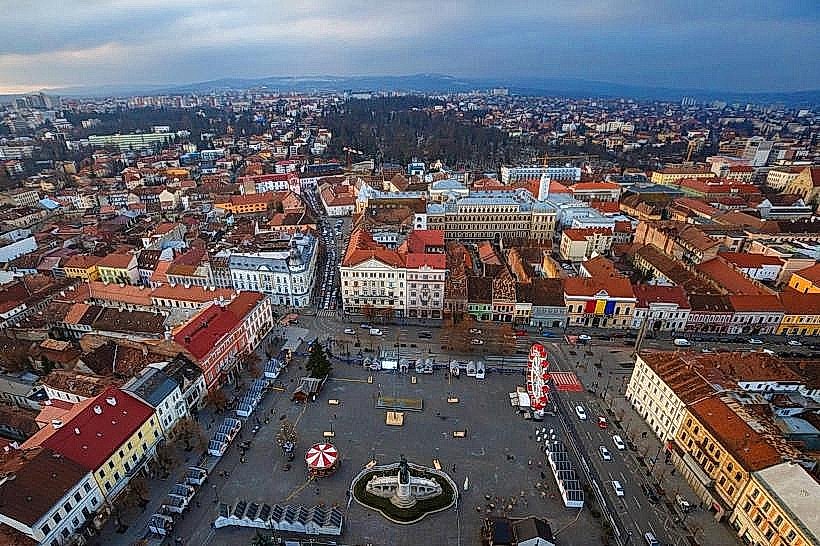
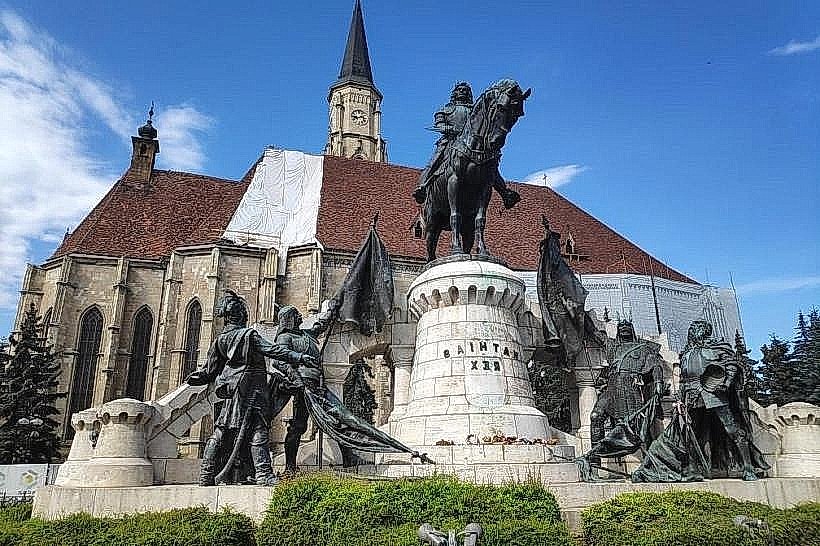
Landmark: St. Michael’s ChurchCity: Cluj Napoca
Country: Romania
Continent: Europe
St. Michael’s Church, Cluj Napoca, Romania, Europe
Dantokpa Market is a large open-air market located in the city of Cotonou, Benin. It is one of the largest markets in West Africa.
Visual Characteristics
The market covers an area of approximately 20 hectares. It is characterized by a dense network of stalls and temporary structures constructed from corrugated metal, wood, and tarpaulins. Goods are displayed on the ground, on tables, and in overhead racks. The primary colors are dictated by the merchandise, ranging from brightly colored textiles and produce to the earthy tones of grains and spices. The market is an active, high-traffic zone with a constant flow of people and vehicles.
Location & Access Logistics
Dantokpa Market is situated in the central district of Cotonou, adjacent to the lagoon. It is accessible via major roads including Boulevard de la Marina and Avenue Jean-Paul II. The market is approximately 2 kilometers (1.2 miles) east of the city center. Parking is extremely limited and often informal, with vehicles typically parked along the periphery or in designated unofficial lots. Public transport is abundant, with numerous shared taxis (taxis-brousse) and motorcycle taxis (zemidjans) serving routes that pass directly through or near the market. Several local bus lines also operate in the vicinity.
Historical & Ecological Origin
Dantokpa Market originated in the early 1960s as a small roadside trading post. It expanded organically over the decades, driven by Cotonou's growth as a commercial hub. Its current form is a result of continuous, largely unplanned development. Ecologically, the market's proximity to the Cotonou Lagoon influences local microclimates and presents logistical challenges related to drainage and waste management.
Key Highlights & Activities
Visitors can observe and purchase a wide array of goods, including textiles, food items (fresh produce, grains, dried fish, spices), household goods, electronics, and artisanal crafts. Haggling is a standard practice. Navigating the market involves walking through narrow aisles between stalls. Photography is permitted but should be done respectfully, with consideration for vendors and shoppers.
Infrastructure & Amenities
Basic sanitation facilities, including public latrines, are available but often overcrowded and of variable cleanliness. Shade is provided by the numerous temporary structures and tarpaulins, but direct sunlight is prevalent in open areas. Cell phone signal (primarily 2G/3G with some 4G in certain pockets) is generally available, though signal strength can fluctuate within the dense market. Numerous small food and drink vendors operate within the market, offering local snacks and beverages.
Best Time to Visit
The market is most active from early morning (around 6:00 AM) until late afternoon (around 6:00 PM). For a less crowded experience, visiting on a weekday morning between 8:00 AM and 10:00 AM is recommended. The hottest part of the day is typically between 1:00 PM and 3:00 PM. There are no tide-related considerations for visiting this market.
Facts & Legends
Dantokpa is reputed to be the largest open-air market in West Africa, covering an area comparable to several city blocks. A local belief suggests that the market's prosperity is tied to the spiritual protection of a deity residing in the nearby lagoon, though this is not officially documented.
Nearby Landmarks
- Dantokpa Lagoon (Adjacent, South)
- Centre Artisanal (0.8km West)
- Grand Mosque of Cotonou (1.5km West)
- Presidential Palace (2.0km West)
- Cotonou Cathedral (2.2km West)