Information
Landmark: Cha das Caldeiras VillageCity: Sao Filipe
Country: Cabo Verde
Continent: Africa
Cha das Caldeiras Village, Sao Filipe, Cabo Verde, Africa
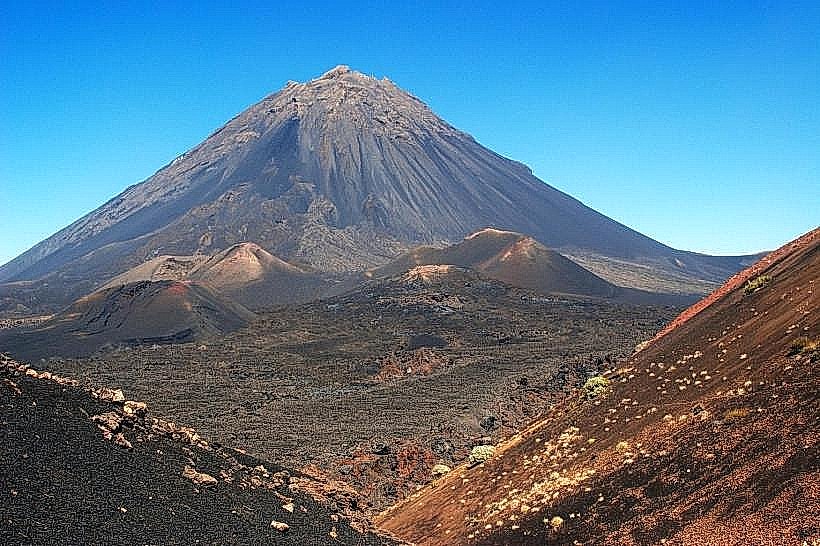
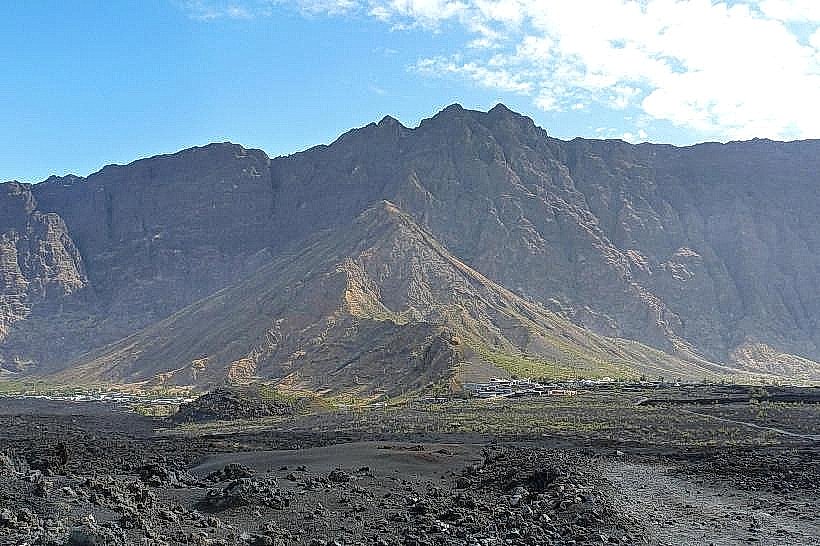
Chã das Caldeiras Village lies inside the vast volcanic caldera at the base of Pico do Fogo, making it one of the most extraordinary inhabited places in Cabo Verde. Life here unfolds directly on lava, within a landscape shaped by repeated eruptions, where human settlement and volcanic force exist in constant proximity.
Setting and Landscape
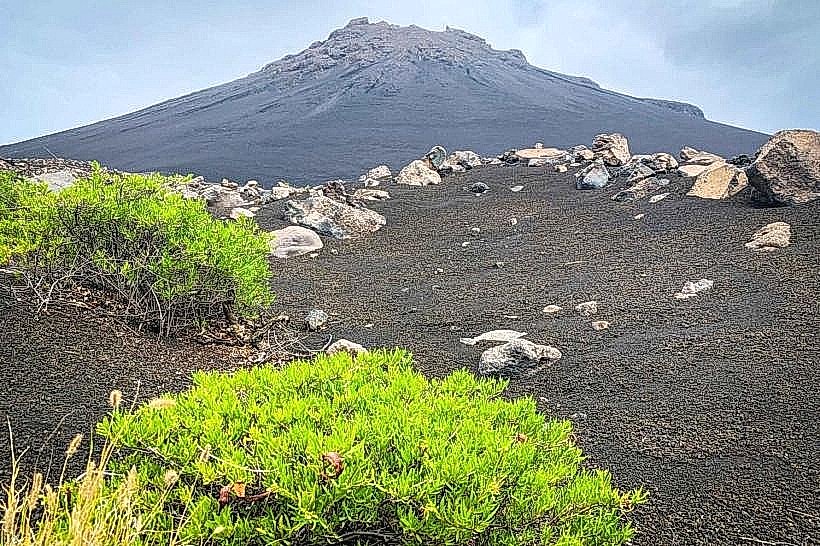
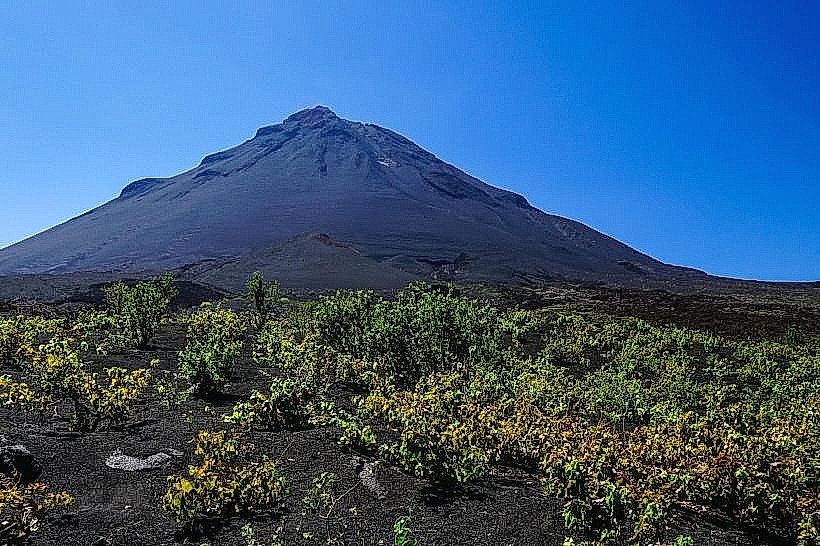
The village sits on the caldera floor, surrounded by steep volcanic walls and dominated by the cone of Pico do Fogo rising above. The ground is entirely volcanic, a mix of hardened lava, ash, and rock in deep blacks and dark browns. Vegetation appears selectively, growing where soil has settled and moisture can be held, creating striking contrasts between green fields and raw stone.
Architecture and Materials
Homes are built almost entirely from volcanic rock, giving the village a uniform, dark appearance that blends into the landscape. Walls are thick and solid, designed for durability rather than ornament. Rooflines are simple, and buildings are positioned carefully around older lava flows, showing how construction adapts to what the land allows rather than reshaping it.
Daily Life and Rhythm
Life in Chã das Caldeiras follows a steady, practical rhythm. Farming is central, with residents cultivating vines, fruit trees, and vegetables directly in volcanic soil. Movement through the village is slow and purposeful, often on foot, with tools, baskets, and small loads carried by hand. Social life is close-knit, shaped by shared experience and isolation.
Volcano Presence and Awareness
The volcano is never background here. Its scale, silence, and occasional activity define the emotional atmosphere of the village. Past eruptions have destroyed homes and fields, and rebuilding is part of collective memory. This history creates a culture of resilience, where risk is acknowledged without dramatization.
Atmosphere and Sensory Experience
Sound is minimal, carried easily across the open caldera. Wind moves dust and fine ash, and footsteps crunch on uneven ground. At night, the absence of light pollution reveals an expansive sky, intensifying the sense of exposure and remoteness.
Chã das Caldeiras Village represents the deepest connection between people and land on Fogo Island. It is a place where habitation is an act of adaptation, shaped by necessity, endurance, and an intimate understanding of volcanic terrain.