Information
Landmark: Fort Larned National Historic SiteCity: Hutchinson
Country: USA Kansas
Continent: North America
Fort Larned National Historic Site, Hutchinson, USA Kansas, North America
Fort Larned National Historic Site preserves a 19th-century U.S. Army outpost located in Pawnee County, Kansas, near the city of Hutchinson.
Visual Characteristics
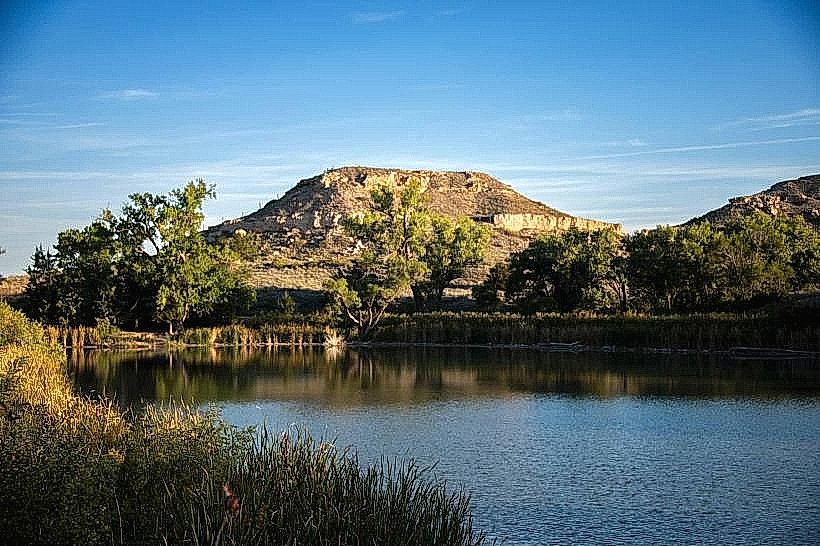
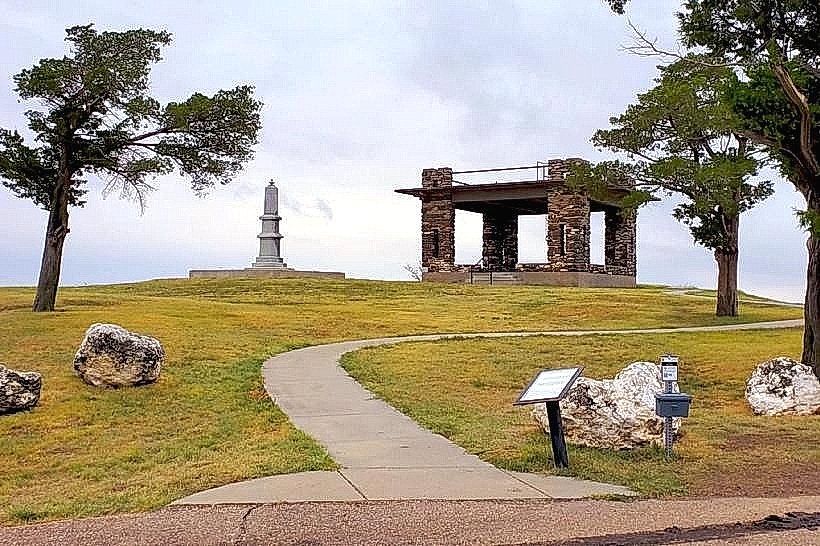
The site features reconstructed adobe and stone buildings, including barracks, officers' quarters, and a hospital, arranged around a central parade ground. The structures are primarily earth-toned, reflecting the local soil and construction materials. The landscape is characterized by open prairie grassland with the Pawnee River flowing nearby.
Location & Access Logistics
Fort Larned is situated 6 miles west of the town of Larned, Kansas, accessible via U.S. Highway 156. From Hutchinson, take U.S. Highway 50 West for approximately 45 miles to Larned, then follow U.S. Highway 156 West. Ample free parking is available on-site. No public transportation directly serves the site.
Historical & Ecological Origin
Established in 1859, Fort Larned served as a crucial supply post and military base along the Santa Fe Trail. Its primary purpose was to protect travelers and enforce peace with Native American tribes. The site is situated on a prairie ecosystem, typical of the Central Great Plains.
Key Highlights & Activities
Visitors can explore the reconstructed buildings, including the barracks and officers' quarters. Ranger-led programs and living history demonstrations are offered seasonally. Walking the grounds allows for observation of the original Santa Fe Trail ruts. Photography of the historic architecture and prairie landscape is permitted.
Infrastructure & Amenities
Restrooms are available in the visitor center. Limited shade is provided by the historic buildings. Cell phone signal is generally weak to non-existent within the historic fort area. No food vendors are present at the site; visitors should bring their own provisions.
Best Time to Visit
The best time for photography is during the morning or late afternoon when the sun angle creates shadows on the adobe structures. Spring (April-May) and Fall (September-October) offer moderate temperatures and less humidity. No specific tide requirements apply.
Facts & Legends
A unique aspect of Fort Larned is the preservation of original Santa Fe Trail wagon ruts, clearly visible on the landscape. These ruts are a tangible link to the westward expansion era. The fort was named after Colonel Benjamin F. Larned, a U.S. Army officer.
Nearby Landmarks
- Pawnee Rock State Historic Site (15km Southwest)
- Santa Fe Trail Museum (6km East)
- Cheyenne Bottoms Wildlife Area (25km Northeast)
- Kansas Wetlands Education Center (25km Northeast)