Information
Landmark: Glenveagh National ParkCity: Donegal
Country: Ireland
Continent: Europe
Glenveagh National Park, Donegal, Ireland, Europe
Glenveagh National Park is a 17,000-hectare nature reserve located in the Derryveagh Mountains of County Donegal. It is the second-largest national park in Ireland.
Visual Characteristics
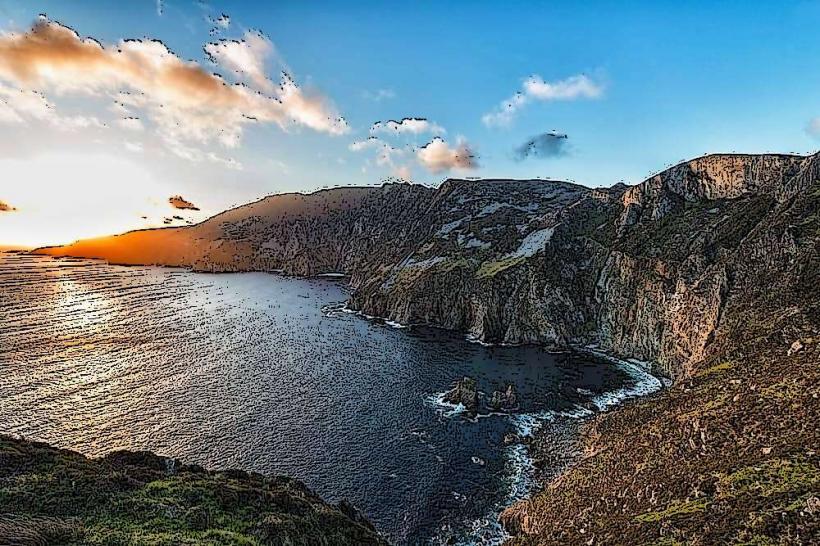
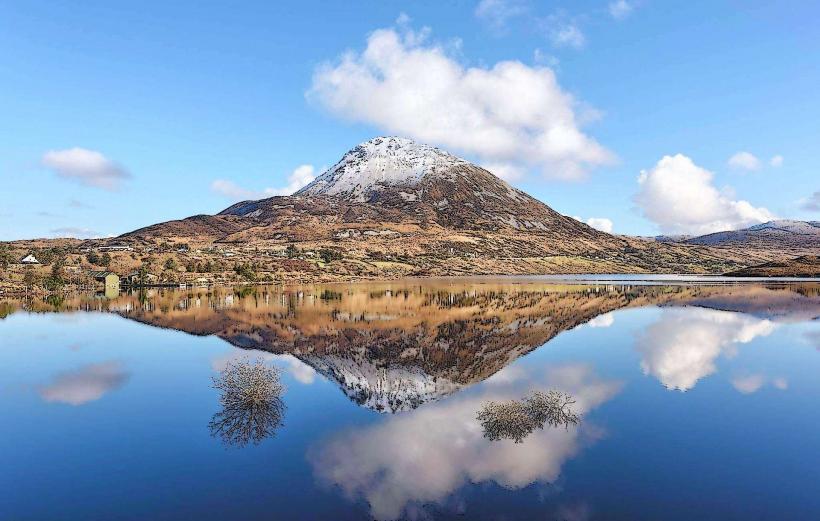
The park is defined by a deep glaciated valley containing Lough Veagh, surrounded by steep granite mountains and rugged moorland.
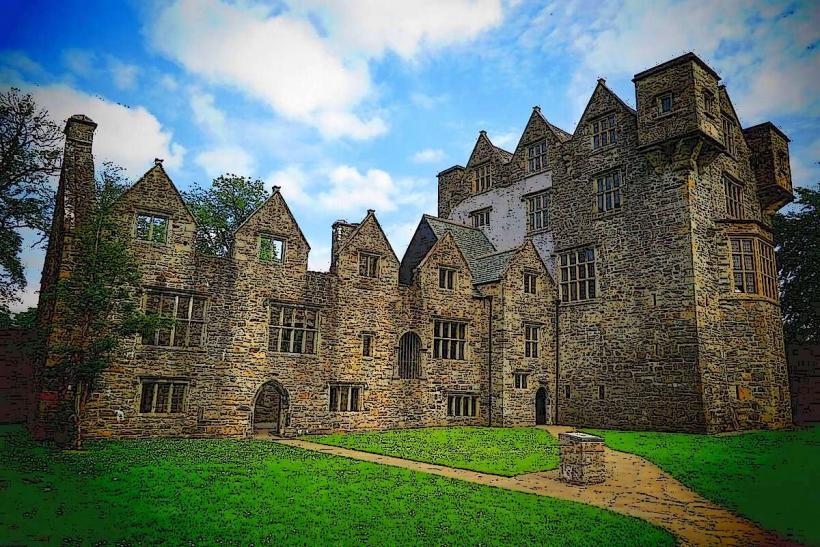
The Castle: A late 19th-century castellated mansion built of local granite, situated on the edge of the lake.
Gardens: A 27-acre intensive horticultural site featuring a Victorian walled garden, an Italian terrace, and a collection of exotic plants from the Southern Hemisphere.
Flora: Contains the largest remains of native oak woodland in Donegal.
Location & Access Logistics
Address: Church Hill, Letterkenny, Co. Donegal (F92 WC97).
Position: Approximately 24km northwest of Letterkenny.
Transit: Accessed via the R251 road. Private car is the primary transit mode; limited seasonal bus services operate from Letterkenny.
Parking: Large visitor car park located at the park entrance. Private vehicles are prohibited from driving to the castle; a shuttle bus operates between the visitor center and the castle (approx. 4km).
Admission: Entry to the park and gardens is free. Fees apply for the castle tour and the shuttle bus.
Historical Origin
1857–1859: Established as an estate by John George Adair, notorious for the "Derryveagh Evictions" of 1861, where 244 tenants were cleared from the land.
1870–1873: The castle was constructed, modeled after Balmoral Castle in Scotland.
1937: Purchased by Henry McIlhenny of Philadelphia, who developed the gardens.
1981: The estate was gifted to the Irish nation; the park opened to the public in 1984.
Key Highlights & Activities
Castle Tours: Guided tours of the interior, preserved as it was during Henry McIlhenny’s residence.
Hiking: Multiple trails including the Viewpoint Trail (easy), the Lakeside Walk (flat), and the more strenuous Glenveagh Bridle Path.
Wildlife: Home to the largest herd of Red Deer in Ireland and a reintroduction site for the Golden Eagle.
Infrastructure & Amenities
Visitor Centre: Features displays on the park’s history, ecology, and geology.
Dining: A restaurant is located in the Visitor Centre, and a tearoom operates in the Castle Courtyard.
Sanitation: Public restrooms at the Visitor Centre and the Castle.
Connectivity: Extremely poor; cellular signal is non-existent in most of the valley. Offline maps are required.
Best Time to Visit
Seasonality: Open year-round. Gardens are most visually significant in May and June (rhododendrons/azaleas).
Hours: Typically 09:15–17:30.
Weather: High rainfall zone. Waterproof gear is mandatory for hikers.
Facts & Legends
The park's landscape was famously described by McIlhenny’s guests-including Greta Garbo and Marilyn Monroe-as one of the most romantic in Ireland. A verified technical detail: the park is a "Special Area of Conservation" (SAC) due to its unique blanket bog and heath habitats.
Nearby Landmarks
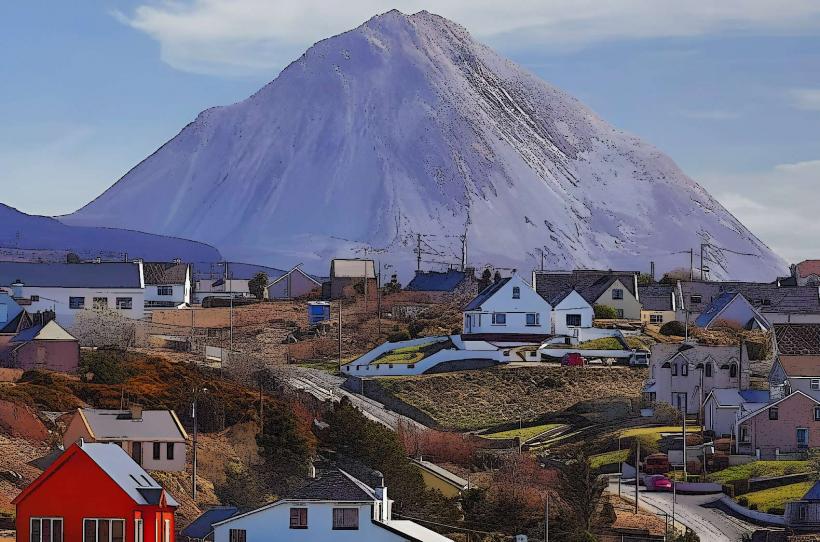
Mount Errigal – 15km West
Gartan Lough – 10km East
Poisoned Glen – 18km West
Leo’s Tavern (Meenaleck) – 25km West