Information
Landmark: Graz Castle (Schlossberg)City: Graz
Country: Austria
Continent: Europe
Graz Castle (Schlossberg), Graz, Austria, Europe
The Schlossberg is a dolomite rock hill rising 123 meters above the city center of Graz, Austria. It is a designated UNESCO World Heritage site and served as a massive fortification that was never conquered, though it was largely dismantled by Napoleonic forces.
Visual Characteristics
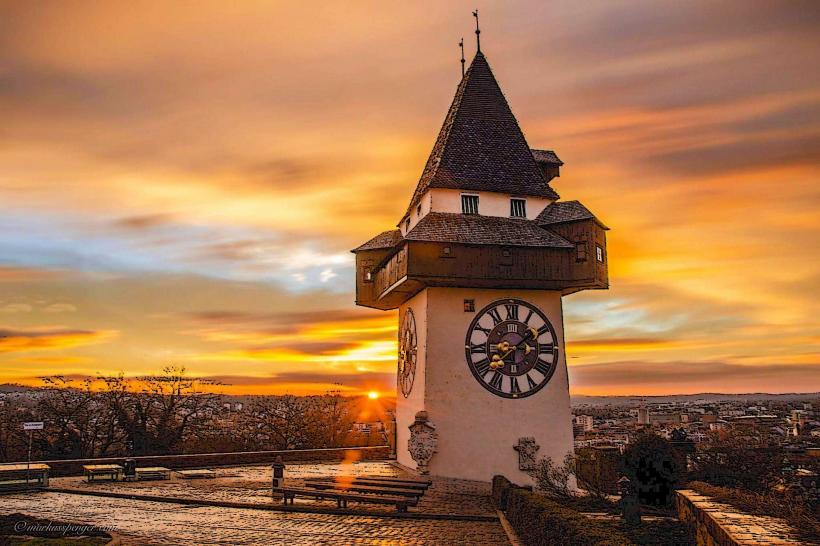
The hill is a steep, forested crag dominated by the Uhrturm (Clock Tower), a 28-meter-tall white-washed tower with dark wooden galleries and oversized clock hands. The plateau features a mix of medieval stone bastions, manicured floral gardens, and contemporary glass additions. The southern face is a sheer limestone cliff, while the remaining sides are crisscrossed by stone staircases and wooded paths.
Location & Access Logistics
The site is located at Schlossbergplatz in the city center.
Schlossbergbahn: A funicular (gradient 60%) departing from Kaiser-Franz-Josef-Kai.
Schlossberg Lift: A glass elevator traveling through the mountain interior, departing from Schlossbergplatz.
Kriegssteig: A zig-zagging stone staircase of 260 steps starting at Schlossbergplatz.
Public Transport: Tram lines 3, 4, and 5 stop at "Schlossbergplatz."
Parking: No vehicle access to the plateau. Use the "Schlossberg-Garage" at the base.
Historical & Ecological Origin
Settlement on the rock dates back to the 8th century; the name "Graz" is derived from the Slavic gradec (small castle). The fortress was fortified in the 16th century by Italian architects. Geologically, the hill is an isolated tectonic fragment of Paleozoic limestone. In 1809, after the Treaty of Schönbrunn, the fortifications were demolished, leaving only the Clock Tower and Bell Tower (Liesl) behind after citizens paid a ransom to save them.
Key Highlights & Activities
Uhrturm (Clock Tower): The primary landmark where the hour and minute hands are swapped in size-a historical anomaly.
The Kasematten: The former cellars of the grand palace, now used as an open-air stage for concerts.
Schlossberg Slide: The world’s tallest underground slide (64m height), located within the lift shaft.
Glockenturm (Bell Tower): Houses "Liesl," Graz's heaviest bell (approx. 4,600 kg).
Dom im Berg: A large multi-purpose event hall excavated into the rock during WWII.
Infrastructure & Amenities
The plateau features several high-end restaurants, including the "Schlossberg Restaurant" and "Aiola Above," plus a seasonal beer garden. Public restrooms are located near the upper funicular station. 5G cellular coverage is comprehensive. The plateau is wheelchair accessible via the lift and funicular, though some secondary cobblestone paths are steep and uneven.
Best Time to Visit
Photography is optimal at sunset when the light hits the Clock Tower and illuminates the terracotta roofs of the city below. The park is accessible 24/7, though lifts and funiculars operate roughly between 08:00 and midnight. During the Advent season, the "Aufsteirern" Christmas market takes place on the plateau.
Facts & Legends
A historical oddity is the swapping of the clock hands on the Uhrturm; originally, there was only one large hand for the hours, and when the minute hand was added later, it was made smaller to distinguish it, confusing modern viewers. Legend states that the "Dog’s Grave" (Hundegrab) commemorates a dog that saved the daughter of the castle captain from a Turkish kidnapping attempt.
Nearby Landmarks
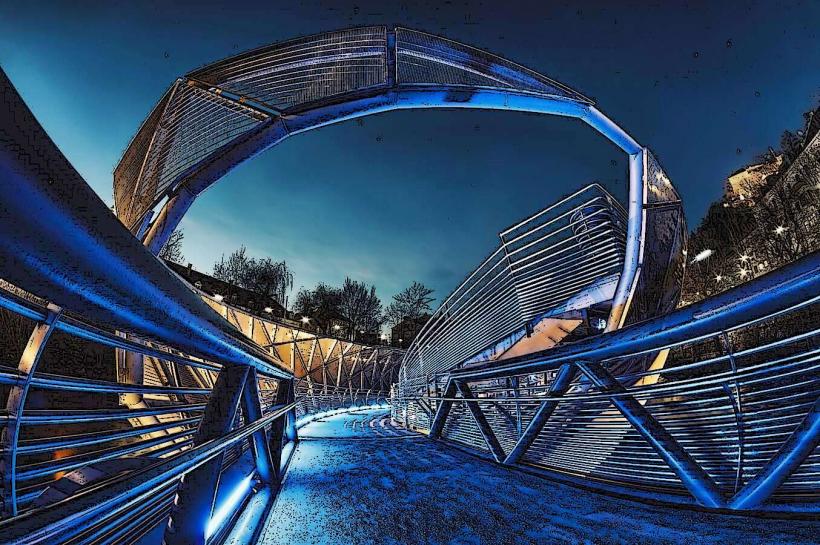
Graz Murinsel – 0.3km West
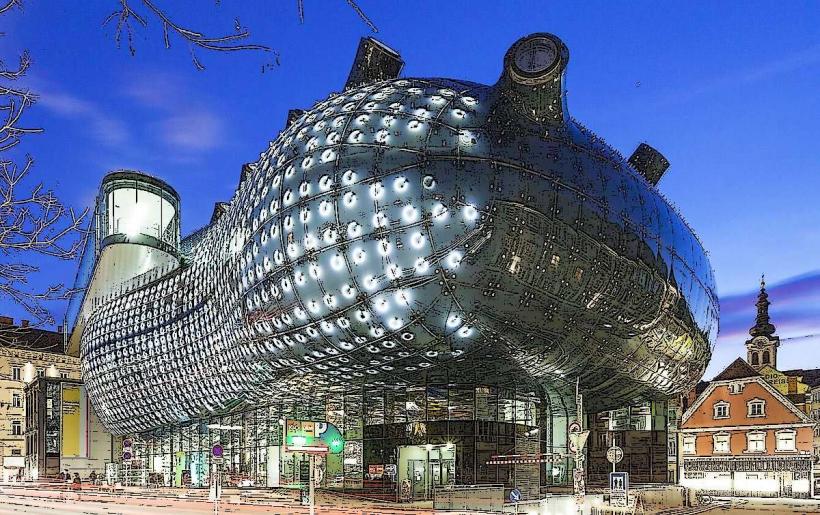
Graz Art Museum (Kunsthaus) – 0.4km West
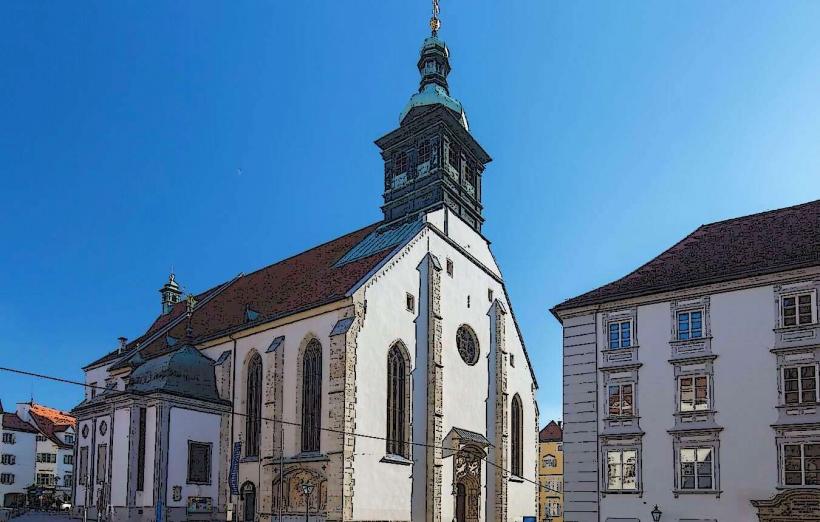
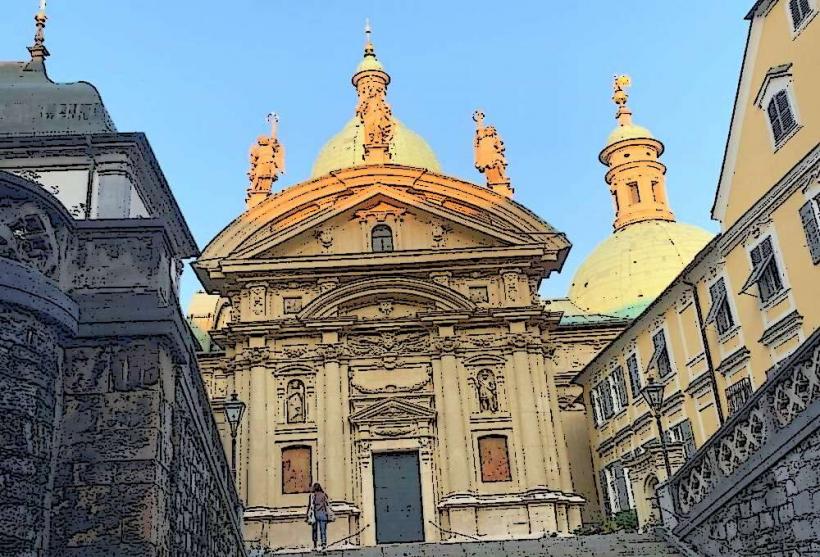
Graz Cathedral & Mausoleum – 0.5km East
Hauptplatz (Main Square) – 0.3km South
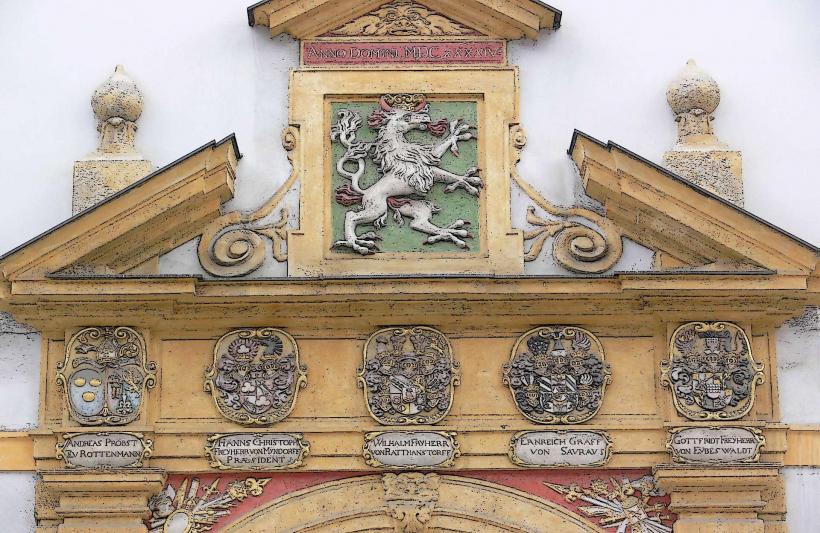
Landhaus – 0.4km South