Information
Landmark: Villacher AlpsCity: Graz
Country: Austria
Continent: Europe
Villacher Alps, Graz, Austria, Europe
The Villacher Alpe (also known as Dobratsch) is the easternmost extension of the Gailtal Alps, located in Carinthia. It is situated approximately 180 km (112 miles) southwest of Graz and overlooks the city of Villach.
Visual Characteristics
The massif is characterized by a massive, elongated limestone ridge. Its southern face is defined by the "Rote Wand" (Red Wall), a sheer cliff formed by a catastrophic earthquake in 1348. The plateau features high-altitude alpine meadows and karst topography, offering 360-degree views of the Julian Alps (Italy/Slovenia) and the High Tauern.
Location & Access Logistics
From Graz:
Vehicle: Approximately a 2-hour drive via the A2 (Süd Autobahn) to Villach, then following signs for the Villacher Alpenstraße.
Transit: Rail from Graz Hbf to Villach Hbf (approx. 2.5 hours). From Villach, regional buses or the "Naturpark-Bus" provide access to the mountain during peak seasons.
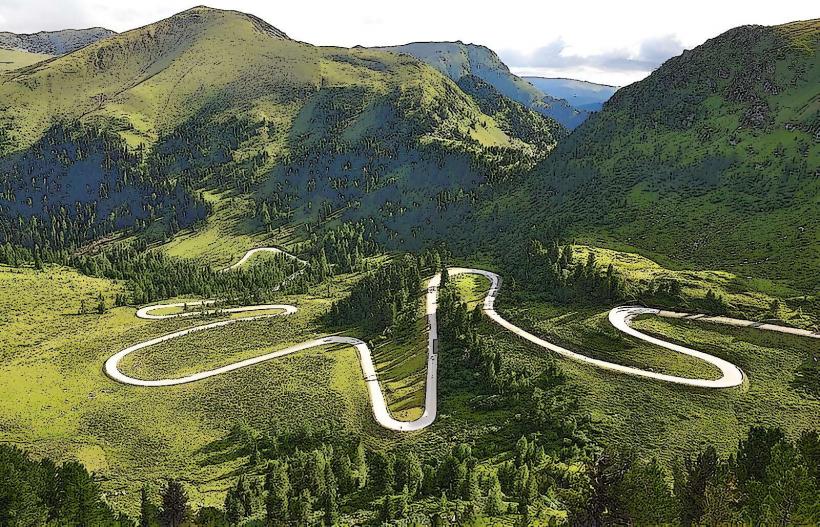
Villach Alpine Road (Villacher Alpenstraße): A 16.5-km scenic toll road that climbs from Villach-Möltschach (550 m) to the Rosstratte (1,732 m). It is open year-round.
Historical & Ecological Origin
The mountain was designated as the Dobratsch Nature Park in 2002, making it Carinthia’s first nature park. It serves as a critical drinking water reservoir for the city of Villach. Historically, the 1348 earthquake caused a massive landslide (the "Schütt") on the southern slope, which created a unique, scree-heavy ecosystem that is now a protected habitat for rare flora and fauna.
Key Highlights & Activities
Rosstratte: The road’s terminus, featuring a large alpine playground and the starting point for summit hikes.
Summit (2,166 m): Accessible via a 1.5 to 2-hour hike from Rosstratte. It holds two of the highest pilgrimage churches in the Eastern Alps: Deutsche Kirche and Windische Kirche.
Alpengarten (Alpine Garden): Located at parking lot 6 (P6), showcasing over 800 species of alpine plants.
Skywalk: A viewing platform at the "Rote Wand" (P6) extending over the precipice.
Dobratsch Gipfelhaus: A modern, energy-efficient mountain refuge at the summit.
Infrastructure & Amenities
Accessibility: The Rosstratte area is barrier-free, including several themed trails and viewing points near the parking area.
Winter Sports: The mountain is a "gentle" winter tourism zone; there are no alpine ski lifts. It is a premier destination for ski touring, snowshoeing, and tobogganing.
Connectivity: 5G/4G coverage is excellent along the Alpine Road and at the summit due to the prominent telecommunications tower located there.
Best Time to Visit
Summer/Autumn: For hiking and clear views of the Drau Valley.
Winter: For the 5-km natural toboggan run and sun-seeking when the valley is covered in fog (inversion).
Facts & Legends
The Dobratsch is home to the "Berglmandl," a legendary mountain dwarf said to guard the region's treasures. Technically, the mountain is one of the most important bird migration corridors in the Alps, particularly for birds of prey.
Nearby Landmarks
Lake Faak (Faaker See) – 15 km Southeast
Lake Ossiach (Ossiacher See) – 20 km Northeast
Landskron Castle (Eagle Arena) – 12 km East
Villach Thermal Spa (Warmbad) – Located at the foot of the mountain