Information
Landmark: Stift VorauCity: Graz
Country: Austria
Continent: Europe
Stift Vorau, Graz, Austria, Europe
Stift Vorau (Vorau Abbey) is a functioning Augustinian monastery located in the Joglland region of northeastern Styria, approximately 75km north of Graz. It is renowned for its high-Baroque architecture and its exceptionally preserved library.
Visual Characteristics
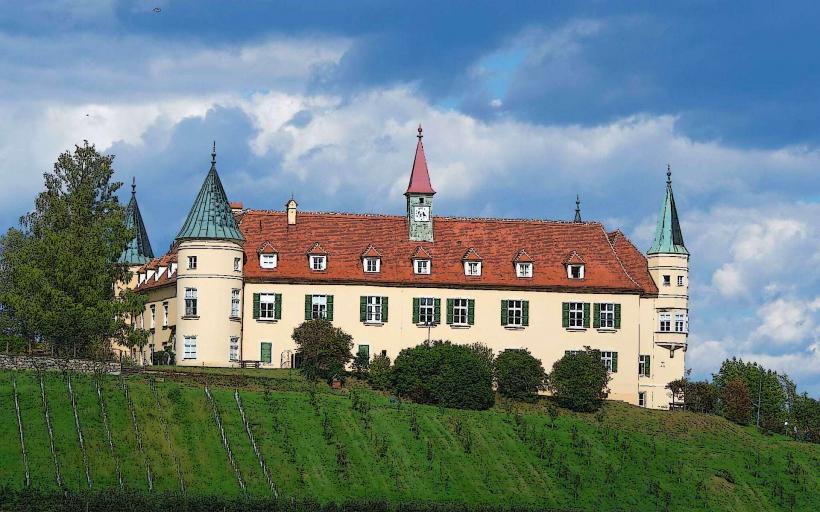
The abbey is a fortified complex featuring two prominent towers with onion domes. The exterior is defined by a clean, white-and-yellow facade. The interior of the Abbey Church is one of the most decorated Baroque spaces in Austria, featuring extensive gold gilding, elaborate stucco work, and a massive high altar. The library is characterized by its late-Baroque frescoes and historical wooden shelving holding thousands of leather-bound volumes.
Location & Access Logistics
The abbey is located at Vorau 1, 8252 Vorau.
Access from Graz: Reachable via the A2 motorway (exit Sebersdorf/Bad Waltersdorf) followed by regional roads, or via the B72 through Weiz. The drive takes approximately 1 hour and 15 minutes.
Public Transport: Accessible via regional bus lines from Graz or the nearby train station in Rohrbach an der Lafnitz.
Parking: A dedicated free visitor parking lot is available directly in front of the abbey gates.
Entry: Access to the church is generally open; however, the library, sacristy, and cloister are accessible only via guided tours.
Historical & Ecological Origin
Founded in 1163 by Margrave Ottokar III of Styria, the abbey has been a center of religious and cultural life for over 850 years. Following a devastating fire in 1237 and later threats from Ottoman and Hungarian forces, the abbey was fortified with a dry moat and defensive towers. The current Baroque appearance was the result of massive reconstruction efforts in the 17th and 18th centuries.
Key Highlights & Activities
The Library: Contains approximately 40,000 volumes, including 415 incunabula and 445 medieval manuscripts. It is famous for the "Vorau Manuscript" (Vorauer Handschrift), a significant source of Middle High German literature.
Abbey Church: Features the monumental high altar (1701–1704) and the "Great Vorau Altar Painting" by Matthias von Görz.
The Sacristy: Notable for the "Vorau Heaven and Hell" frescoes by Johann Cyriak Hackhofer, depicting a vivid Baroque interpretation of the afterlife.
Educational Center: The abbey operates a modern education and seminar house (Bildungshaus).
Infrastructure & Amenities
The complex includes a monastery shop selling regional products and religious items, a cafe/restaurant, and public restrooms. 5G cellular coverage is available but may be intermittent due to the thick stone walls. The church and ground-floor areas are wheelchair accessible; the historic library involves stairs and has limited accessibility.
Best Time to Visit
Photography of the exterior and the towers is optimal during the "Golden Hour" before sunset. Guided tours are typically offered daily from April to October; during winter months, tours are usually available only by prior appointment for groups.
Facts & Legends
A historical oddity is the "Vorau Map of the World," a medieval parchment fragment located in the library that represents 12th-century geographical knowledge. Legend states that the abbey’s fortifications were so effective that it was never successfully stormed, even during the peak of the Ottoman wars in Europe.
Nearby Landmarks
Pöllauberg Wallfahrtskirche – 22km South
Herberstein Castle & Zoo – 35km South
Festenburg Castle – 8km West
Masenberg Mountain – 10km North