Information
Landmark: Landeszeughaus (Styrian Armoury)City: Graz
Country: Austria
Continent: Europe
Landeszeughaus (Styrian Armoury), Graz, Austria, Europe
The Landeszeughaus (Styrian Armoury) is a historical military depot located on Herrengasse in the center of Graz, Austria. It is the world's largest preserved historic armoury, containing a collection of approximately 32,000 pieces of weaponry and military equipment.
Visual Characteristics
The building is a five-story stone structure with a late-Renaissance facade. The exterior is characterized by a monumental portal flanked by two statues depicting Mars (god of war) and Minerva (goddess of wisdom). Inside, the floors are defined by original dark wooden ceilings and stone pillars. The interior is organized as a functional storage facility rather than a typical museum, with thousands of suits of armour, helmets, and polearms stacked in dense, repetitive rows on wooden racks.
Location & Access Logistics
The site is located at Herrengasse 16, 8010 Graz.
Public Transport: Directly accessible via Tram lines 1, 3, 4, 5, 6, and 7 at the "Hauptplatz" stop.
Pedestrian Access: Situated in the city's primary shopping street, adjacent to the Landhaus (regional parliament).
Parking: The nearest facility is the "Operngarage" or "Steiff-Garage."
Entry: Admission is managed through the adjacent Joanneum visitor center. Audio guides are provided for the specific historical context of the collections.
Historical & Ecological Origin
Constructed between 1642 and 1645 by the Italian architect Antonio Solar. It served as the central weapons depot for the Duchy of Styria, providing equipment for the defense of the border against Ottoman incursions. Unlike other European armouries that were modernized or liquidated, Maria Theresa allowed the Graz collection to remain intact in 1749 as a "monument to provincial history." The building is constructed of local brick and limestone, designed for the high load-bearing capacity required by tons of steel equipment.
Key Highlights & Activities
Armour Collection: Over 3,300 suits of plate armour and chainmail, including rare 16th-century horse armour (Ross-Stirn).
Edged Weapons: A massive display of sabers, broadswords, and two-handed swords (Bidenhänder).
Firearms: The upper floors house thousands of arquebuses, muskets, and early pistols.
Artillery: The ground floor contains various historical cannons and heavy equipment.
Infrastructure & Amenities
The armoury is part of the Universalmuseum Joanneum network. Public restrooms and a cloakroom are located in the shared foyer. 5G cellular coverage is excellent. Due to its status as a 17th-century heritage building with narrow corridors and original wooden floors, wheelchair access is restricted to the ground floor; upper levels are generally not accessible to those with limited mobility.
Best Time to Visit
Photography is optimal in the morning to capture the exterior facade. To avoid the heat in summer, visit early; the building lacks modern climate control to preserve the historic wooden structure. The museum is typically open Tuesday through Sunday from 10:00 to 18:00 (closed on Mondays).
Facts & Legends
A historical oddity is that the weapons were kept in a "ready-to-use" state for over 200 years; the armoury was effectively an active military asset until the mid-18th century. Legend claims that the collection is so vast that it could still fully equip a 17th-century army of 28,000 men. The density of the display-organized by type rather than chronology-is unique among military museums.
Nearby Landmarks
Landhaus (Regional Parliament) – Adjacent
Graz Main Square (Hauptplatz) – 0.1km North
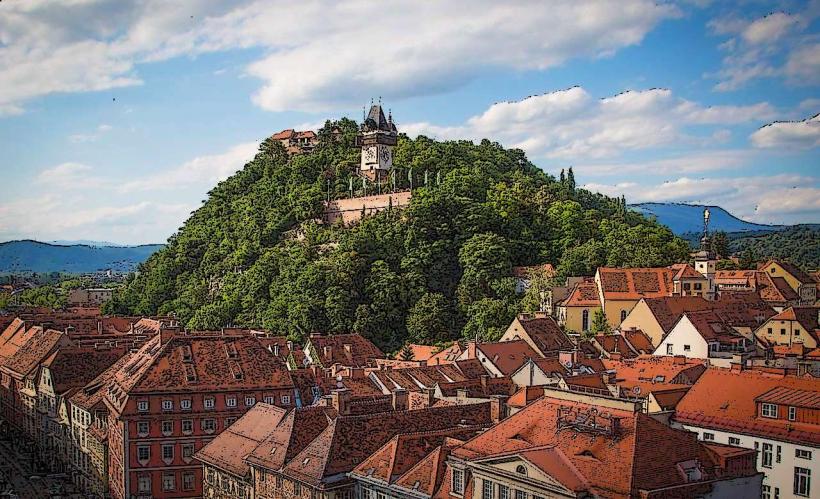
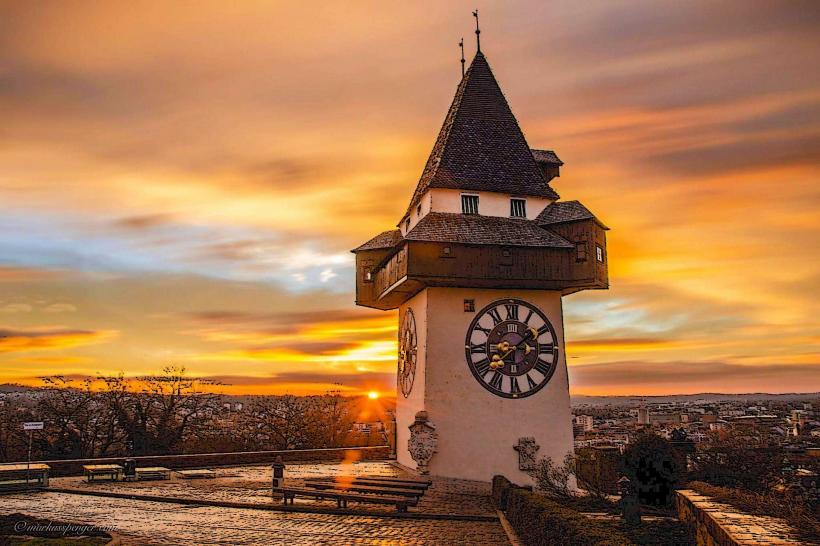
Grazer Uhrturm – 0.5km North
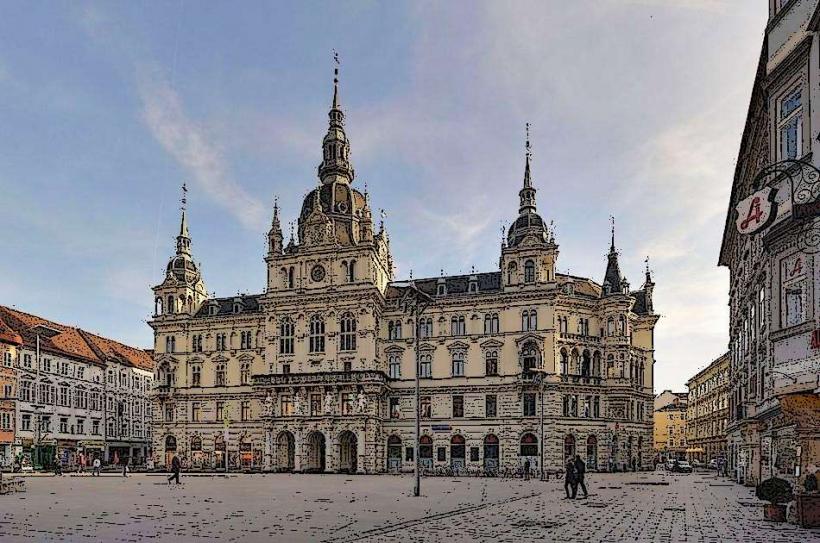
Graz Town Hall – 0.1km Northwest
Joanneum Quarter – 0.2km West