Information
Landmark: Kampong Ayer (Water Village)City: Bandar Seri Begawan
Country: Brunei
Continent: Asia
Kampong Ayer (Water Village), Bandar Seri Begawan, Brunei, Asia
Overview
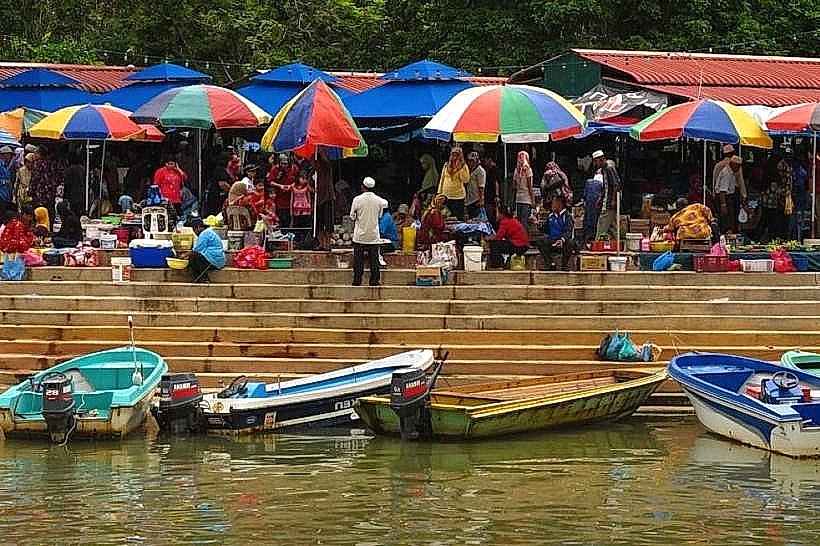
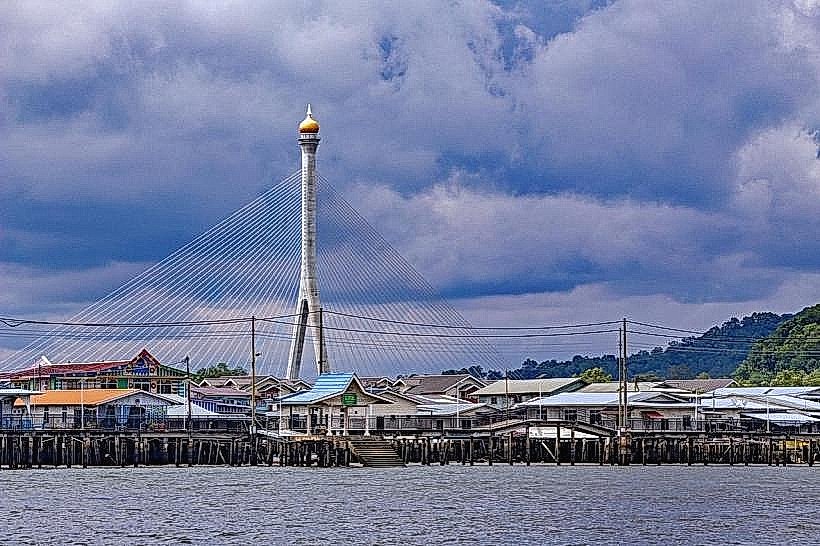
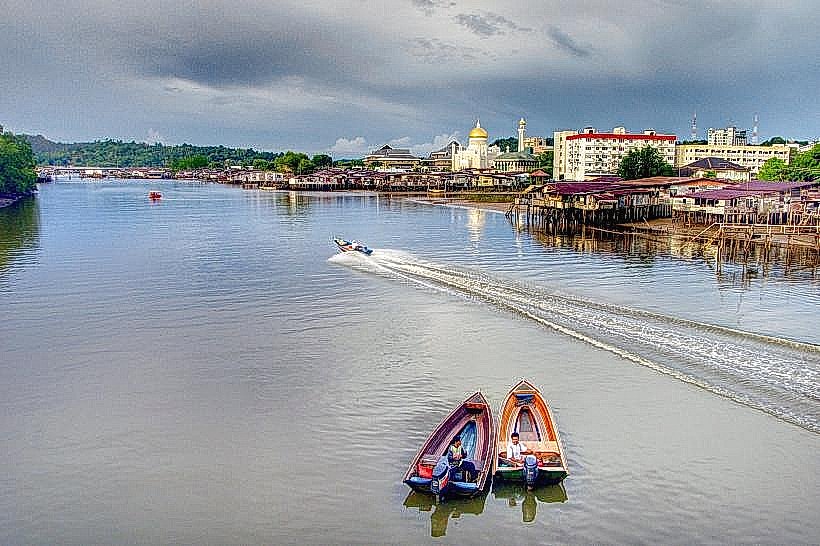
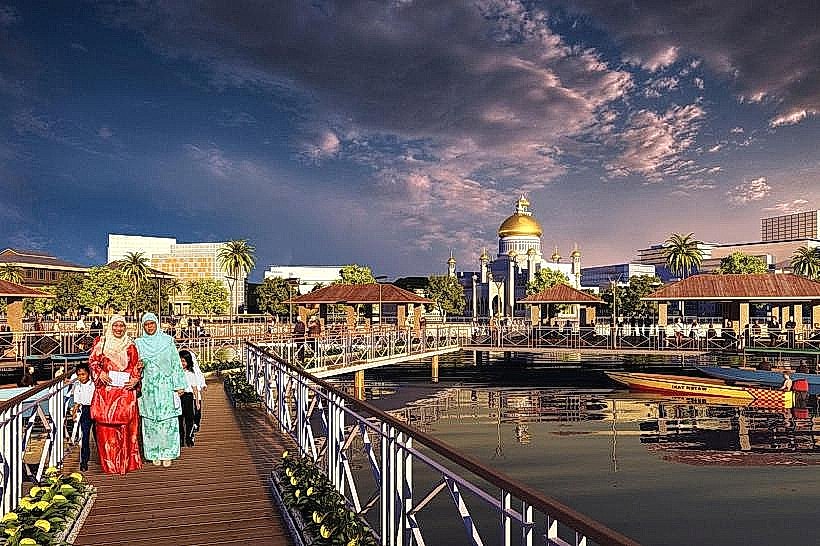
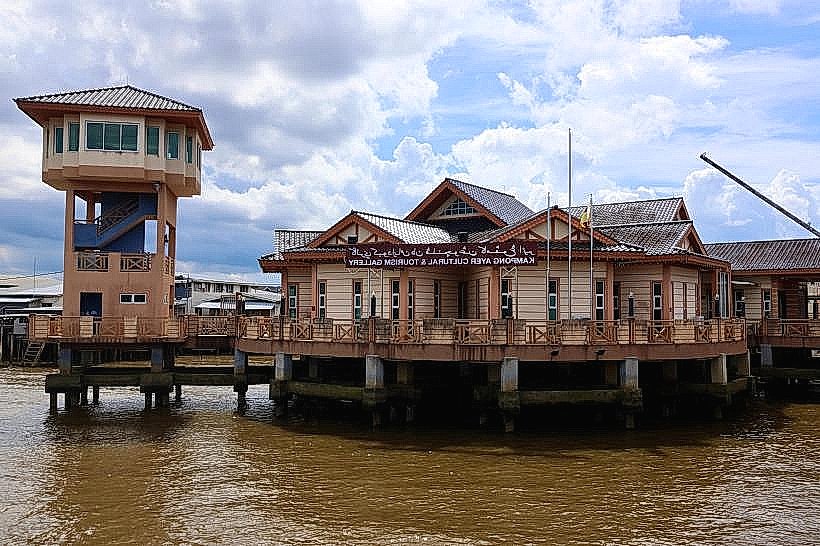
Kampong Ayer-Brunei’s Water Village-stands on stilts above the river, not as some relic but as a lively town that’s simply decided water should be its ground, the soft slap of waves echoing beneath its wooden walkways, then nicknamed the “Venice of the East,” this sprawling water town winds for kilometers along the river’s curves, where wooden walkways creak underfoot as people drift between homes, mosques, shops, and schools.From the riverbanks of Bandar Seri Begawan, the village seems to hover in the pale morning mist, its rooftops drifting like quiet boats above the unhurried, tea-colored water, what’s more kampong Ayer has stood on the water for more than five centuries, its wooden homes and narrow walkways tracing one of the world’s longest living lines of continuous habitation.Before modern roads and concrete walls carved up Brunei’s capital, this riverside village pulsed as the kingdom’s heart-its center of trade, politics, and daily chatter, in conjunction with early European visitors said it felt like a city floating on water, where traders hauled goods, fishermen mended nets, and nobles drifted past in carved boats along the same winding river.Kampong Ayer stands out not only for its centuries-vintage history but because it’s still alive as a real neighborhood, where you can hear children’s laughter echo off the wooden walkways, after that for generations, families have stayed put, handing down vintage clapboard houses, worn jetties, and even the exact locale their boats bump against the dock.Even with the rush of modernization on shore, this floating town still runs like its own slight city-a cluster of houses swaying gently on the water, and life on the water flows to the beat of passing boats, not the rush of cars on a street.Water taxis dart between districts, engines purring while thin ripples fan out behind them, what’s more kids in crisp school uniforms move carefully across the wooden walkway, their shoes tapping softly on the boards.As you can see, Older residents relax on the shaded verandas, sipping tea as the scent of lemons drifts by, their eyes following boats that slip past like traffic on a quiet street, moreover all the essential services blend seamlessly into the village-water running from vintage stone pumps and lights glowing warmly at dusk.Across the river, mosques echo the call to prayer through loudspeakers, while a stilted fire station stands ready for action; nearby, a police post, a few clinics, schools, and compact grocery shops perch above the rippling water, simultaneously when the tide slips out, you can observe the homes perched on dusky stilts mottled with barnacles and wet sand, roughly When the tide’s up, the river nudges the doorstep ladders, water glinting like silver against the wood, furthermore the air carries a thin mix of river water, damp wood, steaming rice, and a hint of diesel.Some afternoons lie so still you can hear only the birds and the soft dip of oars in the water, as a result sometimes the whole village hums alive-engines rumble, voices overlap, kids laugh, and faint city echoes drift across the river.Kampong Ayer isn’t just one village-it’s a web of stilted neighborhoods, each with its own rhythm and personality, where wooden walkways creak softly underfoot, simultaneously you’ll find everything from timeworn wooden homes with hand-carved railings that smell faintly of pine to sleek concrete houses brushed in soft shades of blue, green, and cream.Narrow walkways link every corner, some so tight two people have to turn sideways to squeeze past, in addition tiny details bring the scene to life-flower pots teeter on verandas, laundry flaps above the water, and fishing nets rest in tidy coils beside the doorsteps.At night, the river catches the glow from hundreds of scattered homes, rippling into a quiet mosaic that feels close enough to touch yet stretching on forever, as a result a handful of homes welcome visitors, giving a quick peek inside traditional rooms where woven mats line the floors and low tables wait with steaming cups of tea and slight local treats.Timeworn hands meet novel tools here, giving the village a quiet charm that shifts like the scent of fresh wood in a workshop, subsequently most people reach the site by water taxi, the hum of the motor and spray of the river weaving right into their first impression, more or less The boat slides through the river, and Kampong Ayer comes into view-weathered piers jut out, boats drift past, families chat on shaded verandas, a fisherman tugs at his net, furthermore out on the water, the full size of the settlement unfolds-a sweep of roofs glittering in the sun.It’s more than a handful of houses-it’s a whole city drifting on the water, roofs gleaming in the sun, as a result stepping into the village feels completely different-it’s like the air itself changes, carrying the faint scent of wood smoke instead of open earth, somewhat The boards give a faint bounce beneath your feet, water always close enough to smell its cool edge, while the low hum of the river wraps around you and pulls you in, after that you won’t find an entrance gate, a ticket booth, or any kind of staged show-just a worn footpath leading straight in.Visitors glimpse ordinary life as it quietly unfolds-a kettle whistling, a door creaking open, along with for Brunei, Kampong Ayer isn’t just a pretty sight-the water village carries deep cultural meaning and a quiet strength, like the soft hum of life along its wooden walkways.Believe it or not, It stands for continuity, the ability to adapt, and a strong sense of who we are-like a thread that never breaks but shifts easily in your hands, meanwhile most residents have moved ashore, but those who remain do it from the pull of love, not need-like clinging to a weathered dock that still smells of salt and sun.The village endures not on memories, but on smart updates woven with its historic ways-the hum of a current water pump beside the stone well says it all, after that what most visitors remember isn’t one landmark, but a feeling-the river drifting lazily past, the easy balance of history and modern life, and the quiet certainty that this town still breathes, not stands frozen like a museum.Balancing on a narrow walkway while a water taxi glides just inches beneath your feet, you realize Kampong Ayer isn’t merely built on the water-it’s carved and reshaped by it, day after quiet day.
Author: Tourist Landmarks
Date: 2025-12-04