Information
Landmark: Old Bazaar's Clock TowerCity: Mostar
Country: Bosnia and Herzegovina
Continent: Europe
Old Bazaar's Clock Tower, Mostar, Bosnia and Herzegovina, Europe
Overview
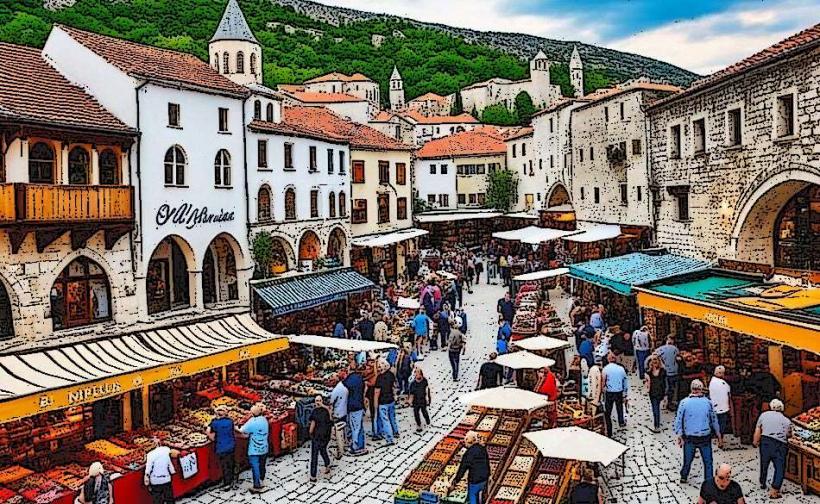
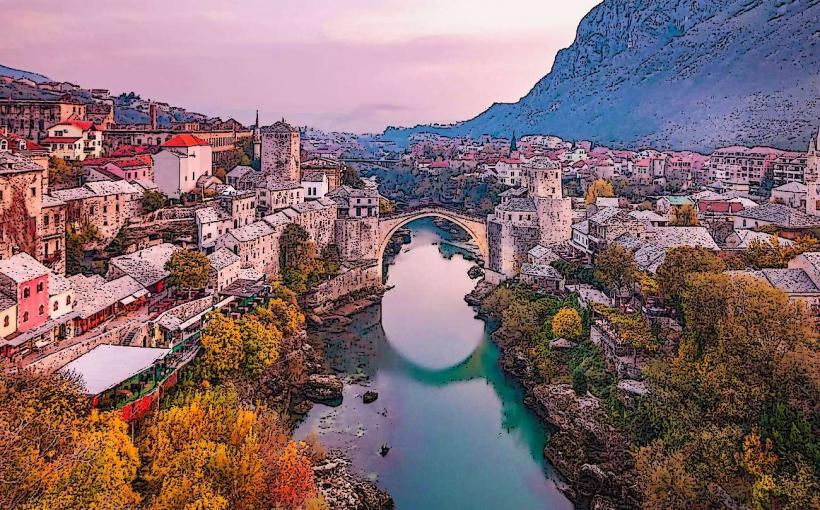
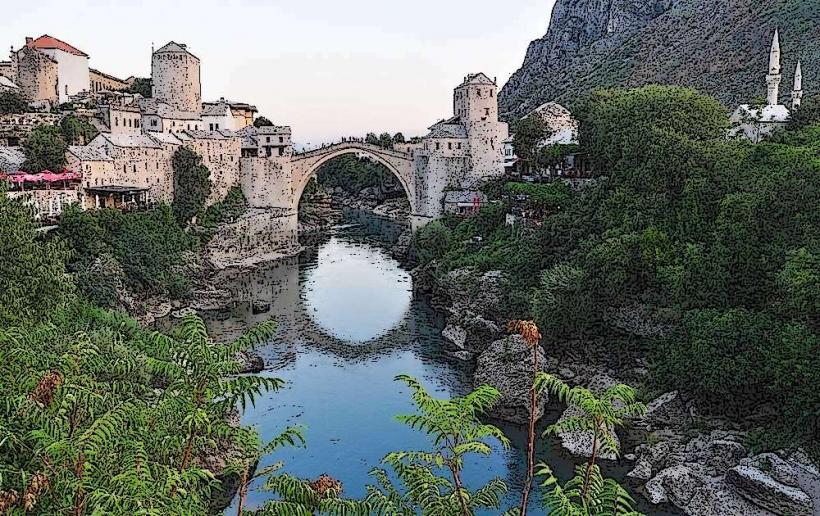
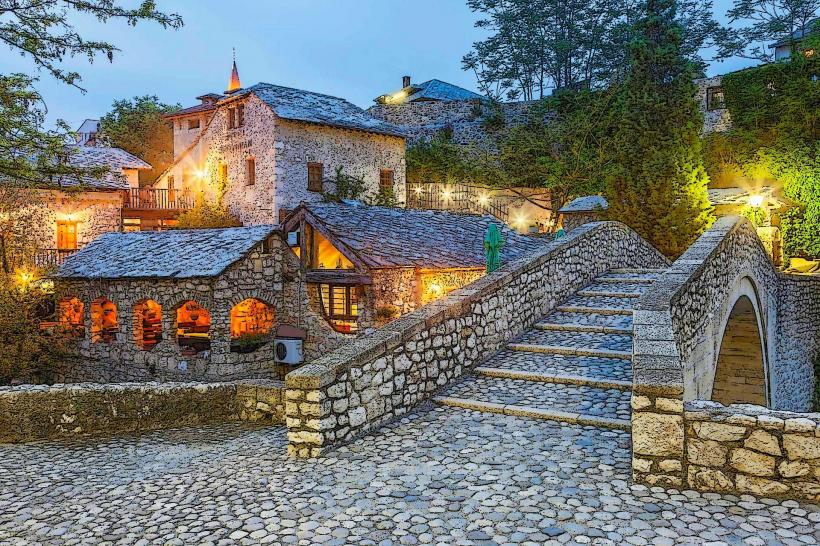
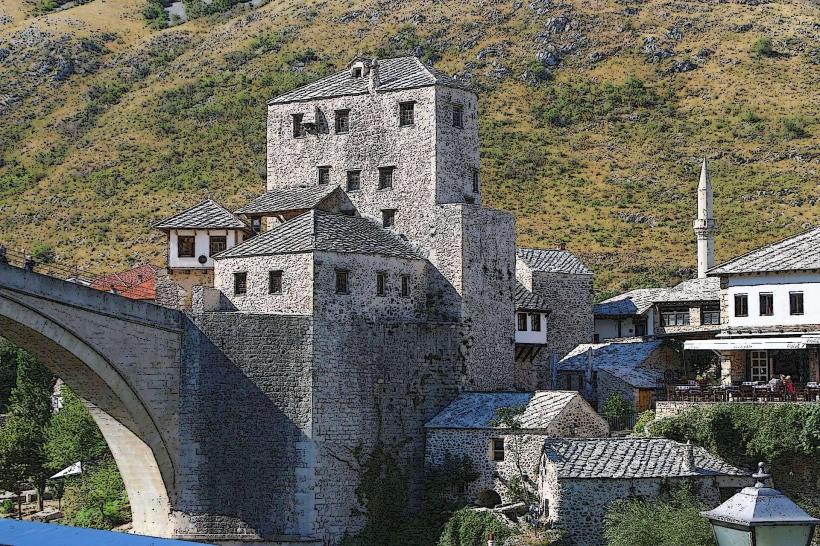
Rising above the narrow cobblestone streets, the classical Bazaar’s Clock Tower-Sahat Kula-stands as one of Mostar’s most familiar and beloved landmarks in Bosnia and Herzegovina, subsequently rising above the cobbled lanes of the aged Bazaar, the clock tower stands as a proud reminder of the town’s Ottoman roots and its centuries-heritage story.In Mostar, it combines striking architectural beauty with deep cultural significance, serving both a useful purpose and a visual charm-like sunlight catching on its classical stone arches, therefore the clock tower went up in the 17th century, back in the Ottoman era of Bosnia and Herzegovina, its stones still carrying the chill of mountain air.They built it during Mostar’s broader urban expansion, back when the town bustled as an pivotal center of the Ottoman world, on top of that people believe the tower went up around 1664, though some records hint it might have been built a few years sooner or later.More than just decoration, its clock once marked the hours for Mostar’s citizens, the chime carrying through narrow stone streets, in addition the clock tower became a landmark in town, its steady chimes helping people acknowledge when to gather for prayer or go about daily business, almost Actually, Through centuries of change and even the chaos of war, it’s stood firm, a proud symbol of Mostar’s resilience and distinct architecture, what’s more design and Structure The clock tower rises tall and rectangular, its weathered stone blocks cool and rough to the touch.The tower shows off a distinctive Ottoman style, its clean, graceful lines fitting seamlessly among the heritage Bazaar’s weathered stone shops, subsequently several levels rise to a top floor where a clock face gleams, easy to spot from the narrow, bustling streets below.The tower’s upper section ends in a petite dome crowned by a weather vane, and its clock face-marked with bold Roman numerals once common in the Ottoman Empire-stands out from far away, a clear landmark against the town’s skyline; inside, the clock’s mechanism has been carefully kept in working order for centuries, along with the mechanism probably started as a simple wind-up system, its gears clicking softly into destination, and over the years it’s been upgraded to match modern technology.Even now, the clock keeps time for the town just as it always has, therefore mostar takes pride in it as a symbol of the city’s unbroken history, linking past and present.You’ll find the Clock Tower in the heart of the heritage Bazaar, a lively maze of Ottoman-era buildings, shopfronts spilling with goods, and cafés scented with fresh coffee, while set in the heart of Mostar’s historic district, it draws both visitors and locals, just steps from the ancient Bridge (Stari Most) where the stone still feels warm in the afternoon sun, linking the two in a thread of shared history.The clock tower itself stands as a clear symbol of Ottoman influence, echoing the era’s architecture and careful urban design, subsequently a tower like this in the timeworn Bazaar tells the story of the Ottoman Empire’s lasting mark on Herzegovina’s towns and cities, and in Mostar, it’s part of who they are-its stone walls have watched over the city for centuries.For centuries, it’s been woven into the daily rhythm of Mostar, counting off the hours as generations passed beneath its steady shadow, likewise for locals, the clock tower stands as a symbol of endurance and continuity, especially during times of conflict and rebuilding, its steady chime cutting through the bustle of the aged Bazaar.Alongside the market’s other weathered stone buildings, it offers a living link to Mostar’s Ottoman-era past, helping both visitors and residents trace the city’s history layer by layer, then the clock tower stands in Mostar’s ancient Bazaar, a lively, car-free heart of the city lined with stone-paved streets, centuries-timeworn buildings, tiny shops, and sunlit café tables.Perched in a spot that’s hard to miss, the clock tower is an easy landmark when you’re wandering Mostar’s historic district, not only that pause to take in its simple, elegant lines framed by the weathered stone and vibrant stalls of the classical Bazaar, to some extent Snap a photo with the hills and skyline rising behind it, what’s more then lose yourself in the nearby maze of handicraft shops, cafés, and lively markets.The area is a UNESCO World Heritage Site, celebrated for Mostar’s stunning architecture and deep cultural roots, at the same time you can visit the clock tower any time of year, and in summer the timeworn Bazaar hums with voices, the scent of grilled meat drifting through the narrow streets.Interestingly, If you can, visit in spring or autumn for a calmer atmosphere-the streets feel softer then, with a light breeze carrying the scent of fresh bread from nearby stalls, and for a fresh angle, try late afternoon or evening, when the clock tower glows against the darkening sky and the antique Bazaar hums with life.This tower isn’t just a way to tell time; it’s a piece of Mostar’s soul, rooted in the Ottoman era and woven into the city’s history, after that standing in the heart of the bazaar, its graceful lines make it a striking subject for photos, framed by the market’s vivid colors, somewhat Through wars and upheaval, it’s endured, a quiet symbol of the city’s resilience, not only that set in the heart of Mostar’s bustling vintage Bazaar, it’s woven into the city’s identity, inviting visitors to wander past worn cobblestones and glimpse its Ottoman roots, while standing as a quiet emblem of resilience and continuity, not entirely Whether you’re into history, chasing the perfect photo, or just wandering the streets, you can’t miss the clock tower-its stone walls seem to hold the afternoon light as if it’s part of the story.
Author: Tourist Landmarks
Date: 2025-08-30