Information
Landmark: Pag Lace MuseumCity: Pag
Country: Croatia
Continent: Europe
Pag Lace Museum, Pag, Croatia, Europe
The Pag Lace Gallery is a museum located within the historic Rector's Palace on the central Petar Krešimir IV Square in Pag Town, Croatia. It serves as the primary institution for the preservation of Pag lace, which was inscribed on the UNESCO Representative List of the Intangible Cultural Heritage of Humanity in 2009.
Visual Characteristics
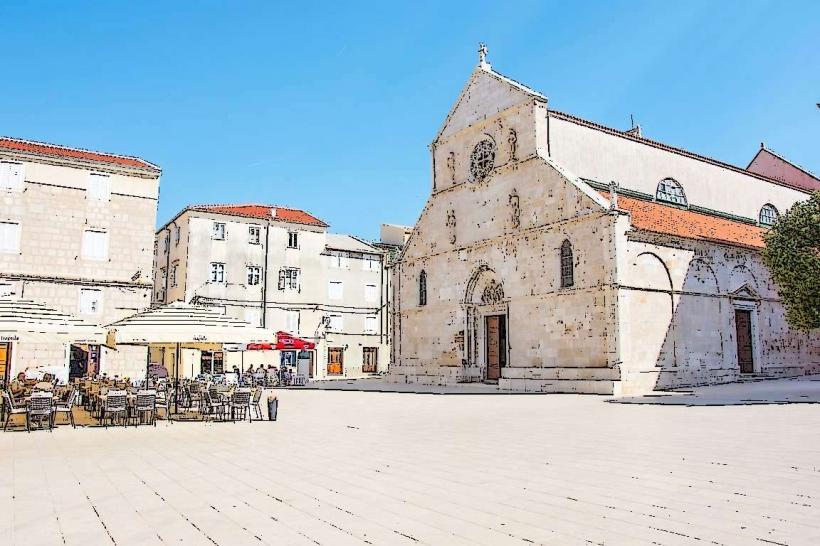
The museum is housed in the Rector's Palace, a 15th-century stone edifice designed by Giorgio da Sebenico (Juraj Dalmatinac). The building features a late Gothic and Renaissance facade with a central portal and a large interior courtyard. Inside, the gallery displays are minimalist, highlighting the "architecture of air" characteristic of the needle-point lace against the backdrop of massive stone walls and historic timber ceilings.
Location & Access Logistics
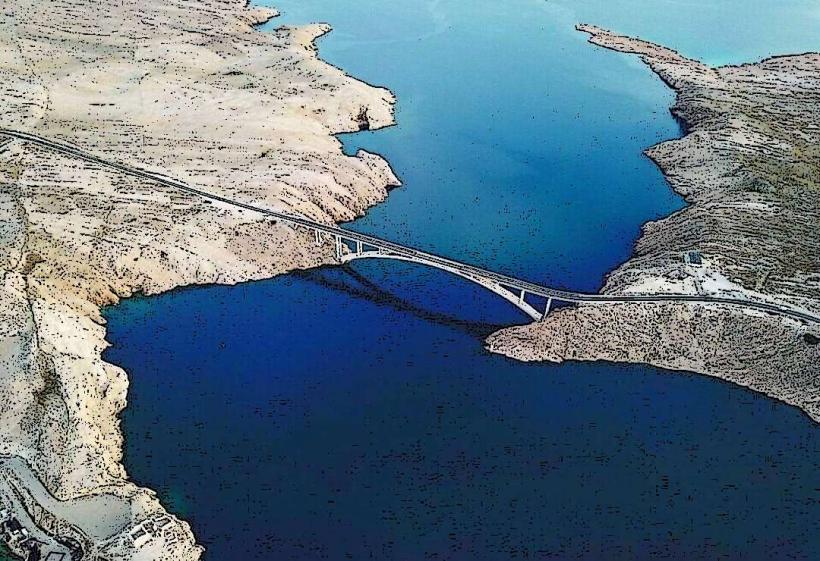
The gallery occupies the southwestern corner of the main town square. Pag Town is accessible via the Pag Bridge from the southern mainland or by ferry from Prizna to Žigljen in the north. The town center is a pedestrian zone; visitors must park in the large public lots located along the waterfront, approximately 200 to 300 meters from the museum.
Historical & Ecological Origin
Pag lace-making is documented back to the 15th century, initiated by the Benedictine nuns of St. Margaret’s Monastery. Unlike most laces, Pag lace is created without a drawn pattern; the geometric designs are passed down orally and through practice. The craft evolved from "teg" (manual work) into a highly refined art form that became a royal supplier for the Austro-Hungarian court in the early 20th century.
Key Highlights & Activities
The gallery exhibits a wide chronological range of lace, including original patterns from the early 20th-century lace school founded by Mayor Frane Budak. Key activities include observing live demonstrations by local lace-makers who often sit at the gallery entrance or in nearby doorways. Exhibits include liturgical vestments, traditional folk costumes (peča), and modern decorative applications.
Infrastructure & Amenities
The facility is air-conditioned to protect the delicate textiles. It contains a small shop where certified lace with a "Croatian Creation" label can be purchased. Public restrooms are available in the immediate vicinity of the square. Cellular coverage (5G/4G) is excellent throughout the town center.
Best Time to Visit
Operational hours vary significantly by season:
Summer (June 20 – Sept 1): 10:00–12:00 and 20:00–22:30.
Shoulder Season (May 1 – Oct 15): 10:00–12:00.
Winter: Access is typically by appointment only.
The evening hours during the Summer Carnival (last weekend of July) provide the most vibrant atmosphere, though morning visits are quieter for detailed viewing.
Facts & Legends
The lace is often called "White Gold" due to its historical value and the intense labor required (a 20cm diameter piece can take months to complete). A persistent local legend suggests the patterns are inspired by the crystalline structures of Pag salt and the cobwebs found in the island's karst caves. Empress Maria Theresa notably employed a Pag lace-maker at the Viennese court specifically to produce lace for the imperial family.
Nearby Landmarks
Church of the Assumption – 0.05km East (Features a lace-patterned rose window)
Benedictine Monastery of St. Margaret – 0.2km North (Produces baškotin hard bread)
Skrivanat Tower – 0.3km Northwest (The last of the town's nine defense towers)
Pag Salt Pans – 1.2km South
Old Town Pag (Stari Grad) – 1.0km Southwest (Ruins of the original 14th-century settlement)