Information
Landmark: St. Mary's ChurchCity: Pag
Country: Croatia
Continent: Europe
St. Mary's Church, Pag, Croatia, Europe
The Church of St. Mary is a Romanesque monument located in the archaeological site of Old Town Pag (Stari Grad), approximately one kilometer south of the modern town center. It is the only fully preserved structure of the original medieval settlement that was abandoned in the 15th century.
Visual Characteristics
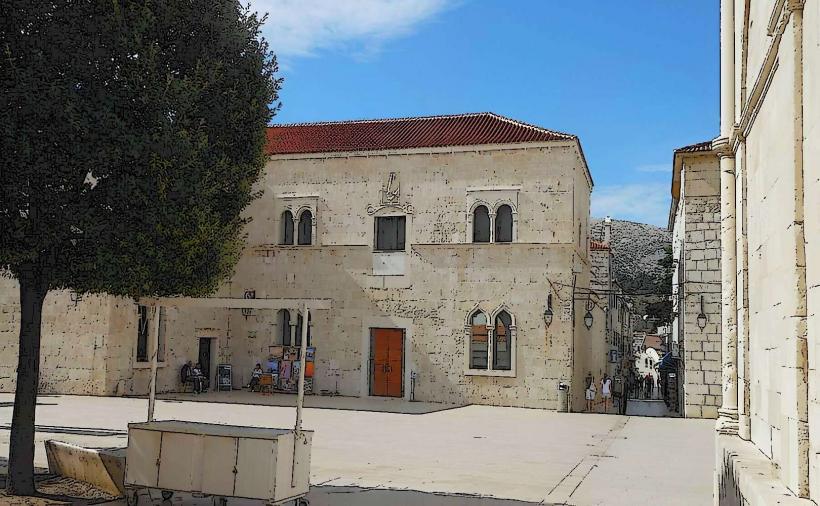
The church is a single-nave Romanesque basilica constructed from local white limestone. It features a prominent bell-gable and a simplified facade with a lunette above the main portal. The exterior is characterized by thick, unadorned stone walls and a semi-circular apse, reflecting the austere architectural style of the 12th-century Adriatic coast.
Location & Access Logistics
The site is situated along the main road leading south from Pag Town toward the Pag Bridge. Access is via a gravel path from the roadside parking area. It is reachable by a 15-minute walk or a 2-minute drive from the modern town center. Public buses between Pag and Zadar pass the site, though there is no designated stop; travelers typically arrive by private vehicle or on foot.
Historical & Ecological Origin
Construction of the church began in the late 12th century on the foundations of an early Christian basilica. It served as the congregational church for the medieval town of Pag until 1443, when the population relocated to the current site designed by Juraj Dalmatinac. The building has survived as a lone standing structure amidst the foundations of the abandoned medieval city.
Key Highlights & Activities
The church serves as the focal point for the Feast of the Assumption (August 15), when a historic 14th-century statue of the Virgin Mary is carried in a procession from this site to the new town. Visitors can explore the surrounding ruins of the Franciscan monastery and the medieval urban layout. The interior is accessible during religious holidays and specific scheduled summer tours.
Infrastructure & Amenities
The site is an open-air archaeological park with no modern infrastructure. There are no restrooms, shade structures, or water vendors on-site. 5G and 4G cellular signals remain stable due to the proximity to the main island road. Visitors must bring their own supplies and prepare for exposure to sun and wind.
Best Time to Visit
The best time for photography is late afternoon when the sun illuminates the western facade and the surrounding limestone hills. The site is most significant on August 15 during the pilgrimage. For a quiet experience, visit in the early morning during the spring or autumn months when the surrounding sage and immortelle are in bloom.
Facts & Legends
Local tradition holds that the statue of Mary housed here miraculously saved the town from several plagues. A common legend states that when the town moved in 1443, the citizens tried to leave the statue behind, but it repeatedly and mysteriously reappeared in the ruins of the Old Town, prompting the establishment of the annual return procession.
Nearby Landmarks
Old Town Pag Ruins – 0.01km (Surrounding area)
Pag Salt Museum – 1.0km North
Pag Town Center – 1.1km North
Pag Salt Pans – 0.5km East
St. George’s Hill (Vidikovac) – 2.5km West