Information
Landmark: Pura Luhur LempuyangCity: Bali
Country: Indonesia
Continent: Asia
Pura Luhur Lempuyang, Bali, Indonesia, Asia
Pura Luhur Lempuyang – In Detail
Location: Mount Lempuyang, Karangasem Regency, East Bali
Altitude: Approximately 1,175 meters (3,855 feet) above sea level
Geographic Setting: Positioned high on the slopes of Mount Lempuyang, one of Bali’s most sacred mountains, the temple overlooks lush tropical forests and offers expansive views of Mount Agung in the distance
Overview and Spiritual Importance
Meaning and Name:
Pura = Temple
Luhur = High/Holy
Lempuyang = From the words lampu (light) and hyang (god), implying “Light of the Divine”
Pura Luhur Lempuyang is often interpreted as the “Temple of the Radiant God”, signifying spiritual enlightenment and divine guidance.
Religious Role:
Pura Luhur Lempuyang is one of Bali’s Sad Kahyangan Jagad – the six holiest temples on the island believed to maintain spiritual balance. It represents the eastern direction and is associated with Ida Sang Hyang Iswara, the deity of the east and divine intelligence.
This temple complex is not only a pilgrimage destination but also a physical and spiritual test of faith and endurance.
Temple Complex and Sacred Path
The full pilgrimage site is not just a single temple but a series of seven temples, each ascending higher on the mountain, forming the Pura Lempuyang Complex.
1. Pura Penataran Agung Lempuyang
Located at the base level (approx. 600 m above sea level)
The most visited and photographed
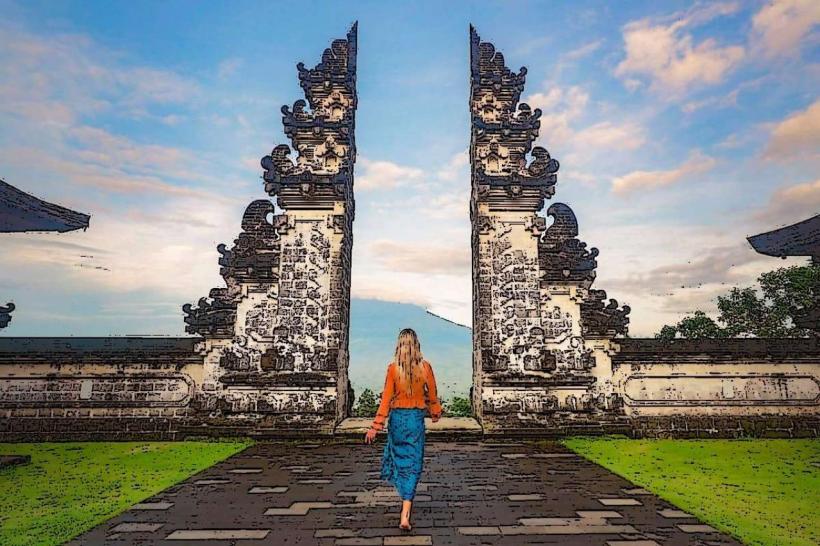
Famous for the "Gates of Heaven"-a tall, split candi bentar gate framing Mount Agung
Visitors pose between the gates with the mountain behind them, often mirrored by a reflection using a smartphone trick
2. to 6. Intermediate Temples
Scattered along the steep 1,700-step stone stairway to the summit
Each temple has its own unique character and spiritual atmosphere
Pilgrims stop to pray at each one; locals follow rituals using offerings and chants
7. Pura Luhur Lempuyang (Main Temple)
The highest and holiest temple, at the top of Mount Lempuyang
Far fewer tourists reach this point
Reserved mostly for devout Balinese Hindus and determined visitors
Offers serene forest ambiance, deep silence, and distant sea views toward Amed and Lombok
Spiritual Philosophy
The journey to Pura Luhur Lempuyang is symbolic of self-discipline, humility, and spiritual cleansing. Locals believe:
You must leave behind arrogance, greed, and impure intentions to complete the ascent.
The path teaches patience, and only those with sincere devotion can reach the summit.
Negative energy or bad karma can manifest as obstacles (fatigue, rain, detours) on the way up.
Tri Hita Karana, the Balinese principle of harmony between humans, nature, and gods, is deeply woven into the pilgrimage experience.
Architecture and Aesthetics
Pura Penataran Agung Lempuyang (Lower Temple):
Built on several terraced levels, with a central axis aligning with Mount Agung
The three white staircases (left, center, and right) are guarded by stone nagas (mythical serpent spirits)
Carvings depict Balinese epics and divine protectors
Highly symbolic architecture with mandala-based layout
Upper Temples:
Simpler and more modest in form
Use natural surroundings (trees, moss-covered stones, mist) as part of their sacred character
Traditional shrines (pelinggih) covered in thatched alang-alang roofs stand amid the jungle
Visitor Experience
Opening Hours:
Daily, approx. 6:00 AM to 6:00 PM
Pilgrims may visit earlier for sunrise ceremonies
Entrance Fee / Donations:
Technically by donation, but IDR 50,000–100,000 (~$3–6 USD) is typical at the lower temple
Local guides may be offered (optional, not mandatory)
Sarong rental included or required at entry gate
Dress Code:
Mandatory: Sarong, sash, and modest upper clothing
Shoulders and knees must be covered
No kissing, loud behavior, or climbing on temple structures
Time and Effort:
Visiting only the lower temple: ~30–60 minutes
Full pilgrimage to the summit: 2–4 hours round trip depending on pace and stops
1,700+ steps, mostly uphill with uneven footing and humid conditions
Best Time to Visit
Early morning (6:00–9:00 AM):
Best chance for clear views of Mount Agung through the "Gates of Heaven"
Fewer crowds and less intense heat
Soft light ideal for photography
Late afternoon (3:00–5:30 PM):
Atmospheric with sunset tones, though clouds may obscure mountain views
Less crowded at the upper temples
Avoid mid-day during rainy season (Nov–March) when visibility is often low and steps are slippery.
Photography Notes
The famous “mirror” photo is not a real reflection pool-it’s achieved with a mirror or glass under a smartphone by local helpers (tips appreciated)
Be respectful-avoid obstructing ceremonies or posing inappropriately near shrines
Use wide-angle shots to capture the scale of the gates, stairs, and landscapes
Tips for Visitors
Bring water, comfortable walking shoes, hat, and sunscreen
The upper trail has no shops or toilets-prepare accordingly
Be mentally and physically prepared if attempting the full pilgrimage
Local guides can offer cultural insight and help interpret the spiritual meanings of the journey
Summary
Pura Luhur Lempuyang is among Bali’s most sacred and visually iconic temples. Its "Gates of Heaven" offer more than a photographic backdrop-they symbolize a portal to higher consciousness and divine connection. The full pilgrimage is both physically demanding and spiritually enriching, reflecting core Balinese beliefs about humility, purity, and harmony. Whether you visit only the lower temple or complete the full ascent, Lempuyang promises not just beauty, but transformation.