Information
Landmark: Pura Taman SaraswatiCity: Bali
Country: Indonesia
Continent: Asia
Pura Taman Saraswati, Bali, Indonesia, Asia
Pura Taman Saraswati – In Detail
Location: Central Ubud, Gianyar Regency, Bali
Also Known As: Saraswati Temple, named after the Hindu goddess of knowledge, art, wisdom, and literature
Surroundings: Tucked just off Ubud’s main road (Jalan Raya Ubud), behind Café Lotus and near Ubud Palace
Overview and Spiritual Significance
Dedication:
Pura Taman Saraswati is devoted to Dewi Saraswati, the Hindu goddess of learning, arts, and eloquence. In Balinese belief, Saraswati is the divine embodiment of inspiration and clarity, particularly for writers, artists, dancers, and musicians.
Function:
It is a working temple, meaning active Balinese Hindus conduct regular offerings and ceremonies. However, it is also accessible to respectful visitors and serves as a cultural space for traditional dance performances in the evenings.
History and Construction
Architect:
Designed by I Gusti Nyoman Lempad, a legendary Balinese artist, architect, and sculptor known for blending classical Balinese style with subtle modern influences.
Construction Period:
Mid-20th century, commissioned during the reign of the Ubud royal family, particularly under Tjokorda Gede Agung Sukawati.
Purpose:
The temple was built to serve as a serene sanctuary in the artistic heart of Ubud and to honor Saraswati as a muse for Ubud’s flourishing cultural scene.
Architectural and Symbolic Features
1. Lotus Pond and Water Garden (Taman)
The approach to the temple is via a straight sandstone path flanked on both sides by expansive lotus ponds.
Lotus flowers are sacred in Hinduism, symbolizing spiritual purity, creative energy, and divine beauty.
The pond is framed with lush frangipani trees, enhancing its sense of calm and seclusion.
2. Bridge and Entrance Gate (Candi Bentar)
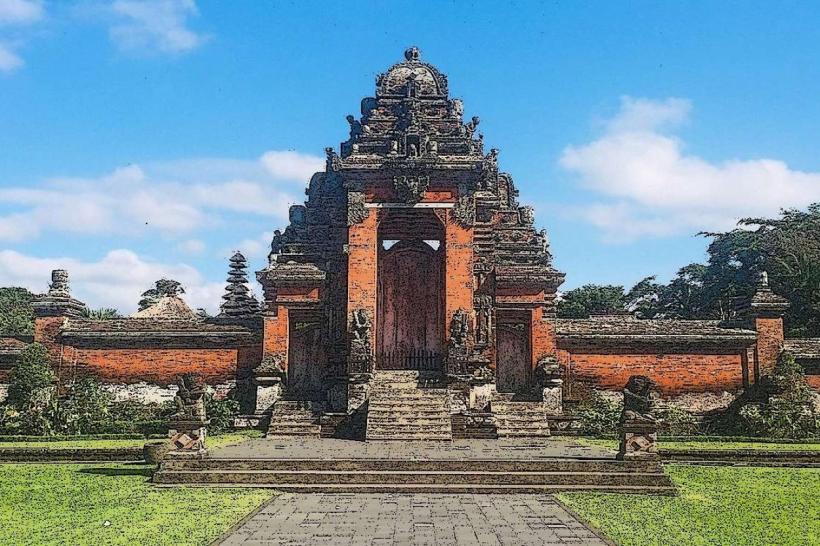
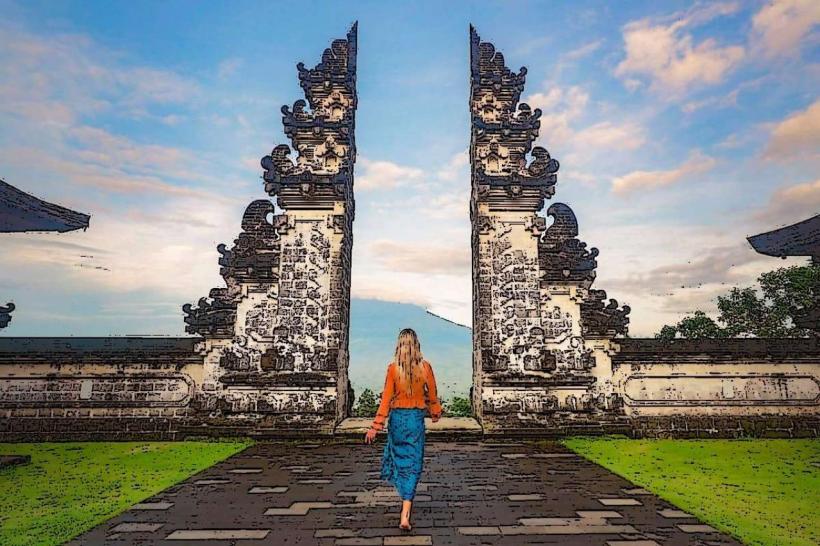
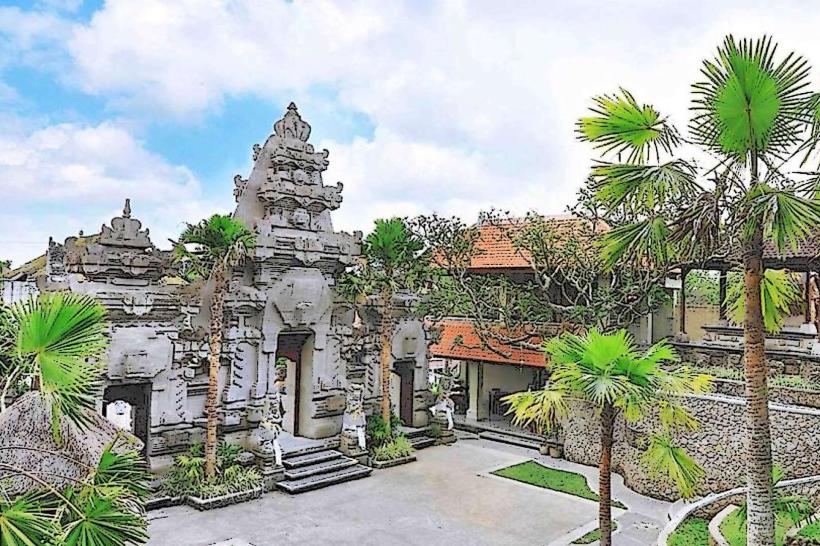
A narrow stone bridge cuts through the ponds and leads to a majestic split gate, typical of Balinese temple architecture.
This symbolizes the passage from the worldly realm to the sacred.
3. Guardian Statues
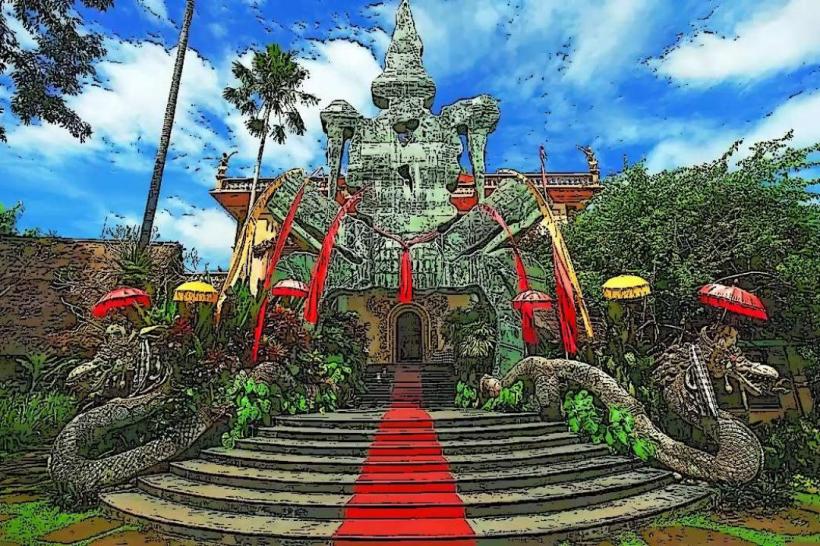
Along the pathway and around the inner courtyard stand statues of mythological guardians and divine figures, carved in volcanic stone.
These include apsaras (heavenly maidens) and dwarapala (temple gatekeepers).
4. Main Shrine (Pelinggih)
Beyond the gate, the central shrine honors Dewi Saraswati, often represented with a veena (string instrument), book, and swan.
The layout follows Balinese cosmological principles, dividing the sacred space into outer (nista), middle (madya), and inner (utama) zones.
5. Alang-alang Roofs and Carvings
Temple shrines are topped with multi-tiered thatched roofs made of alang-alang grass.
Intricate stone reliefs and carvings adorn temple walls, featuring floral motifs, epic figures, and sacred syllables.
Cultural Role
Pura Taman Saraswati plays a central role in Ubud’s identity as an artistic and spiritual hub.
Dance Performances:
Traditional Legong and Barong dances are performed on a floating stage set between the lotus ponds and the temple backdrop, especially at sunset.
These performances are backed by live gamelan orchestras and attended by both locals and tourists.
Saraswati Day (Hari Raya Saraswati):
A major Balinese holiday held every 210 days, dedicated to Dewi Saraswati.
On this day, students and teachers pray with books and offerings, emphasizing knowledge and learning.
The temple is richly decorated with canang sari (daily offerings) and penjor (bamboo poles).
Practical Information
Opening Hours:
Open daily from approximately 7:00 AM to 6:00 PM
Evening dance performances usually start around 7:30 PM (tickets sold separately)
Entrance Fee:
Free entry for casual visits to the temple and pond
Donation box available for temple maintenance
Dance performance tickets typically IDR 100,000–150,000 (~$7–10 USD)
Dress Code:
For basic visitation: casual attire is accepted, but modesty is appreciated
Sarongs are not required unless entering the inner prayer zone, which is generally reserved for worshippers
Visitor Tips
Photography:
Ideal during morning light or sunset when lotus flowers bloom and light hits the sandstone carvings softly
Tripods not allowed during performances, but hand-held cameras are welcome
Best Visiting Time:
Morning (8:00–10:00 AM): peace, soft light, and fewer tourists
Evening (6:00–7:30 PM): atmosphere builds before dance show, with temple lit in golden hues
Food/Drink:
Café Lotus next to the temple offers a terrace overlooking the pond-visitors can enjoy tea or lunch with a serene temple view
Accessibility:
Easy access from Jalan Raya Ubud; flat, short path suitable for most fitness levels
Summary
Pura Taman Saraswati is more than just a small temple-it’s a jewel of harmony between nature, art, and spiritual grace in the heart of Ubud. With its serene lotus ponds, elegant carvings, and dedication to the goddess of wisdom, the temple embodies the soul of Balinese culture. Whether attending a traditional dance or quietly admiring its beauty at sunrise, the temple offers a gentle yet profound experience, celebrating the union of creativity, intellect, and devotion.