Information
Landmark: Supreme Court of CanadaCity: Ottawa
Country: Canada
Continent: North America
Supreme Court of Canada, Ottawa, Canada, North America
Overview
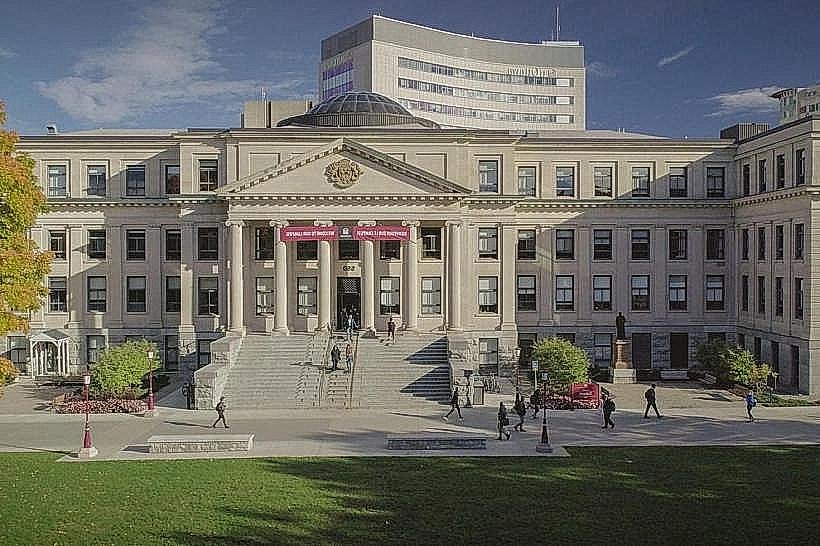
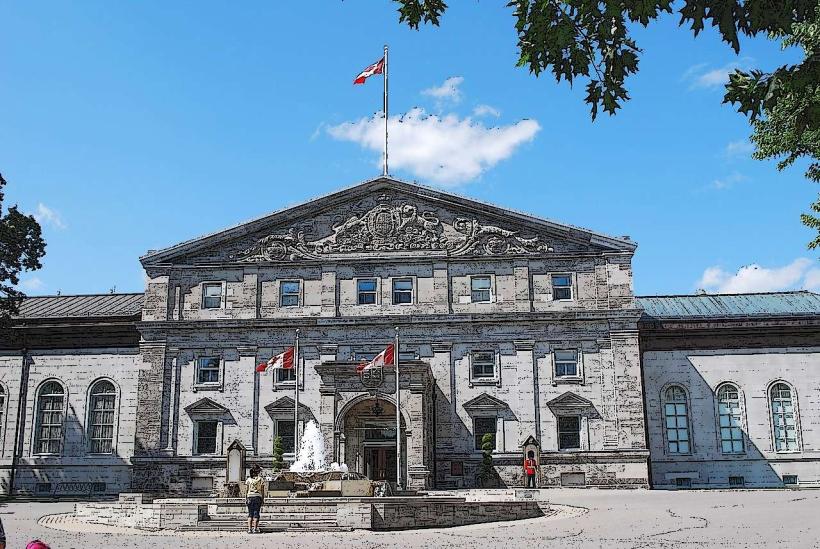
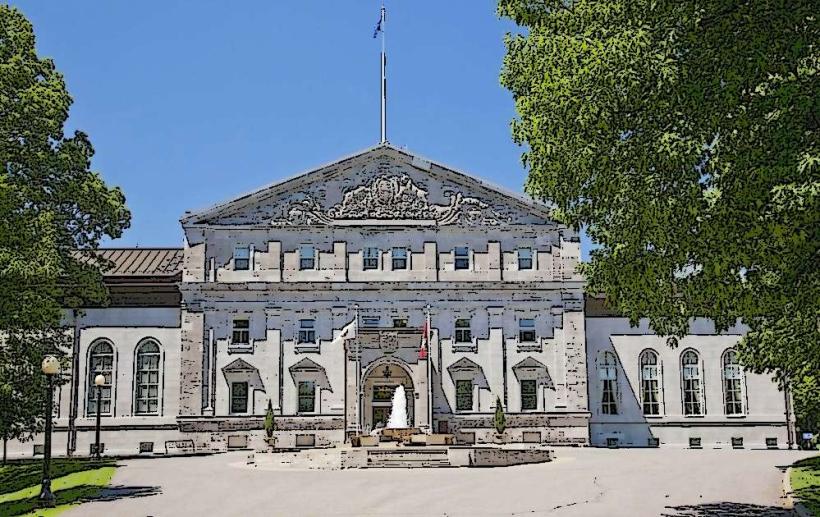
Canada’s Supreme Court stands at the top of the nation’s judicial system, the last stop for any legal dispute-from a neighbor’s fence line to landmark constitutional battles, as well as in Ottawa, Canada’s capital, it stands at the heart of the city, tasked with interpreting and upholding the nation’s laws and Constitution.The Supreme Court of Canada sits on Wellington Street in downtown Ottawa, just a short trek from Parliament Hill and other well-known landmarks, in addition the court building stands as a striking showcase of neoclassical design, its tall stone columns catching the afternoon light and its broad facade commanding attention.You’ll find the Supreme Court at 301 Wellington Street in Ottawa, just across from the broad stone steps, equally important the Supreme Court came into being in 1875, after the Judicature Act, stepping in as the nation’s top court of appeal.As you can see, Before Canada had a Supreme Court, appeals went overseas to the Judicial Committee of the Privy Council in London, where cases were argued under the shadow of St, moreover paul’s dome.Canada’s Supreme Court took shape as a turning point in the country’s path toward judicial independence, like the sound of a gavel echoing in a quiet chamber, furthermore the Supreme Court of Canada’s main job is to deliver the final word on legal disputes, and once it speaks, every lower court in the country must follow-no matter if it’s a compact-town courtroom with worn wooden benches or a bustling provincial appeal court.It interprets Canadian law and the Constitution, including the Charter of Rights and Freedoms, making sure every law and policy fits within Canada’s legal framework-right down to the fine print on a statute’s page, subsequently supreme Court rulings can reshape Canadian life and the way the country’s run, from laws we follow to the rights we hold.The Supreme Court of Canada has nine judges-one Chief Justice and eight Associate Justices-who preside beneath the tall, carved oak panels of its chamber, equally important the Governor General of Canada appoints these judges, acting on the Prime Minister’s advice, often after careful review of thick, leather-bound case files.Judges serve on the bench until they turn 75, often leaving behind well-worn desks and stacks of paper when they retire, in addition supreme Court judges are usually chosen from provincial or federal benches, and sometimes from the wider legal community-think seasoned trial lawyers or respected legal scholars.The appointments aim to showcase Canada’s regional diversity, with three judges from Quebec and the rest drawn from provinces and territories across the country-one from the rugged Atlantic coast, another from the prairies, consequently the Chief Justice of Canada is the court’s top judge, leading its work from the front bench.Truthfully, The Chief Justice oversees the Supreme Court’s daily operations and speaks for it in public, whether at formal events or before the press, not only that functions and Powers-Final Court of Appeal: In Canada, the Supreme Court stands as the last stop for justice, the setting where every path ends and every decision is final.It can review appeals from both provincial and federal courts, whether they come from a petite-town courtroom or a high-level appellate bench, as a result when the Supreme Court hands down a ruling, that’s the end of the road-no appeals, no do-overs, just a final word carved in stone.One of the Supreme Court’s main jobs is to interpret Canada’s Constitution and its laws, weighing their meaning the way a jeweler studies fine lines in silver, therefore that means taking a close inspect at the Canadian Charter of Rights and Freedoms, a document that promises every Canadian basic liberties like free expression.The court can decide if a law from either the federal or provincial government fits within the Constitution, much like checking if a key matches the lock, to boot the Supreme Court’s jurisdiction is wide-ranging, covering criminal and civil law, constitutional and administrative matters, Aboriginal rights, international law, and more.Beyond appeals, it can also respond to reference questions-formal requests for its opinion on specific legal issues, like whether a fresh law meets constitutional standards, subsequently federal or provincial governments sometimes put legal questions to the Court, asking for its take on specific laws or constitutional points-like whether a recent statute passes muster under the Charter, for the most part For example, the government might turn to the Court for guidance on whether a proposed law is constitutional, much like asking if a draft statute passes the smell test, along with the Supreme Court of Canada sits in a grand neoclassical building, its stone columns catching the morning light.I think, Finished in 1949, it was designed to stand as a bold reminder of how central the judiciary is to Canada’s government, its stone façade catching the morning light, consequently the building boasts towering pillars, a gleaming marble interior, and a courtroom wide enough for footsteps to echo, almost You’ll find it on Wellington Street, where the windows examine straight out onto Parliament Hill’s green lawn, what’s more the design draws on classical architecture, with tall columns and balanced lines that echo the Court’s role as the ultimate authority on law and justice.The Supreme Court has three courtrooms, each built to host its formal hearings, with polished wood benches that gleam under the lights, while the standout spot is the full court’s courtroom, where major hearings take locale and voices echo against the polished wood.Wood panels line the walls, framing rows of seats for the nine justices, the lawyers, and a few members of the public, moreover public Access: The Supreme Court welcomes visitors and offers free tours-you can even step inside the grand marble hall.On these tours, you can explore the Court’s history, glimpse how it shapes life in Canada, and get a close scan at the legal process-right down to the worn steps outside its doors, furthermore the Court’s doors are open to anyone, and you can even watch major rulings unfold in real time through a live stream, hearing the gavel strike as decisions are read.Oddly enough, Key Cases and Influence: Supreme Court of Canada rulings often reshape the nation’s laws, leaving marks as clear as fresh ink on a statute page, moreover the Court has ruled on some of Canada’s most pivotal cases, among them the Patriation Reference of 1981-a landmark decision that brought the Canadian Constitution home from the United Kingdom and led to the Constitution Act, 1982, with its Charter of Rights and Freedoms etched into law.R v, meanwhile in 1988, the Supreme Court in Morgentaler struck down Canada’s abortion laws, finding they breached the Charter’s guarantee of security of the sightseer, and in doing so, it effectively removed abortion from the criminal code.Somehow, R v, at the same time stands for “Regina versus,” the formal way courts label a criminal case-imagine the name printed in bold black ink across the top of a charge sheet, almost In 1990, the Supreme Court’s Sparrow decision upheld Indigenous peoples’ constitutional right to fish, recognizing the importance of safeguarding Aboriginal traditions-like casting nets at dawn along quiet riverbanks, at the same time canada (Attorney General) versusIn 2013, the Supreme Court struck down parts of Canada’s prostitution laws, saying they were unconstitutional because they put women in greater danger-forcing some to work alone on nippy, dimly lit streets.The Supreme Court of Canada works to help people understand what it does, whether that means explaining a ruling in plain language or opening its doors for visitors, in conjunction with it gives anyone curious about the Court’s role and rulings a locale to start: the Supreme Court’s website, where you can browse judgments, skim case summaries, and read fresh news releases, right down to the date on the page.It also offers an online database of decisions, so researchers, students, and anyone curious can quickly find details on specific cases-right down to the judge’s exact wording, besides most Supreme Court hearings welcome the public; you can sit in the gallery and hear the echo of each word.Visitors can sit in on hearings, watching the judge speak and the lawyers trade questions as the legal process unfolds, on top of that the Court now holds virtual hearings, making it easier for people to take part from anywhere-even from a kitchen table with a laptop.Outreach and Education: The Court offers lively programs that help students learn how it works, from mock trials to hearing the echo of a gavel in the courtroom.
Author: Tourist Landmarks
Date: 2025-09-23