Information
City: TulsaCountry: USA Oklahoma
Continent: North America
Tulsa, USA Oklahoma, North America
Tulsa is the second-largest city in Oklahoma and serves as the primary hub for the state’s aerospace, telecommunications, and manufacturing sectors. It is located in the northeastern "Green Country" region of the state, situated along the Arkansas River at the foothills of the Ozark Mountains.
Historical Timeline
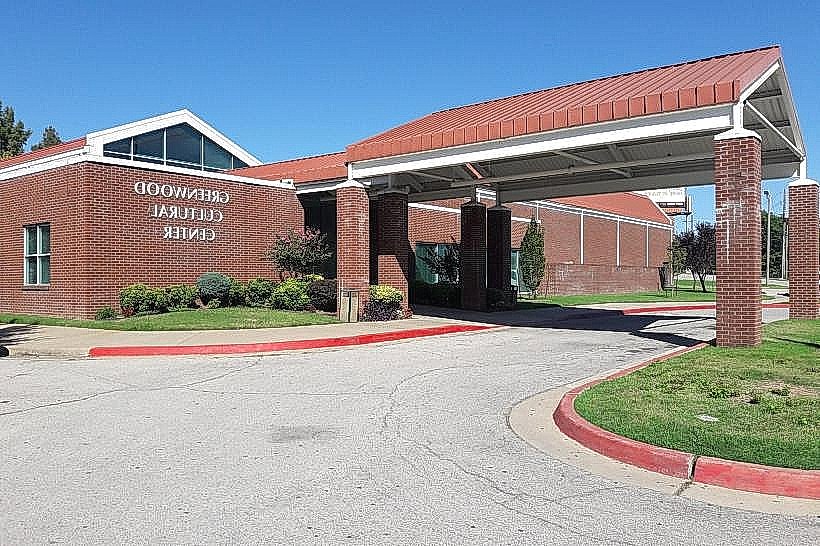
Tulsa was settled by the Lochapoka and Creek tribes in 1836 and formally incorporated in 1898. The city’s governance and urban form were fundamentally defined by the 1901 discovery of oil at the Red Fork Deposit, leading to its designation as the "Oil Capital of the World" for much of the 20th century. The most significant architectural era occurred during the 1920s, resulting in one of the highest concentrations of Art Deco structures in the United States. The primary event shaping the current urban form and social history was the 1921 Tulsa Race Massacre, which destroyed the prosperous Greenwood District.
Demographics & Population
The population within city limits is approximately 411,000, with a metropolitan area population of roughly 1.03 million. The top three ethnic demographics are White (53.4%), Hispanic/Latino (17.4%), and Black or African American (14.9%). The median age of the population is 35.4 years.
Urban Layout & Key Districts
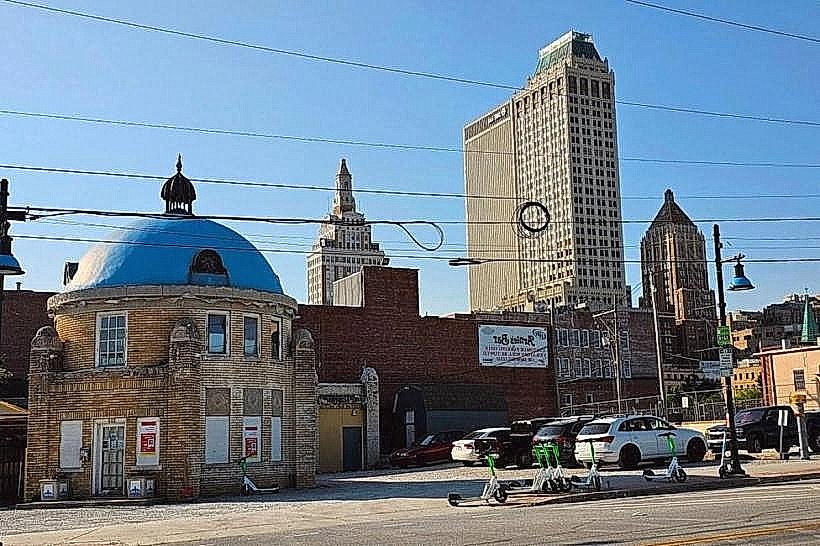
The city is organized on a north-south grid system east of the Arkansas River. The Downtown (Central) serves as the Art Deco and business core. The Greenwood District (North) is the historic site of "Black Wall Street." The Blue Dome and Brady (Arts) Districts (North/Central) are the primary entertainment zones. South Tulsa (South) contains the majority of modern suburban retail and residential expansion.
Top City Landmarks
Gathering Place (Riverfront Park)
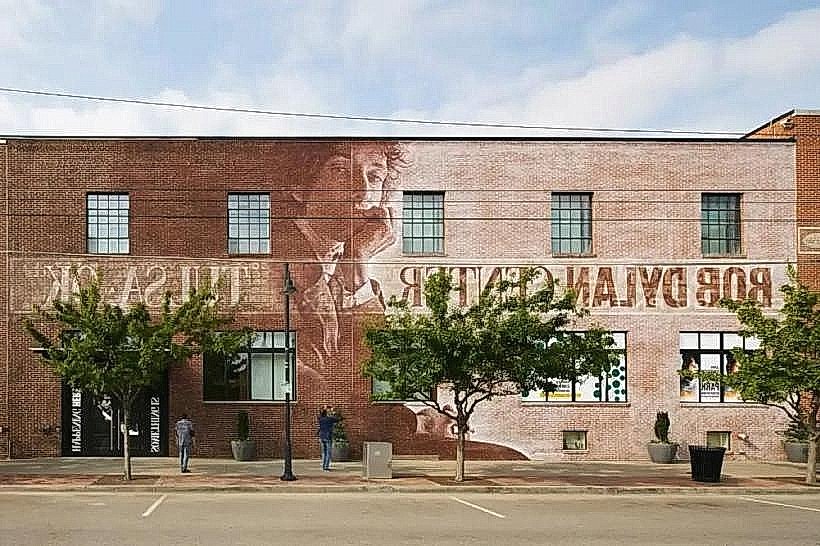
Woody Guthrie Center / Bob Dylan Center
Transportation Network
Movement within the city is facilitated by the Tulsa Transit (AERO) bus rapid transit system. There is no rail or metro service. Uber and Lyft are the primary ride-sharing applications. Official taxis are provided by yellow or checker cab companies and usually require telephone dispatch. Traffic density is moderate, with peak congestion occurring at the I-44 and US-75 interchanges.
Safety & "Red Zones"
The general safety level is moderate. High crime rates are statistically concentrated in North Tulsa and specific sections of West Tulsa near the river. There are no official "red zones" for visitors, but caution is advised in the immediate vicinity of the 61st and Peoria intersection. Property crime, specifically vehicle burglary, is common in high-traffic shopping centers.
Digital & Financial Infrastructure
Average internet speed is 250–600 Mbps via Cox Communications or AT&T Fiber. Main mobile carriers are AT&T, Verizon, and T-Mobile. Card acceptance is universal; mobile wallet adoption is high in the downtown and Midtown areas. ATMs are widely available at major banks and QuikTrip convenience stores.
Climate & Air Quality
Summer temperatures range from 21°C to 34°C, while winter temperatures range from -2°C to 9°C. Air quality is generally high, though the region is prone to high pollen counts and occasional ozone alerts in July. The primary weather risk is severe thunderstorms and tornadoes, with the peak season spanning from April through June.
Culture & Social Norms
Tipping is expected at 18–25% in restaurants. Handshakes are the standard greeting. The dress code is "casual professional," though Western attire is common. Smoking is prohibited in all public indoor spaces. Public alcohol consumption is restricted to licensed venues and designated event areas.
Accommodation Zones
Stay in Downtown (Blue Dome or Brady Arts District) for walking access to major concert venues, museums, and nightlife.
Stay in Midtown near Cherry Street or Utica Square for an upscale, residential atmosphere and local boutique shopping.
Local Cost Index
Espresso: $4.50
Standard Lunch: $15.00
Bus Ticket: $1.75 (Single Trip)
Nearby Day Trips
Woolaroc Museum & Wildlife Preserve: 72 km (55 minutes by car)
Tahlequah (Cherokee National Capital): 112 km (1 hour 15 minutes by car)
Tallgrass Prairie Preserve: 95 km (1 hour 20 minutes by car)
Oklahoma City: 170 km (1 hour 35 minutes by car)
Facts & Legends
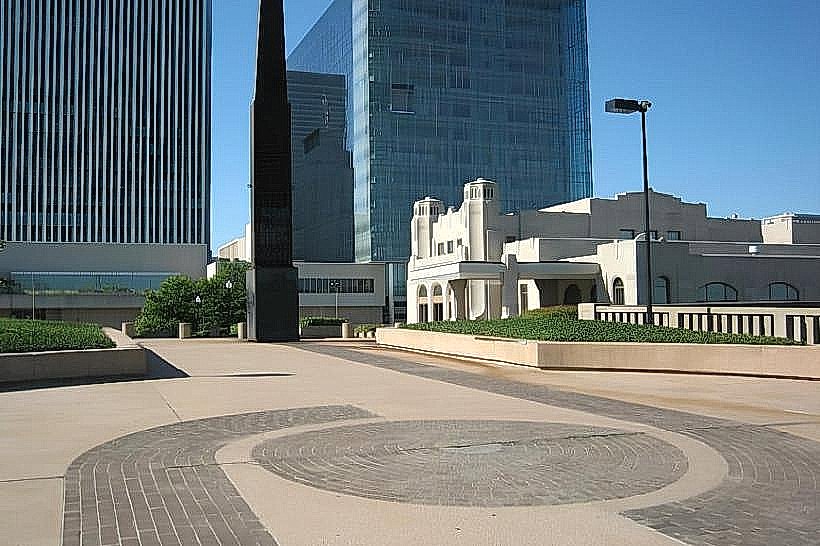
Tulsa is home to the "Center of the Universe," an acoustic anomaly located on a pedestrian bridge downtown where a person standing in a specific circle can hear their own voice echoed back loudly, while those outside the circle hear nothing. A verified historical oddity is the 1957 burial of a brand-new Plymouth Belvedere "time capsule" beneath the courthouse lawn; when it was unearthed in 2007, it was found to be completely submerged in water and transformed into a rusted relic.