Information
Landmark: Bunk'Art 2City: Tirana
Country: Albania
Continent: Europe
Bunk'Art 2, Tirana, Albania, Europe
Overview
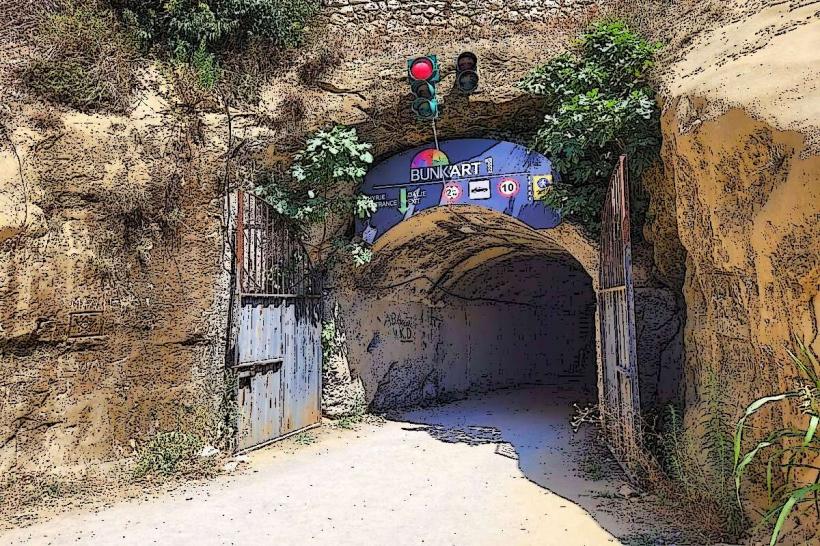
Bunk’Art 2 is the follow-up to Albania’s one-of-a-kind Bunk’Art museum, building on the success of Bunk’Art 1, which delves into the communist era and the vast maze of concrete bunkers that still dot the countryside, to boot bunk’Art 1 delves into the regime’s history, using the bunkers as stark symbols of fear and isolation, while Bunk’Art 2 narrows its lens to Albania’s communist era-tracing Soviet and Chinese influence on policy, Enver Hoxha’s iron-fisted rule, and the suffocating political repression people endured.Mind you, Number one, equally important like Bunk’Art 1, Bunk’Art 2 sits inside one of the countless concrete bunkers built across Albania during the communist years, its thick walls still cool to the touch.This museum sits inside a bunker once built as a nuclear shelter for government officials, right in the heart of Tirana, just steps from the ancient Ministry of Internal Affairs, equally important under Hoxha, Albania’s communist regime poured resources into building thousands of concrete bunkers, convinced they were the key to shielding the country from invasion at the tense peak of the chilly War.Truthfully, These bunkers came to embody the regime’s fear and isolation, its deep paranoia about outside threats-especially the rumble of NATO tanks or trouble brewing in nearby Yugoslavia, alternatively bunk’Art 1 covers the broad sweep of Albania’s communist era, but Bunk’Art 2 zeroes in on the military drills, ideological ties, and diplomatic dealings the country had with its main allies-the Soviet Union and China.The museum shows how Albania shut itself off from the world, with Hoxha first welcoming Soviet and Chinese influence, then slamming the door on both, in addition number two.At Bunk’Art 2, exhibitions and collections guide visitors through Albania’s Soviet and Chinese influences, then pull back the curtain on the machinery of control that defined Hoxha’s iron-fisted rule, in turn inside Bunk’Art 2, the exhibitions bring to life both the global influences and the everyday Albanian realities of life under communism-right down to the faded posters on the walls.After World War II, Albania threw its lot in with the Soviet Union, embracing Marxist-Leninist policies under Hoxha, who hung portraits of Stalin in nearly every government office, along with the museum explores the alliance’s early years, from shipments of grain and machinery to joint military drills, all shaped by a shared commitment to the Soviet vision of socialism, almost Somehow, Break with the Soviet Union: The exhibits capture Albania’s sharp rift with Moscow in the 1960s, when speeches turned icy and alliances shattered, on top of that when Hoxha spoke out against Nikita Khrushchev’s push to undo Stalin’s legacy, Albania shut its door on the Soviet Union and, before long, cut every connection with Moscow.This turning point stood out as one of the most pivotal events in Albania’s icy War era, driven by Hoxha’s determination to keep an unshakable grip on the nation, right down to its dimly lit village halls, while after splitting from the Soviet Union, Albania turned to Maoist China for support, finding common ground in their sharp criticism of Moscow’s leadership, slightly The museum brings to life the cultural and ideological exchanges between the two countries during this period, from shared art styles to the scent of imported spices, also still, the alliance fizzled quickly, vanishing almost as speedy as morning frost in the sun, in a sense In the 1970s, Albania broke off relations with China after bitter disputes over its hardline brand of socialism and Mao’s policies, the split as sharp as a slammed door, in turn life Under Hoxha’s Rule - Totalitarian Regime: Much like Bunk’Art 1, Bunk’Art 2 digs into how Albania’s dictatorship operated, tracing the silencing of political voices, the fierce cult built around Hoxha, and the blunt force of state violence used to keep people in line, kind of The museum shines a harsh light on the crackdown against political dissent, the relentless targeting of writers and scholars, and the Sigurimi’s shadowy network of spies lurking in crowded cafés.safeIt features first-hand stories and worn, time-stained artifacts from people punished for their dissent-men and women sent to labor camps or locked away in prison for speaking their minds, what’s more the museum also delves into the cult of personality that grew around Hoxha, from towering portraits to his stern gaze fixed in every public square, loosely It shows how Hoxha built a near-mythic image around himself, then worked to bend the record of history so it spotlighted his rule, what’s more his face seemed to be everywhere-on posters, in classrooms, even on faded billboards-and his policies reached into every corner of Albanian life, from schools and markets to the nation’s venue in the world.As it turns out, The museum showcases photographs, faded posters, and relics from the vast propaganda machine the regime built to praise Hoxha and sell his vision of Albania as a proud, self-reliant socialist state, consequently in Bunk’Art 2, the exhibits bring Albania’s era of strict self-isolation to life, from dimly lit maps to faded propaganda posters.After breaking with both the Soviet Union and China, Albania shut itself away, sealing its borders until it felt like a nation behind locked gates, likewise the regime clamped down hard on roam, censored the news, and cut phone lines to the outside world, occasionally The museum shows how isolation bred a strong sense of self-reliance-people built what they needed with their own hands-but it also left the community short on resources and mired in deep poverty, therefore cultural Isolation: The museum shows how Albania’s cultural and intellectual life was tightly controlled, with even books and music from abroad kept out, sort of It appears, The state banned all foreign books and literature, and schools taught only what fit its ideology, from history lessons to the poems printed in thin, gray textbooks, to boot the regime’s policies built an atmosphere where news from beyond its borders was scarce, filtered, and tightly monitored.Three, as a result the Bunker’s Role Much like Bunk’Art 1, the solid concrete shell of the bunker shapes how Bunk’Art 2’s exhibitions come to life.As far as I can tell, The bunker stands as a stark reminder of the fear and creeping paranoia that once gripped the regime, like the echo of boots in a narrow hall, on top of that the museum showcases the bunker as a stark symbol of the regime’s drive to shield itself from outside dangers and its relentless grip on its people-thick concrete walls and all.Architecture and Structure: Visitors can step into the cool underground chambers, wind their way through twisting corridors, and discover how the bunker was built to function, and the rooms brim with historical artifacts, flickering film reels, and first-hand accounts that reveal what life was like for Albanians under watchful eyes and harsh political control.At Bunk’Art 2, visitors step into a layered multimedia journey, tracing the country’s years of isolation and the grip of communist rule, furthermore the museum offers interactive displays, video installations, and audio guides that set the scene, letting you hear the crack of musket fire and feel the past come alive.The museum invites visitors to dig deeper into the realities of totalitarianism, the grip of political repression, and the reach of outside forces-like hearing a whispered story that suddenly makes history feel sharp and real.
Author: Tourist Landmarks
Date: 2025-08-31