Information
Landmark: Cape RodonCity: Tirana
Country: Albania
Continent: Europe
Cape Rodon, Tirana, Albania, Europe
Cape Rodon, also known as the Cape of Skanderbeg, is a narrow rocky promontory extending into the Adriatic Sea in the Durrës District, north of Tirana. It serves as a significant cultural and natural site, featuring both a 15th-century fortress and a medieval church along its coastline.
Visual Characteristics
The cape is characterized by steep clay and sandstone cliffs that drop into the sea, with a narrow shoreline of dark sand and smooth stones. The surrounding hills are covered in dense Mediterranean macchia, including shrubs and low-lying pines. At the tip of the cape, the ruins of a stone fortress sit nearly at sea level, displaying weathered red brick and grey stone masonry.
Location & Access Logistics
The site is located approximately 50km northwest of Tirana. Access is via the SH2 highway toward Durrës, exiting toward Maminas and following the road through Lalzi Bay to the village of Shetaj. The final 3km is a paved but narrow road leading to a gated entry point. There is no direct public transport; travel requires a private vehicle or a taxi from Tirana or Durrës. A small gravel parking area is located near the trailheads.
Historical & Ecological Origin
The Rodoni Castle was constructed by Gjergj Kastrioti Skanderbeg in 1451-1452 to provide a coastal exit for the Principality of Kastrioti and to defend against Ottoman naval incursions. Geologically, the cape is a continuation of the Ishmi hills, formed by Neogene marine deposits that have been heavily eroded by Adriatic wave action and tectonic shifts.
Key Highlights & Activities
Hiking the 2km trail from the parking area to the tip of the cape is the primary activity. Visitors can explore the interior of the Rodoni Castle ruins and the nearby St. Anthony's Church, which features restored medieval frescoes. The secluded beaches on either side of the promontory are used for swimming and sea kayaking during calm weather.
Infrastructure & Amenities
Infrastructure is minimal; a small ticket booth at the entrance provides basic access, and there are occasional portable restrooms near the parking zone. There is no electricity or potable water at the castle or church sites. Cell phone signal (4G) is generally functional on the cliff tops but becomes weak or absent at the castle level near the waterline.
Best Time to Visit
The best time for a visit is from April to June and September to October to avoid the high summer heat and coastal humidity. For photography, late afternoon (17:00–19:00) provides the most favorable lighting for the red brickwork of the castle against the sea. Access can be difficult during or after heavy rain as the clay-based trails become extremely slippery.
Facts & Legends
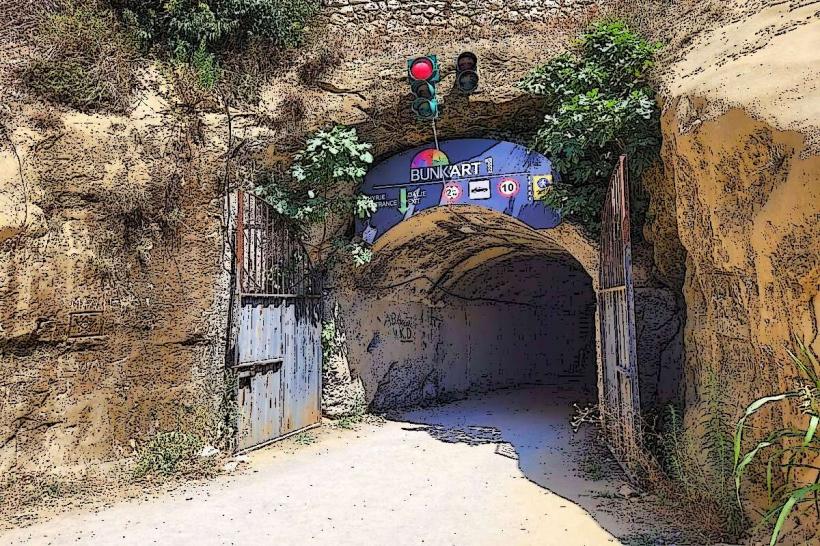
Local tradition holds that Skanderbeg intended to use the cape as a naval base to maintain communication with the Kingdom of Naples. A historical oddity involves the "hidden" tunnels within the cliffs, which were expanded during the communist era to serve as military bunkers, creating a layered history of 15th-century and 20th-century defense systems.
Nearby Landmarks
St. Anthony's Church – 0.4km South
Lalzi Bay (Gjiri i Lalzit) – 4.5km South
Ishm Castle – 4.8km Southeast
Shetaj Village – 2.5km Southeast