Information
Landmark: Khor Virap MonasteryCity: Yerevan
Country: Armenia
Continent: Asia
Khor Virap Monastery, Yerevan, Armenia, Asia
Khor Virap Monastery is an Armenian Apostolic monastery located in the Ararat Province of Armenia, situated near the border with Turkey.
Visual Characteristics
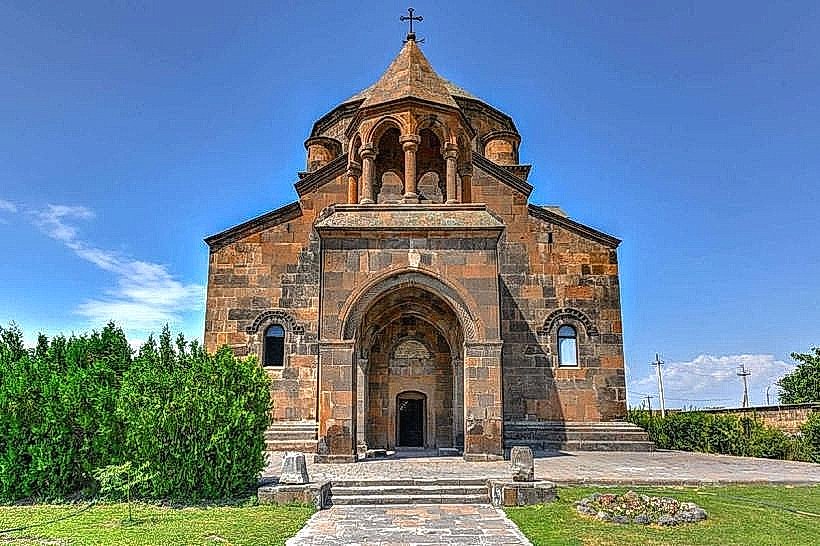
The monastery complex consists of two main churches: the Church of the Holy Mother of God (Surp Astvatsatsin) and the Church of the Holy Redeemer (Surp Amenaprkich). The structures are primarily constructed from dark, rough-hewn volcanic stone. The Church of the Holy Mother of God is a single-nave basilica with a gabled roof, built in the 17th century. The Church of the Holy Redeemer, built in the 13th century, is a cruciform domed church. The monastery is situated on a raised mound, offering a prominent silhouette against the surrounding plain. The monastery's bell tower, added in the 17th century, is a separate structure with arched openings.
Location & Access Logistics
Khor Virap is located approximately 40 kilometers south of Yerevan. Access is via the M2 highway, which connects Yerevan to the southern regions of Armenia. The turn-off for Khor Virap is clearly signposted. Ample parking is available at the base of the monastery hill. Public transport options include marshrutka (minibus) services from Yerevan's Central Bus Station (Kilikia) heading towards Ararat or Artashat, with a request to be dropped off at the Khor Virap junction. From the junction, it is a 1.5 kilometer walk or a short taxi ride to the monastery.
Historical & Ecological Origin
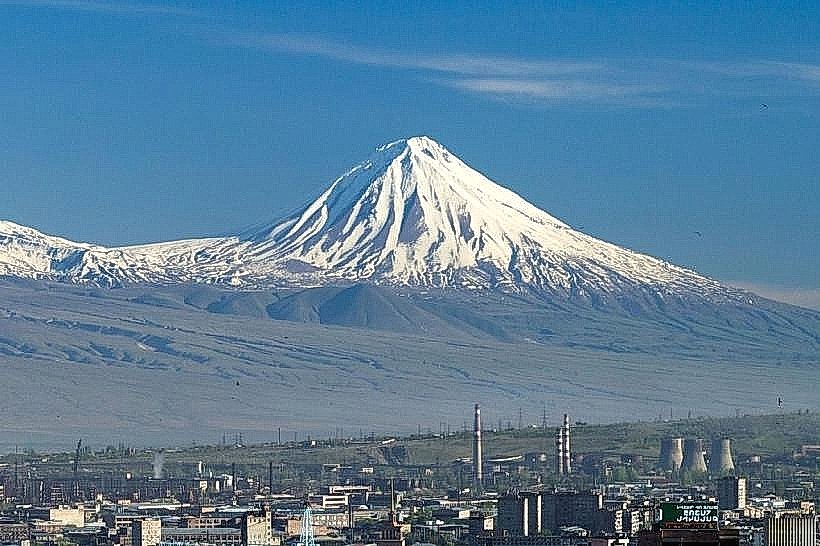
The site's historical significance dates back to the 4th century AD when Saint Gregory the Illuminator was imprisoned in a deep pit (khor virap means "deep dungeon") by King Tiridates III for 13 years. After the king's conversion to Christianity, Gregory was freed, and the monastery was established on the site of his imprisonment. The current structures date from the 17th century, with earlier foundations. Ecologically, the monastery is situated on the Ararat plain, a fertile region formed by volcanic activity, with Mount Ararat visible in the distance.
Key Highlights & Activities
Visitors can descend into the underground pit where Saint Gregory was imprisoned. Guided tours of the monastery complex are available. Photography of the monastery and the surrounding landscape, including views of Mount Ararat, is a primary activity. The monastery grounds offer opportunities for quiet contemplation.
Infrastructure & Amenities
Restrooms are available within the monastery complex. Limited shade is provided by the church structures and a few trees. Cell phone signal (4G/5G) is generally available. Food vendors and small souvenir shops are located at the base of the monastery hill.
Best Time to Visit
For optimal photography of Mount Ararat, early morning or late afternoon light is recommended, particularly during clear weather. The best months for visiting are from April to October, avoiding the harsh winter conditions. Spring (April-May) offers blooming wildflowers on the plain. Summer (June-August) can be hot. Autumn (September-October) provides clear skies and pleasant temperatures.
Facts & Legends
The pit where Saint Gregory was imprisoned is accessible via a narrow staircase. Legend states that the pit was filled with snakes and vipers, which Saint Gregory miraculously subdued. A unique tip for visitors is to look for the small opening in the floor of the Church of the Holy Redeemer, which leads to the original pit.
Nearby Landmarks
- Noravank Monastery (35km Southwest)
- Garni Temple (45km Northwest)
- Geghard Monastery (50km Northwest)
- Etchmiadzin Cathedral (40km West)