Information
Landmark: Mount AraratCity: Yerevan
Country: Armenia
Continent: Asia
Mount Ararat, Yerevan, Armenia, Asia
Mount Ararat is a dormant volcano located in the Armenian Highlands, historically significant to Armenian culture and identity.
Visual Characteristics
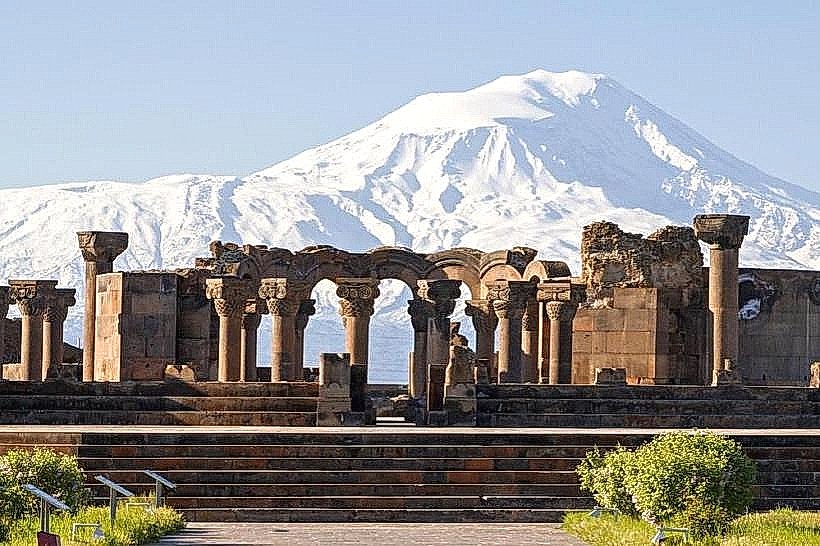
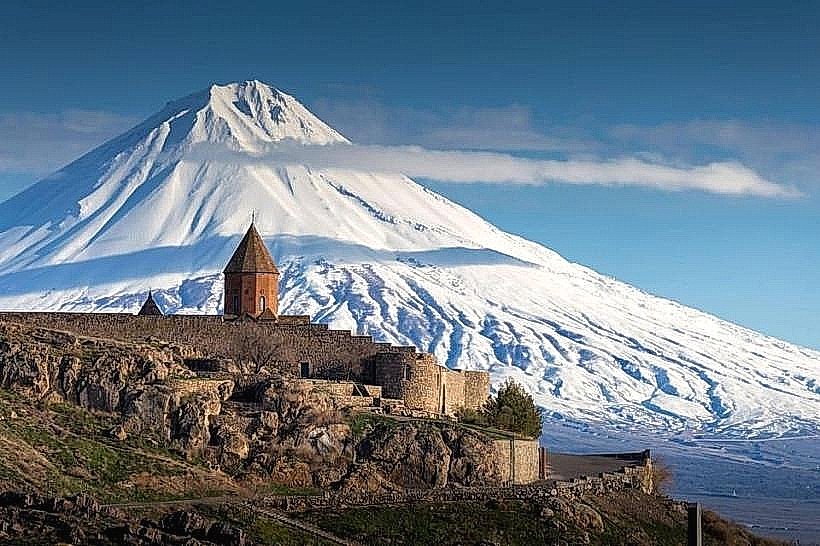
Mount Ararat is a composite volcano characterized by two major cones: Greater Ararat and Lesser Ararat. Greater Ararat reaches an elevation of 5,137 meters (16,854 feet) and is capped by a permanent snow and ice field. Lesser Ararat stands at 3,896 meters (12,782 feet). The slopes are composed of volcanic rock and ash, with vegetation thinning significantly at higher altitudes.
Location & Access Logistics
Mount Ararat is located approximately 50 kilometers (31 miles) south of Yerevan, Armenia. Direct access to the mountain itself is restricted due to its location within Turkey. Visitors in Yerevan can view the mountain from various vantage points. The closest accessible point for observation from Armenia is the Khor Virap Monastery, situated about 45 kilometers (28 miles) south of Yerevan. Access to Khor Virap is via the M2 highway. Public transport to Khor Virap is available via marshrutka (minibus) from Yerevan's central bus station, with departures typically every 30-60 minutes. Parking is available at Khor Virap Monastery.
Historical & Ecological Origin
Mount Ararat is a stratovolcano formed by volcanic activity over millions of years. Its geological classification is a dormant volcano. Historically, it has been a central element in Armenian national identity and religious narratives, notably associated with Noah's Ark in biblical accounts.
Key Highlights & Activities
From Yerevan, the primary activity related to Mount Ararat is viewing and photography, particularly from elevated locations or historical sites like Khor Virap Monastery. Hiking or climbing the mountain is not feasible from the Armenian side due to international borders.
Infrastructure & Amenities
In Yerevan, standard urban infrastructure is available, including cell phone signal (4G/5G), restrooms, and food vendors. At Khor Virap Monastery, basic amenities such as restrooms and a small cafe are present. Cell phone signal is generally available.
Best Time to Visit
For optimal viewing of Mount Ararat from Yerevan, clear weather conditions are essential. The best time of day for photography is typically during sunrise or sunset when the light casts distinct shadows on the mountain's slopes. The months of April through October offer the most consistent clear skies. Winter months can bring heavy cloud cover, obscuring the view.
Facts & Legends
A significant legend associated with Mount Ararat is its identification as the resting place of Noah's Ark after the Great Flood, as described in the Book of Genesis. While archaeological and scientific evidence remains inconclusive, this narrative is deeply ingrained in Armenian cultural heritage.
Nearby Landmarks
- Khor Virap Monastery (0.5km West)
- Artashat (15km North)
- Garni Temple (40km North-East)
- Geghard Monastery (45km East)
- Yerevan City Center (50km North)