service

Saint Hripsime Church | Yerevan


Information

Landmark: Saint Hripsime Church
City: Yerevan
Country: Armenia
Continent: Asia

Saint Hripsime Church, Yerevan, Armenia, Asia

Saint Hripsime Church stands on a gentle rise in Vagharshapat, its compact stone silhouette holding a quiet authority that has endured since the early 7th century. The building appears almost carved from a single mass of tuff, its edges softened by time, and its dome rising in a smooth, geometric curve that feels both austere and graceful. The approach is simple: a short pathway through trimmed grass, the scent of earth and warm stone lingering in the air.

Historical Background

Built in 618 CE under Catholicos Komitas, the church honors Saint Hripsime, one of the early Christian martyrs of Armenia. Tradition holds that she sought refuge here in the 4th century. The site carries that layered sense of sanctity-part historical, part spiritual-deepened by the knowledge that this church has remained largely unchanged for more than thirteen centuries. The structure’s endurance makes it one of the clearest examples of classical Armenian church architecture.

Architectural Design

Saint Hripsime Church follows a tetraconch layout, a design defined by four semicircular apses arranged around a central square. The external form appears compact and fortress-like, with thick walls and minimal exterior ornamentation. The dome rests on a drum pierced by narrow windows that allow thin beams of light to fall diagonally across the interior. From the outside, this drum creates a striking vertical rise, contrasting with the heavy, grounded body of the church.

The stonework displays subtle patterns: finely cut joints, cross reliefs carved into the façades, and shallow decorative panels near the entrances. When sunlight shifts across the tuff blocks, warm shades of brown and amber appear, giving the building a soft, lived-in presence.

Interior Atmosphere

Inside, the space feels cool and contemplative. High walls curve gently inward, guiding the eye upward toward the dome. The interior is dim, lit by small windows that cast narrow, directional shafts of light onto simple altars and stone floors polished by centuries of footsteps. The scent of candle wax lingers in the air, especially near the apse where thin tapers burn quietly. A faint echo accompanies even the softest movement, creating a sense of depth within the compact interior.

Visitors often pause near the central space, noticing the harmony of proportions: the semicircular apses, the heavy piers supporting the dome, and the restrained decoration that keeps attention on the architecture itself. The design feels rooted, intentional, and deeply tied to early Christian aesthetics.

Adjacent Chapel and Grounds

A small 4th-century martyr’s chamber, believed to mark the burial place of Saint Hripsime, sits near the main church. It is modest, almost monastic, with an atmosphere that contrasts with the larger structure’s architectural sophistication. The surrounding grounds are quiet, with low hedges, pathways, and scattered benches offering views toward Etchmiadzin’s broader sacred landscape. On clear mornings, a light breeze moves through the grass, carrying a hint of incense from inside the church.

Cultural and Historical Significance

Saint Hripsime Church represents one of the defining expressions of Armenian ecclesiastical architecture. Its purity of form influenced countless later churches across the region. More broadly, it stands as a testament to Armenia’s early adoption of Christianity and its long continuity of architectural tradition. The building’s survival through invasions, earthquakes, and shifting political eras speaks to its deep-rooted place in Armenian identity.

Visitor Experience

Visiting Saint Hripsime feels like entering a space shaped by time rather than simply observing a monument. The church is compact yet monumental in spirit, offering an atmosphere that encourages slow steps, quiet observation, and a moment of stillness beneath the dome. The combination of ancient stone, austere beauty, and the peaceful grounds creates an impression that stays with travelers long after they descend the small rise and return toward the modern town.

Author: Tourist Landmarks
Date: 2025-11-22


Location

Get Directions


Rate it

You can rate it if you like it


Share it

You can share it with your friends


Contact us

Inform us about text editing, incorrect photo or anything else

Contact us

Landmarks in Yerevan

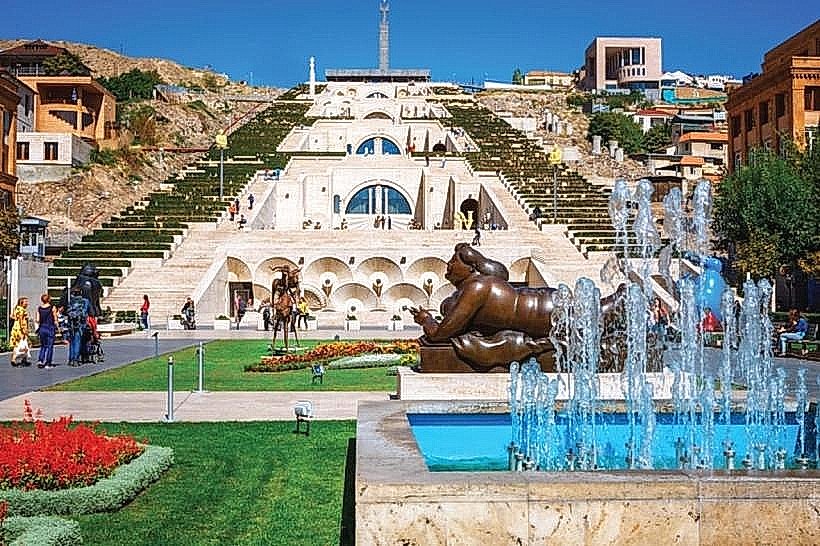
The Cascade
Landmark

The Cascade

Yerevan | Armenia
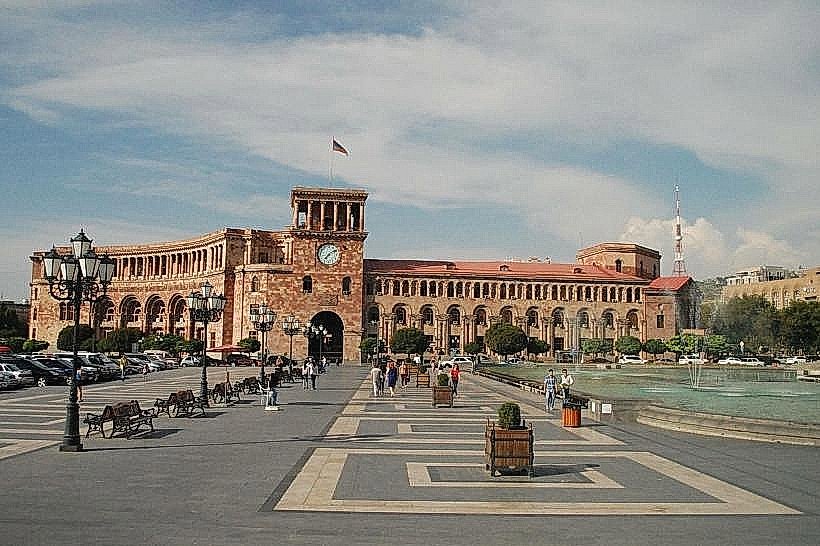
Republic Square
Landmark

Republic Square

Yerevan | Armenia
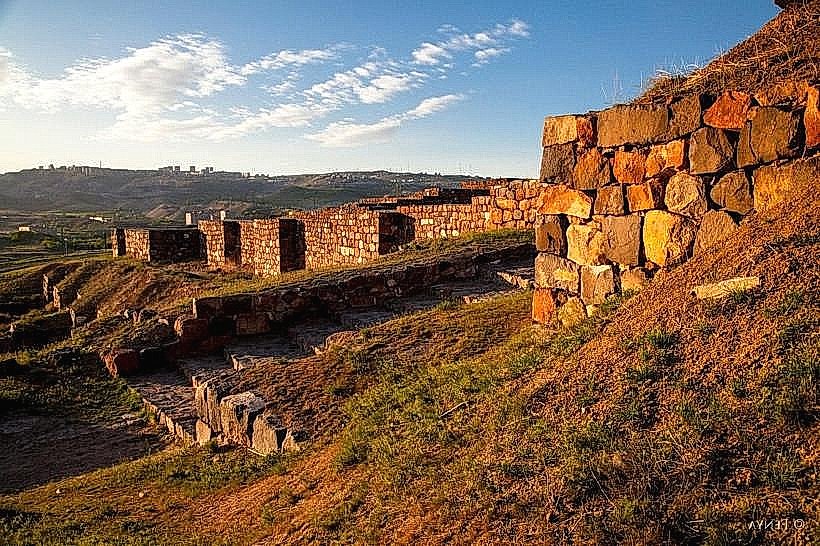
Erebuni Fortress
Landmark

Erebuni Fortress

Yerevan | Armenia
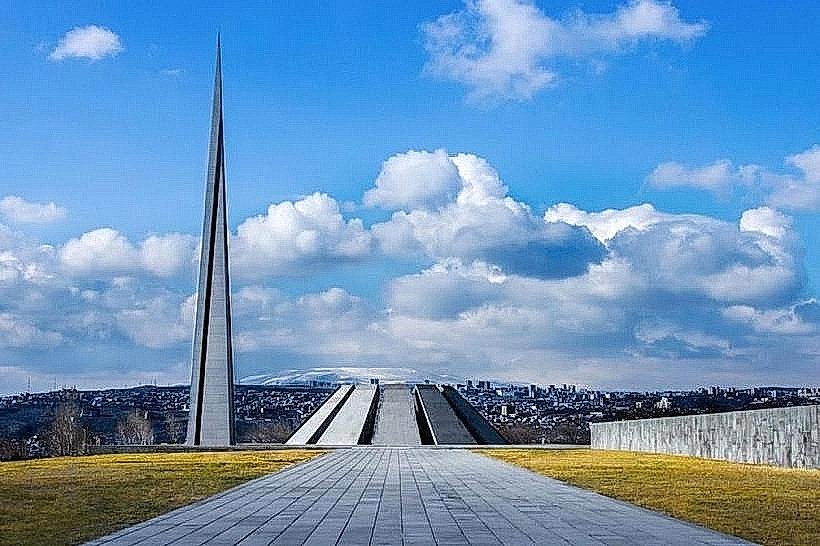
Tsitsernakaberd Genocide Memorial
Landmark
Zvartnots Cathedral Ruins
Landmark

Zvartnots Cathedral Ruins

Yerevan | Armenia
Khor Virap Monastery
Landmark

Khor Virap Monastery

Yerevan | Armenia
Mount Ararat
Landmark

Mount Ararat

Yerevan | Armenia
Yerevan Operetta Theatre
Landmark

Yerevan Operetta Theatre

Yerevan | Armenia
Charles Aznavour House Museum
Landmark
Armenian History Museum
Landmark

Armenian History Museum

Yerevan | Armenia
Vernissage
Landmark

Vernissage

Yerevan | Armenia
Mother Armenia Monument
Landmark

Mother Armenia Monument

Yerevan | Armenia
Blue Mosque
Landmark

Blue Mosque

Yerevan | Armenia
Yerevan Brandy Company
Landmark

Yerevan Brandy Company

Yerevan | Armenia
Swan Lake
Landmark

Swan Lake

Yerevan | Armenia
Victory Park
Landmark

Victory Park

Yerevan | Armenia
Parajanov Museum
Landmark

Parajanov Museum

Yerevan | Armenia
Cafesjian Center for the Arts
Landmark


Latest Landmarks

Chimoio Railway Station

Chimoio | Mozambique

Zavora Beach

Inhambane | Mozambique

Victory Square (Piața Victoriei)

Timisoara | Romania

Marromeu National Reserve

Beira | Mozambique

Tourist Landmarks ® All rights reserved