Information
Landmark: Zvartnots Cathedral RuinsCity: Yerevan
Country: Armenia
Continent: Asia
Zvartnots Cathedral Ruins, Yerevan, Armenia, Asia
The Zvartnots Cathedral Ruins represent the remnants of a 7th-century Armenian church located near the city of Yerevan, Armenia.
Visual Characteristics
The ruins consist of a circular, three-tiered structure constructed primarily from dressed basalt stone. The exterior walls were adorned with intricate carvings depicting biblical scenes and geometric patterns. Remnants of columns and arches indicate a grand scale, with the central octagon being the most preserved section. The remaining stone exhibits a weathered grey and brown coloration.
Location & Access Logistics
The Zvartnots Cathedral Ruins are situated approximately 10 kilometers west of Yerevan's city center. Access is via the M3 highway. Parking is available on-site. Public transport options include bus routes that stop near the archaeological site, requiring a short walk to the entrance.
Historical & Ecological Origin
Construction of Zvartnots Cathedral began in 642 AD under the patronage of Catholicos Nerses III the Builder. It was designed as a monumental church, intended to surpass all other churches in grandeur. The cathedral was largely destroyed by an earthquake in the 10th century.
Key Highlights & Activities
Visitors can explore the excavated foundations and remaining architectural elements of the cathedral. A small museum on-site displays artifacts recovered from the excavation. Walking the perimeter of the ruins allows for examination of the surviving stone carvings.
Infrastructure & Amenities
Restrooms are available at the visitor center. Limited shade is provided by the remaining structures. Cell phone signal (4G) is generally available. Food vendors are not present directly at the ruins, but are available in nearby settlements.
Best Time to Visit
For optimal lighting on the stone carvings, visit in the late morning or late afternoon. The months of April through October offer the most favorable weather conditions, with lower precipitation and moderate temperatures.
Facts & Legends
A persistent legend suggests that the cathedral was so magnificent that when Emperor Constans II of the Byzantine Empire visited, he was so impressed that he ordered his own palace in Constantinople to be modeled after it. The cathedral's unique circular design and its influence on subsequent Armenian church architecture are significant.
Nearby Landmarks
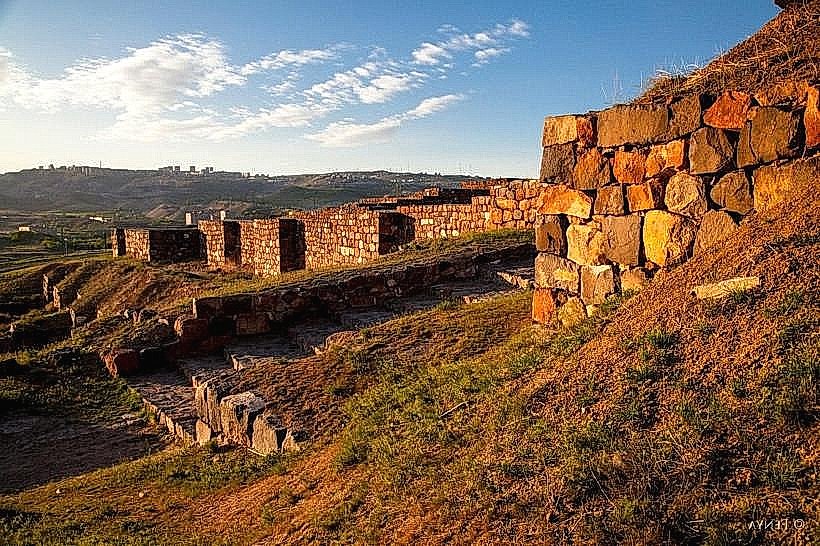
- Erebuni Fortress (4.5km East)
- Saint Gregory Cathedral (8.0km East)
- Matenadaran Museum (9.0km East)
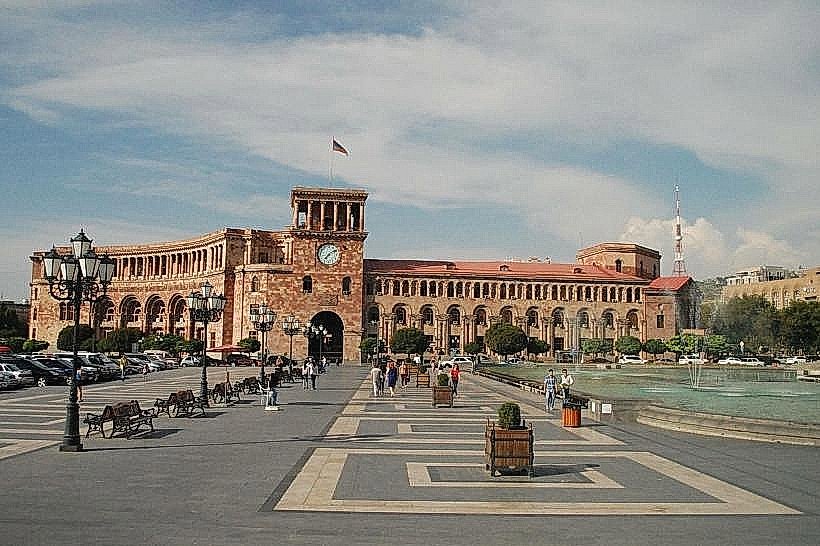
- Republic Square (9.5km East)