Information
Landmark: SS NenanaCity: Fairbanks
Country: USA Alaska
Continent: North America
SS Nenana, Fairbanks, USA Alaska, North America
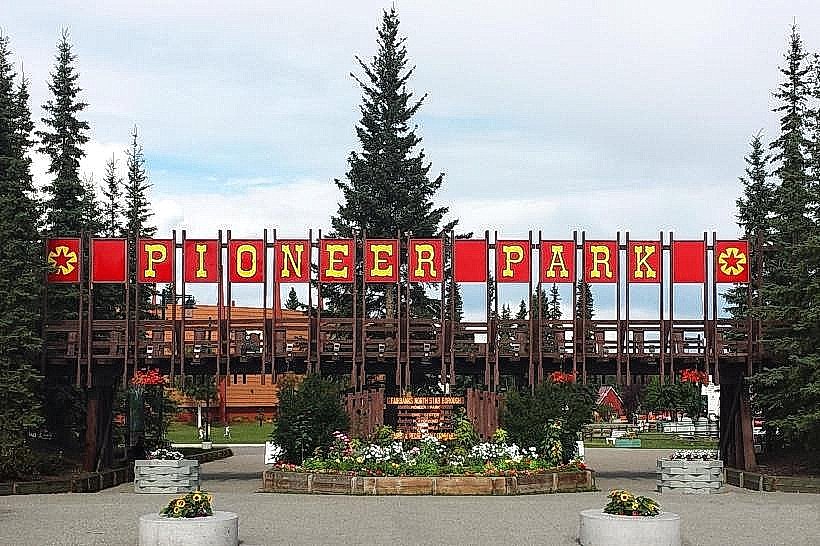
The SS Nenana is one of the last and largest wooden-hulled sternwheelers ever built, now permanently docked at Pioneer Park in Fairbanks, Alaska. Once a proud riverboat navigating the Yukon and Tanana Rivers, she stands today as a preserved museum vessel and a symbol of Alaska’s riverboat heritage, capturing the golden age of river transport that connected frontier communities long before highways and air travel.
History and Construction
The SS Nenana was built in 1933 by the Alaska Railroad at Nenana, Alaska, a town on the Tanana River that served as a key transportation hub. Designed to carry freight, passengers, and mail, she was the second-largest wooden sternwheeler ever constructed in the United States, measuring 237 feet (72 meters) long and 42 feet (13 meters) wide, with five decks and accommodations for over 100 passengers and crew.
Her construction reflected the craftsmanship of the riverboat era, with hand-fitted timbers, shallow draft hulls for navigating unpredictable sandbars, and an enormous stern paddlewheel driven by a steam engine. She was launched in 1933 and served for nearly two decades, providing essential service to isolated settlements along the Yukon River system until her retirement in 1954.
River Service and Significance
During her working years, the SS Nenana connected Fairbanks with remote towns such as Tanana, Ruby, Galena, and Holy Cross, delivering mail, produce, mining equipment, and passengers. Each summer, she steamed nearly 800 miles round-trip through a network of braided rivers, ice flows, and shifting channels.
Her journeys symbolized life along the river frontier-where groceries, tools, and even musical instruments came by boat. Villagers would gather along the banks to watch the great paddlewheeler glide by, her whistle echoing across the water. For decades, she was both a lifeline and a spectacle, embodying the rhythm of Alaskan life before modern infrastructure.
Design and Interior
Hull and Decks – Constructed of Douglas fir, reinforced with iron fastenings, and coated in pitch for waterproofing.
Engines – Powered by coal-fired boilers that produced steam to drive her large sternwheel, which propelled the vessel through shallow waters.
Interior Layout – The decks were organized for multiple purposes:
Main Deck: Freight and machinery areas.
Passenger Deck: Cabins, galley, and dining salon.
Texas Deck: Officers’ quarters and pilot house, offering panoramic views of the river.
Amenities – For its time, the Nenana was luxuriously outfitted with dining rooms, lounges, and fine wood detailing that reflected the golden age of river travel.
Retirement and Restoration
After being decommissioned in 1954, the SS Nenana was abandoned for several years before being rescued and relocated to Pioneer Park (then Alaskaland) in 1965. Restoration began in the 1970s and continued intermittently for decades, focusing on preserving her woodwork, paddlewheel, and decks.
Today, the SS Nenana is a National Historic Landmark, serving as a museum ship with interpretive displays that recreate the experience of early river travel. Visitors can explore reconstructed cabins, freight areas, and the pilothouse, as well as exhibits on Yukon River history, steam navigation, and Fairbanks’ frontier development.
Atmosphere and Visitor Experience
Walking her decks feels like stepping into another century-the scent of aged timber, the faint echo of footsteps on wooden planks, and the vast paddlewheel looming over the stern. Inside, mannequins and period furnishings depict a 1930s voyage downriver: passengers dining, crew stoking the boilers, and traders unloading goods at river landings.
The SS Nenana rests beside a quiet lagoon in Pioneer Park, surrounded by spruce trees and trails that hint at Fairbanks’ early days as a river town. The soft creak of the timbers and the gentle reflection of the paddlewheel in the water evoke a time when the rivers were Alaska’s highways and the Nenana was its grand vessel.
Legacy
Today, the SS Nenana endures as a powerful reminder of Alaska’s transportation heritage and the ingenuity of early settlers who depended on the rivers for connection and survival. She stands as both artifact and symbol-a wooden giant that once conquered the Yukon currents, now preserved for future generations to walk through and imagine the pulse of a bygone era.