Information
Landmark: Gold Dredge No. 8 Historic SiteCity: Fairbanks
Country: USA Alaska
Continent: North America
Gold Dredge No. 8 Historic Site, Fairbanks, USA Alaska, North America
Gold Dredge No. 8, located just north of Fairbanks, is one of Alaska’s most iconic reminders of the great gold rush era that transformed the interior in the early 20th century. Resting quietly in the permafrost-laced valley of Goldstream Creek, this massive floating dredge once chewed through tons of earth each day in search of gold. Today, it stands as a National Historic Landmark and open-air museum, where visitors can explore the machinery that built Fairbanks’ early fortune and even try their own hand at gold panning.
The site blends authentic industrial heritage with an almost theatrical sense of discovery-rusted gears, thick iron cables, and towering buckets preserved against the backdrop of birch forest and tundra hills.
Historical Background
The Fairbanks gold rush began in 1902, when prospector Felix Pedro struck gold in a nearby creek. His discovery triggered a rush that drew thousands of miners and investors into Alaska’s interior, laying the foundation for Fairbanks as a booming frontier town.
As surface gold deposits dwindled, miners turned to mechanized extraction. Built in 1928 by the Fairbanks Exploration Company (F.E. Company)-a subsidiary of mining giant U.S. Smelting, Refining and Mining Co.-Gold Dredge No. 8 was one of eight large dredges that scoured the Fairbanks district.
This dredge worked continuously from 1928 to 1959, digging a path more than 4 miles long and processing millions of cubic yards of gravel, extracting an estimated 7.5 million ounces of gold over its lifespan. The sheer scale of the operation-massive mechanical arms lifting 10-cubic-foot buckets and depositing tailings in neat rippled rows-transformed the landscape into what locals still call “the tailings country.”
Engineering and Design
Gold Dredge No. 8 is a floating bucket-line dredge, essentially a self-contained gold mining factory that could move slowly across ponds created by its own excavation.
Structure: The dredge is a towering wooden and steel structure, about 70 feet tall and 250 feet long, built to float on a man-made pond.
Bucket Line: Its continuous chain of 68 steel buckets, each weighing over a ton, scooped gravel from the creek bed, lifting it to the onboard processing plant.
Processing: Inside, a system of trommels, sluices, and gravity separation tables washed and sorted the material, extracting fine gold particles and returning waste rock behind the dredge.
Operation: Manned by a crew of eight to ten workers, the dredge ran almost nonstop during the thawed months, powered first by steam and later by electricity from the F.E. Company power plant.
What makes Gold Dredge No. 8 so impressive is its preserved authenticity. Unlike many mining exhibits, the machinery remains in its original position, still embedded in the very gravel beds it once worked.
Visitor Experience
Today, the Gold Dredge No. 8 Historic Site functions as both a museum and a living history experience.
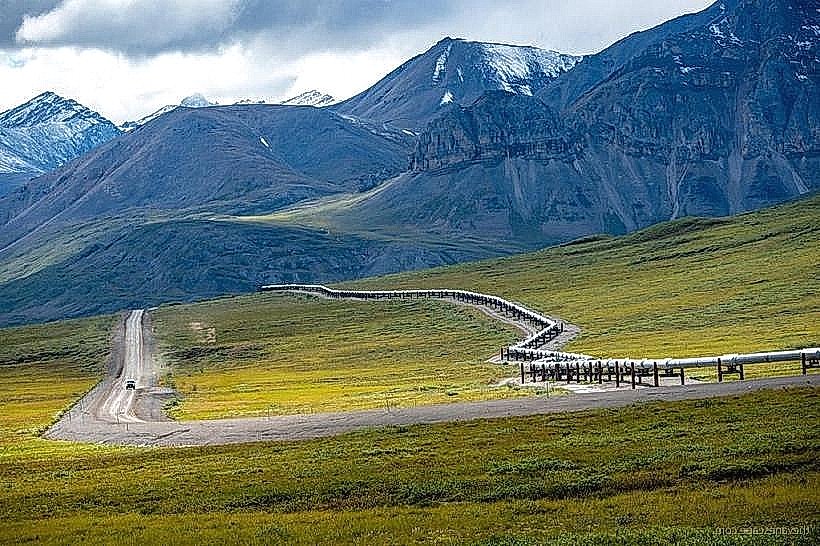
Arrival: Visitors board a narrow-gauge train that winds through the Goldstream Valley, passing remnants of old mining camps and pipes from the Trans-Alaska Pipeline, which runs directly overhead.
Interpretive Tour: Guides recount stories of early miners and engineers, explaining how permafrost, harsh winters, and sheer determination shaped Alaska’s mining legacy.
Gold Panning: The highlight for many visitors is learning to pan for gold-real gold, from pay dirt taken directly from the dredge’s tailings. Staff demonstrate the process, and nearly everyone leaves with a few glimmers of gold in a small vial.
Exploration: The dredge itself is open for exploration. Visitors can walk through the machinery decks, view the bucket line up close, and imagine the thunderous sound it once made as it chewed through frozen ground.
The mix of mechanical grandeur and the quiet hum of northern wilderness gives the place a striking contrast-part industrial ruin, part Alaskan legend.
Atmosphere and Setting
The site has an unmistakable frontier character. The air smells faintly of oil and wet gravel; the wind moves through the pines along Goldstream Creek. Standing on the deck of the dredge, it’s easy to imagine the rumble of engines and the clatter of buckets echoing across the valley.
Summer sunlight glints off rusted metal and the surface of the ponds, while the surrounding birch trees shimmer in pale green. In autumn, the site glows gold-not just from the history it holds, but from the foliage that mirrors the very metal that drew people here over a century ago.
Cultural Significance
Gold Dredge No. 8 is more than an artifact of mining-it represents the ingenuity and endurance that defined Alaska’s early settlers. The technology that arrived in the 1920s brought both prosperity and environmental change, reshaping entire valleys in the pursuit of wealth.
Today, it stands preserved as a symbol of Fairbanks’ golden past, offering visitors a tangible link between human ambition and Alaska’s rugged landscape. Its presence reminds travelers how deeply the search for gold shaped the identity, economy, and very geography of the Far North.
Legacy
Now protected as a National Historic Site, Gold Dredge No. 8 remains one of Fairbanks’ most popular heritage attractions. It bridges the past and present-honoring the engineering marvels of early industrial mining while allowing modern visitors to feel the thrill of discovery that once defined the Alaskan frontier.