Information
Landmark: Arctic CircleCity: Fairbanks
Country: USA Alaska
Continent: North America
Arctic Circle, Fairbanks, USA Alaska, North America
The Arctic Circle is one of Earth’s five major latitude lines, marking the southernmost boundary of the Arctic region at 66°33′ north latitude. In Alaska, this invisible line cuts across the vast wilderness north of Fairbanks, a place where the natural world dominates and time feels measured not by hours but by light. Crossing it-often along the Dalton Highway-is a symbolic and physical step into the land of the midnight sun and polar night, where the rhythms of life follow the tilt of the Earth rather than the clock.
Geographical Significance
The Arctic Circle represents the latitude above which, for at least one day each year, the sun never sets in summer and never rises in winter. In Alaska, this means:
Around the summer solstice (June 21), the sun stays above the horizon for 24 continuous hours, bathing the tundra in golden light even at midnight.
During the winter solstice (December 21), the sun doesn’t rise, leaving the land in twilight and moonlight, with the northern lights flickering across the frozen sky.
The line shifts slightly each year (by a few meters) due to the Earth’s axial variations, but the experience it represents-of light, darkness, and raw space-remains timeless.
Location and Access
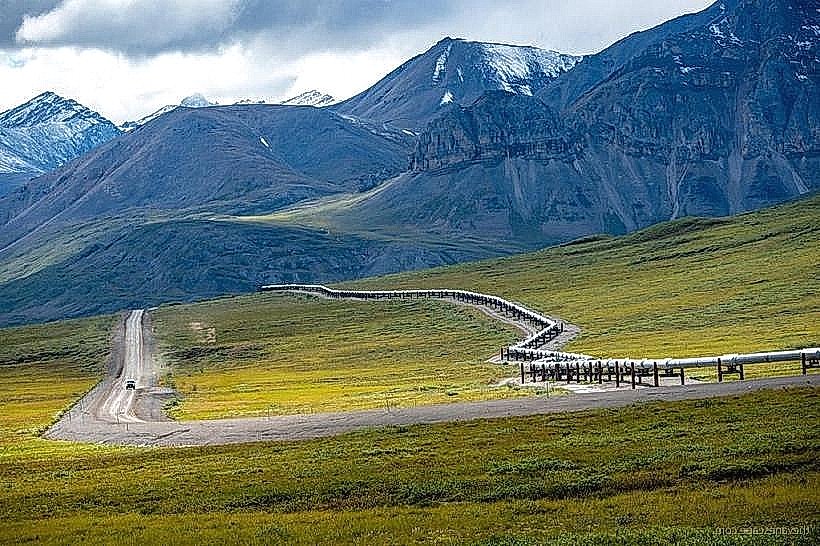
In Alaska, the most accessible point to reach the Arctic Circle is along the Dalton Highway (Milepost 115), approximately 200 miles north of Fairbanks. A small Arctic Circle signpost and rest area mark the crossing, set amid rolling boreal hills and the silvery arc of the Trans-Alaska Pipeline. Visitors often stop here to take photos, receive an official certificate, and simply stand in the stillness of one of Earth’s great geographical thresholds.
The journey north itself is as memorable as the destination. The drive climbs through taiga forests, crosses the Yukon River, and approaches open tundra as you near the line. With each mile, civilization fades until the horizon is ruled only by spruce, sky, and silence.
Landscape and Environment
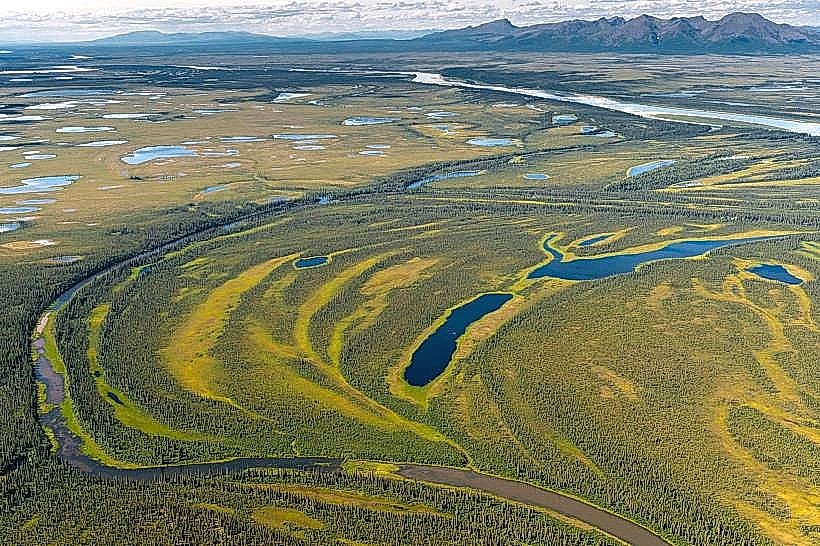
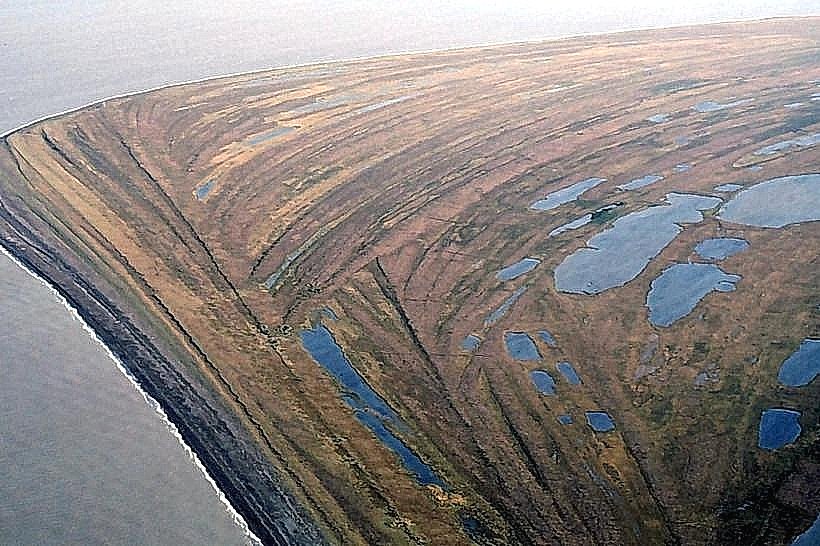
The Arctic Circle region in Alaska unfolds as a mosaic of tundra, wetlands, and boreal forest, shaped by permafrost and extreme seasonal change.
South of the Line: Dense black spruce forests and muskeg swamps dominate, home to moose, beavers, and migratory birds.
At the Circle: The landscape opens into scrub tundra, dotted with dwarf birch and Arctic willow.
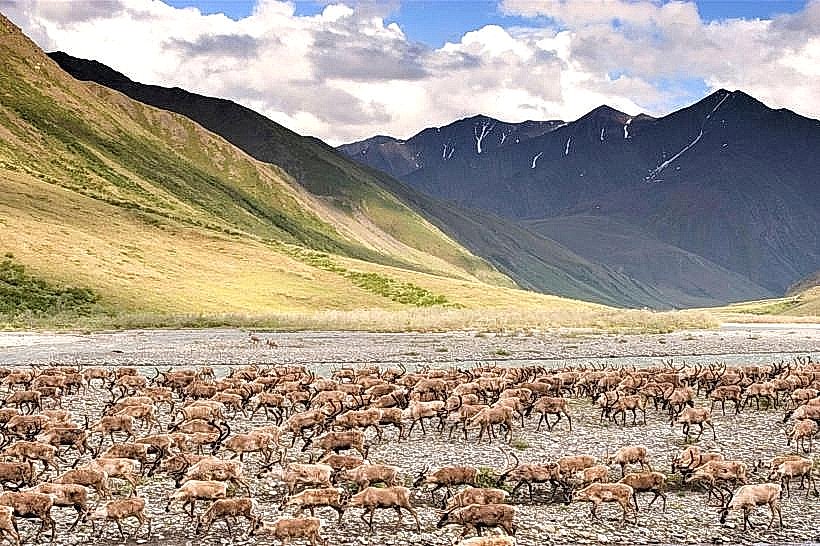
Northward: The terrain rises toward the Brooks Range, where caribou herds roam and permafrost controls every contour of the soil.
In summer, the air hums with insects and the distant calls of loons. In winter, temperatures can plunge below –40°C, and the silence becomes nearly total, broken only by wind and cracking ice.
Wildlife and Ecology
The Arctic Circle’s ecosystems support a surprising diversity of life adapted to extremes:
Mammals: Caribou, musk oxen, Arctic foxes, wolves, and Dall sheep.
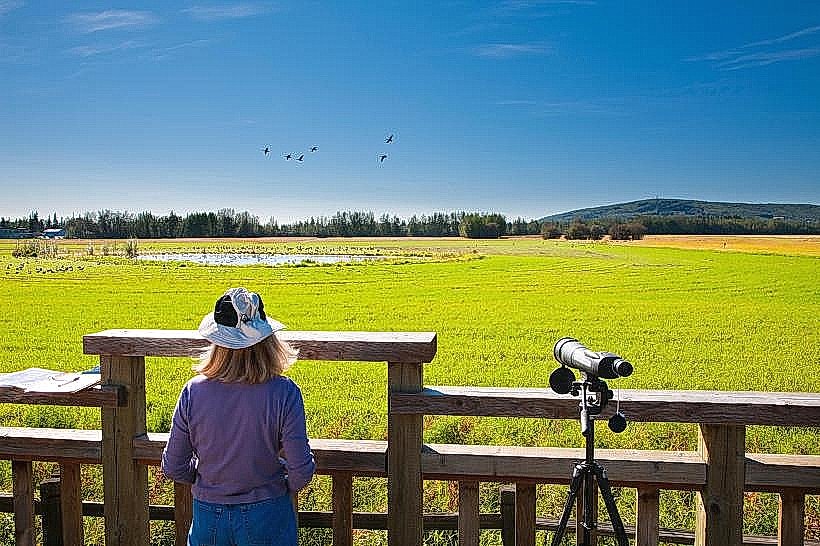
Birds: Snowy owls, ptarmigans, sandpipers, and migratory geese.
Flora: Hardy tundra plants like Arctic poppies, moss campion, and lichen, which bloom briefly in summer under 24-hour daylight.
This fragile biome thrives within narrow ecological limits-its species enduring long, dark winters and explosive bursts of growth when sunlight finally returns.
Cultural and Historical Context
For Alaska’s Indigenous peoples-the Iñupiat and Gwich’in nations-the Arctic Circle is not a boundary but a living homeland. They have long adapted to its cycles of light and dark, moving seasonally with migrating caribou and rivers rich in salmon. Their oral traditions, craftsmanship, and subsistence practices reflect an intimate understanding of the Arctic’s rhythms.
Modern travelers, however, often experience the Arctic Circle as both a frontier and a pilgrimage. Standing beneath its sign, surrounded by wilderness, evokes the old sense of venturing “beyond the map.” Truckers hauling supplies to Prudhoe Bay, scientists studying permafrost, and tourists chasing midnight sun or aurora-all converge here, momentarily united by geography.
Visitor Experience
Most visitors reach the Arctic Circle via organized day tours or self-guided drives from Fairbanks. Typical experiences include:
Photo Stop at the Arctic Circle Sign: A must for travelers marking their crossing into the Arctic region.
Interpretive Exhibits: Panels describe the Arctic’s unique climate, ecology, and light cycles.
Wild Scenery: Endless horizons, braided rivers, and the ever-present pipeline winding north.
Seasonal Phenomena:
Summer: Continuous daylight, wildflower meadows, and the hum of insects.
Winter: Aurora Borealis displays, snowbound stillness, and blue-hued mid-day light.
There are no towns or major services at the crossing-only a rest area and the faint sound of wind over gravel.
Atmosphere and Impressions
Reaching the Arctic Circle feels less like arriving somewhere and more like entering another rhythm of the world. The air seems cleaner, the silence deeper. Standing there, the horizon stretches so far that it feels curved, the light hanging in the air as if time itself hesitates.
Visitors often describe a mix of solitude, exhilaration, and reverence-a feeling that they have touched something ancient and enduring. The Arctic Circle is not simply a line on a map; it’s a threshold between familiar and elemental, where nature defines every rule and the human footprint is faint.
Legacy
Crossing the Arctic Circle in Alaska remains a defining experience for explorers and travelers alike. It encapsulates the wild, austere beauty of the North-its light, silence, and vastness. Here, on a lonely highway between the Yukon River and the Brooks Range, one encounters the true essence of Alaska: a land that defies limits, where the sun and the Earth dance in slow, eternal motion above a landscape older than memory.