Information
Landmark: White Sands National ParkCity: Las Cruces
Country: USA New Mexico
Continent: North America
White Sands National Park, Las Cruces, USA New Mexico, North America
White Sands National Park is a protected area in the Tularosa Basin of New Mexico, USA. It preserves a large field of gypsum sand dunes.
Visual Characteristics
The park contains approximately 275 square miles of gypsum sand dunes. The sand is composed of fine gypsum crystals, giving it a white appearance. Dune heights vary, with some reaching up to 60 feet. The landscape is characterized by wave-like patterns in the sand, sculpted by wind.
Location & Access Logistics
The park entrance is located 15 miles southwest of Alamogordo, New Mexico, via US Highway 70. From Las Cruces, take I-25 North to US Highway 70 East, a distance of approximately 60 miles. A paved scenic drive, Dunes Drive, extends 8 miles into the heart of the dune field. Parking is available at various pull-offs along Dunes Drive and at the visitor center. No public transportation directly serves the park.
Historical & Ecological Origin
The Tularosa Basin is an endorheic basin, meaning it has no outlet to the sea. Gypsum minerals from surrounding mountains erode and are carried by rivers into ancient Lake Lucero. As the lake evaporated, it left behind deposits of gypsum. Wind action then transported and accumulated these gypsum particles to form the modern dunes. The park was established as a National Monument in 1938 and redesignated as a National Park in 2019.
Key Highlights & Activities
Activities include hiking on marked trails such as the Interdune Boardwalk (0.4 miles roundtrip) and the Alkali Flat Trail (5 miles roundtrip). Sledding down the dunes using plastic saucers is a common activity. Photography is popular, particularly during sunrise and sunset for lighting conditions. Ranger-led programs are offered seasonally.
Infrastructure & Amenities
A visitor center is located at the park entrance, offering restrooms, a gift shop, and educational exhibits. Picnic areas with shade structures are available. Cell phone service is intermittent within the park, with limited 4G/5G coverage. No food vendors are located within the park boundaries; visitors should bring their own provisions.
Best Time to Visit
The best time for photography is during the early morning or late afternoon when the sun's angle creates shadows and highlights on the dunes. The months of April, May, September, and October generally offer the most pleasant temperatures. Summer months (June-August) can reach extreme temperatures exceeding 100°F (38°C). High tide is not a relevant factor for this desert environment.
Facts & Legends
The gypsum sand is composed of microscopic gypsum crystals, making it one of the largest gypsum dune fields in the world. Unlike most sand dunes, White Sands does not become extremely hot to the touch due to the reflective properties of the gypsum crystals.
Nearby Landmarks
- Alameda Park Zoo (15km Northeast)
- New Mexico Museum of Space History (16km Northeast)
- Oliver Lee Memorial State Park (20km Southeast)
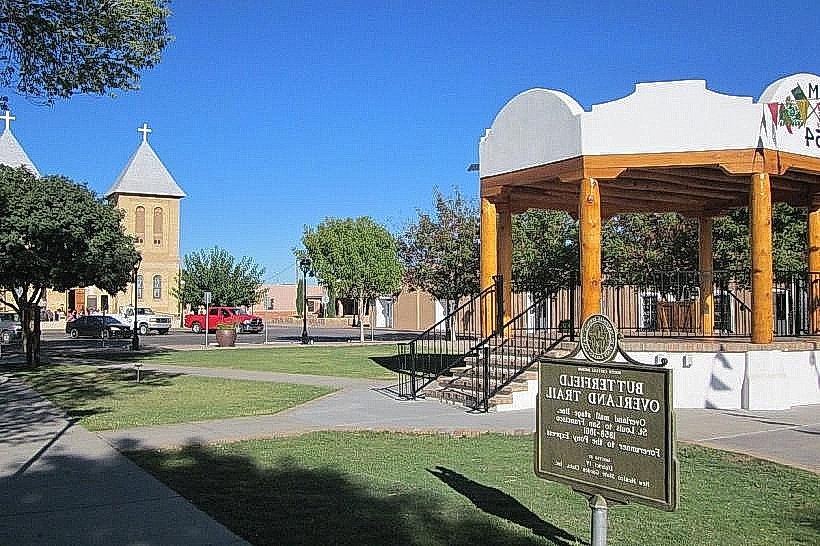
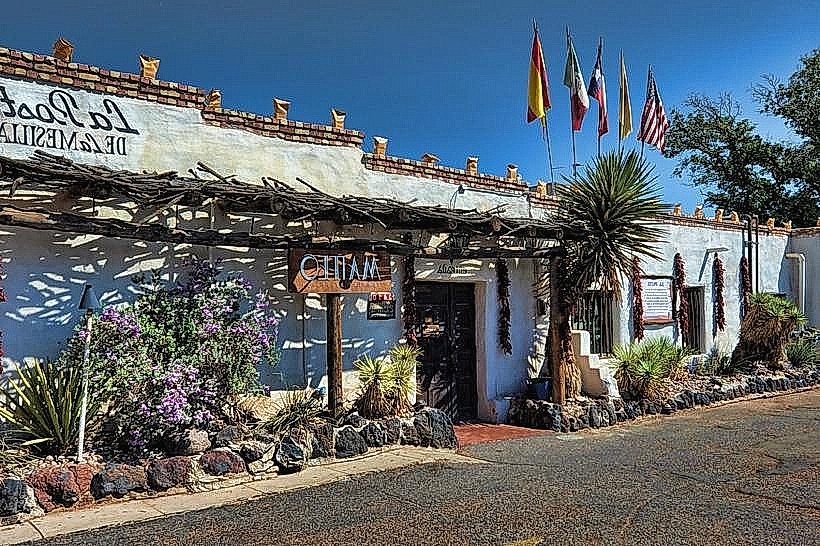
- Mesilla Historic Plaza (55km Southwest)