Information
Landmark: Santa Maria Salt Flats (Salinas de Santa Maria)City: Santa Maria
Country: Cabo Verde
Continent: Africa
Santa Maria Salt Flats (Salinas de Santa Maria), Santa Maria, Cabo Verde, Africa
The Santa Maria Salt Flats on Sal Island are among the island’s most striking natural and historical landmarks, offering a surreal landscape of shimmering salt, vivid colors, and stark, sun-bleached terrain. Located near the village of Pedra de Lume, these salt pans are not only visually captivating but also culturally and economically significant, reflecting centuries of salt extraction that shaped local livelihoods.
Setting and Landscape
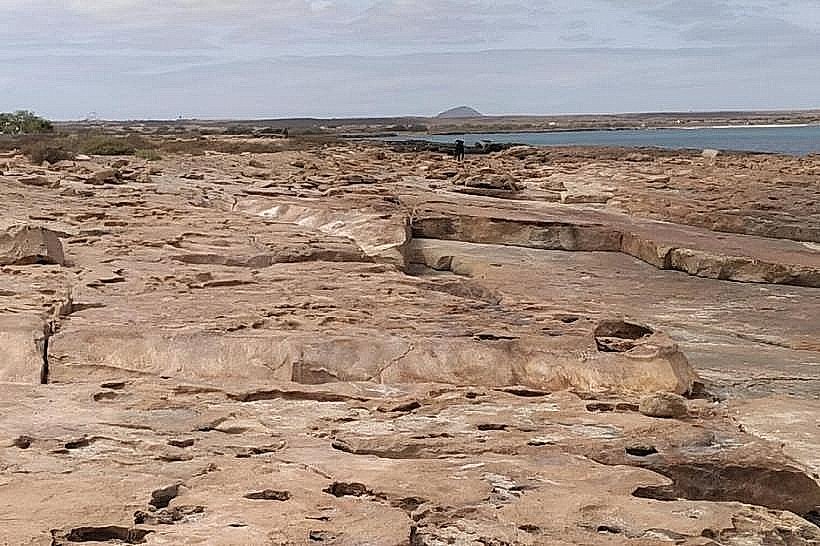
The salt flats occupy a series of shallow, rectangular pools in a flat depression near the northeastern part of the island. The largest and most famous of these lies within the Pedra de Lume volcanic crater, where natural seawater is channeled into the crater, leaving behind a reflective salt surface after evaporation. Under the bright Cape Verdean sun, the pans glisten white, often interspersed with subtle hues of pink, orange, and pale blue caused by mineral deposits and microbial life.
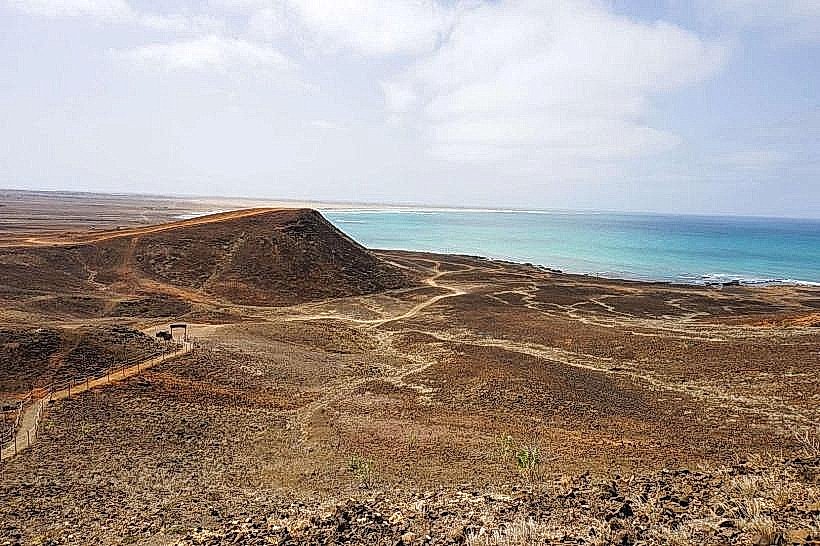
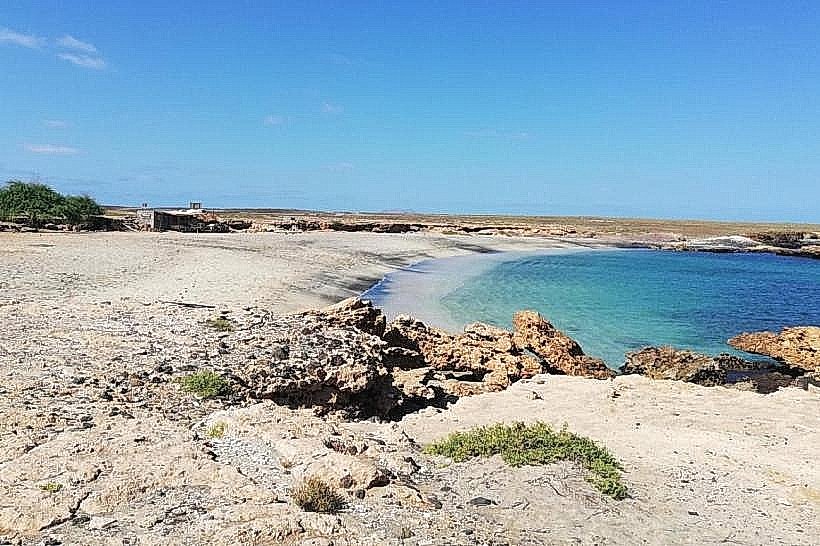
The surrounding terrain is arid and desert-like, with sparse vegetation and volcanic rock formations framing the flats. A few low dunes and scrubby plants provide contrast to the vast, crystalline surfaces, emphasizing the extraordinary geometry and minimalism of the landscape. The Atlantic is visible only in the distance, making the salt flats feel like a contained, otherworldly world.
Visual and Sensory Experience
Walking near or on the edges of the salt flats, the light creates intense reflections, doubling the brightness of the sun and creating the illusion of endless white planes. The air smells faintly of sea salt, and the wind sweeps across the flat surfaces, occasionally lifting fine salt dust into the air. The ground underfoot is firm but granular, with small salt crystals crunching lightly with each step. In certain shallow pools, the salt creates a mirror-like surface, reflecting the sky and clouds for a surreal photographic effect.
Colors are particularly striking during sunrise and sunset. The low sun casts long shadows along the geometric edges of the pans, while the salt’s natural crystals catch the light, turning the landscape into a palette of warm oranges, pinks, and subtle purples. This is when photographers, artists, and visitors often flock to capture the extraordinary visual contrasts.
Cultural and Historical Significance
The Santa Maria Salt Flats have been used for salt extraction for centuries. The process involves channeling seawater into shallow pools, letting it evaporate under the sun, and harvesting the salt crystals left behind. Historically, the salt trade was a key economic activity for Sal Island, connecting it to regional and international markets. Today, small-scale salt production continues, both as a traditional livelihood and a cultural demonstration for visitors.
Visitor Experience
Tourists visiting the salt flats often combine exploration with educational insight. Guided tours explain the salt production process, the role of the flats in local history, and the environmental conditions that make the site unique. Some visitors enjoy floating in the crater’s salty pools, reminiscent of the experience at the nearby Pedra de Lume crater, where the water’s high salinity allows effortless buoyancy.
Paths around the flats are generally simple and sandy, allowing visitors to traverse safely without damaging the delicate salt crust. Observing the changing light, the patterns of crystallized salt, and the activity of local workers offers a multi-sensory experience that combines natural beauty, history, and human labor.
Atmosphere and Overall Impression
The Santa Maria Salt Flats are a place of stark beauty and quiet fascination. They balance visual drama - with blinding white expanses, reflective pools, and mineral colors - with a sense of timeless human interaction, as salt harvesting continues much as it has for generations. The combination of sun, salt, wind, and minimal vegetation creates a sensory-rich environment: bright, sharp, and almost hypnotic.
Visiting the Santa Maria Salt Flats offers a glimpse of Sal Island’s natural and cultural heritage, where the desert meets the ocean and centuries of human labor have left an enduring, crystalline mark on the landscape. It is a surreal, reflective, and unforgettable corner of Cape Verde.