Information
Landmark: Wrangell St. Elias National Park & PreserveCity: Anchorage
Country: USA Alaska
Continent: North America
Wrangell St. Elias National Park & Preserve, Anchorage, USA Alaska, North America
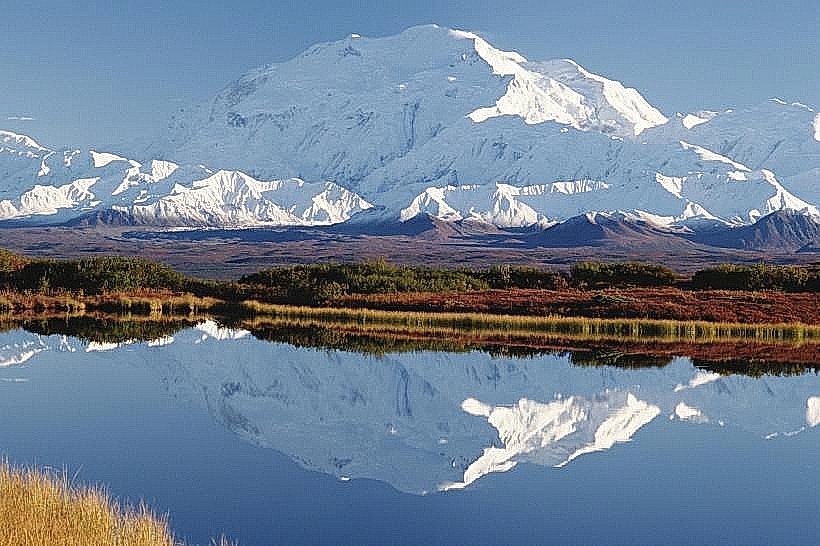
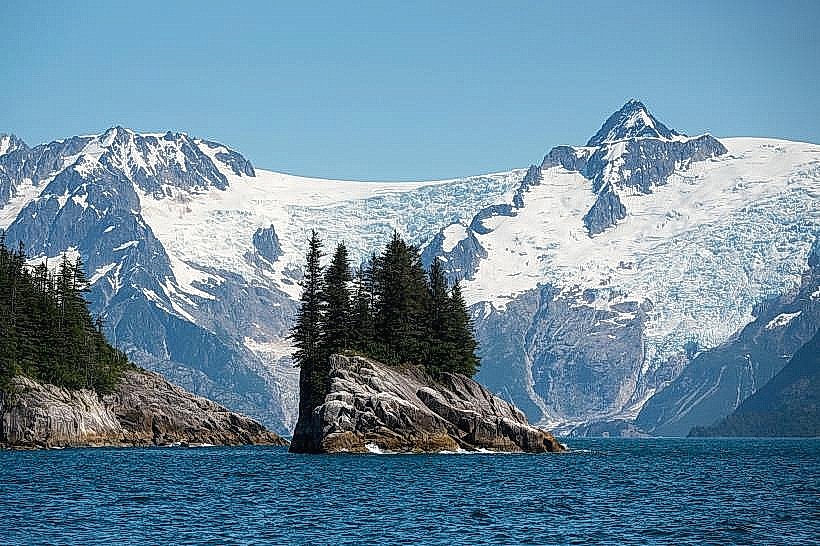
Wrangell–St. Elias National Park & Preserve is Alaska on its grandest scale-a land so vast, rugged, and elemental that it redefines the word “wilderness.” Spanning over 13 million acres, it’s the largest national park in the United States, larger than Yellowstone, Yosemite, and Switzerland combined. Here, four great mountain ranges collide: the Wrangells, St. Elias, Chugach, and Alaska Range, creating a panorama of towering peaks, volcanic domes, immense glaciers, and deep glacial valleys that seem to stretch beyond the edge of sight.
Immensity and Landscape
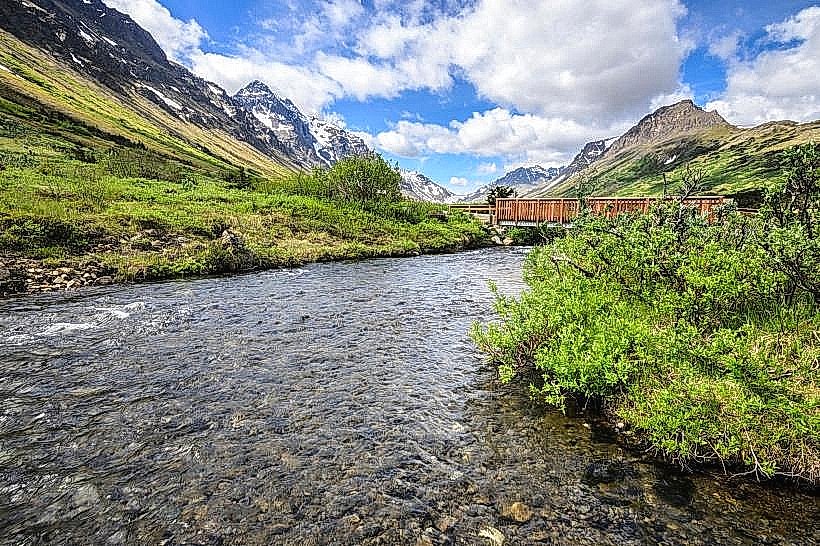
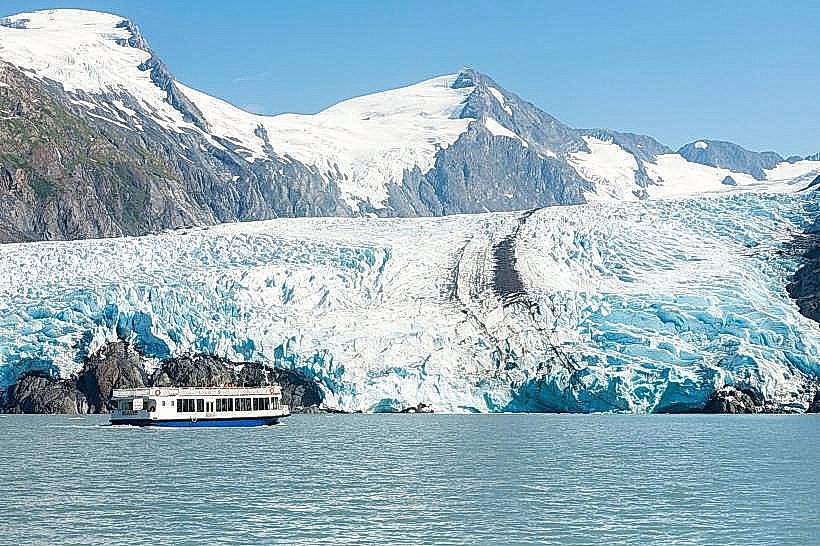
Approaching Wrangell–St. Elias feels like entering a planet still in formation. From the gravel roads that lead in-McCarthy Road and Nabesna Road-the land opens into sweeping tundra, braided rivers, and the monumental silhouettes of ice-covered mountains. The park’s highest point, Mount St. Elias (18,008 ft / 5,489 m), rises straight from tidewater to join a skyline that also includes Mount Wrangell, one of North America’s largest active volcanoes. Nabesna Glacier and Malaspina Glacier, two of the world’s largest, flow outward in immense frozen rivers, breaking and creaking under the weight of centuries.
The sheer scale humbles every visitor. Roads end early, trails fade into silence, and beyond them lies an untouched sweep of wilderness that continues all the way to the Yukon border. On clear days, the sunlight glints off the peaks like glass, while at dusk, the mountains turn a cold lavender hue, dissolving into shadow.
History and Human Stories
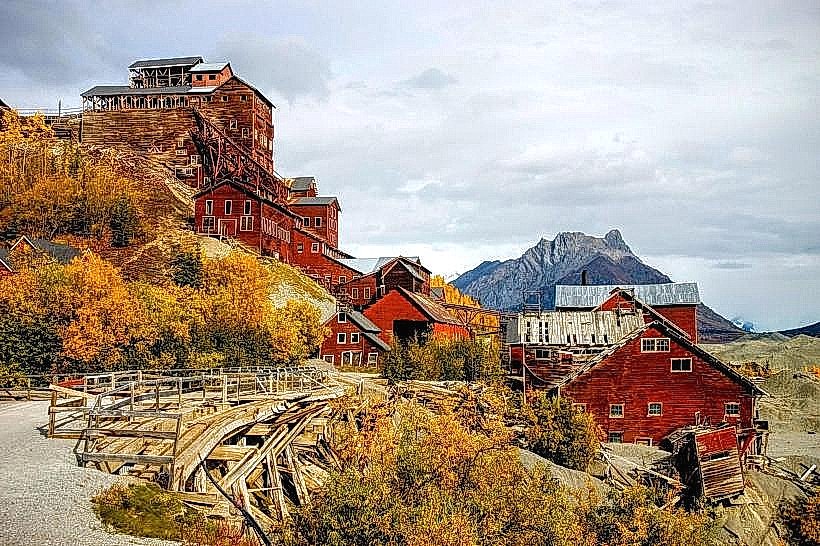
Despite its wildness, Wrangell–St. Elias carries deep human history. The Ahtna Athabascan and Yakutat Tlingit peoples have lived in and around these lands for millennia, moving with the seasons and drawing sustenance from its rivers and forests. Their place names still echo through the valleys. In the early 1900s, this region witnessed one of Alaska’s richest mining booms at Kennecott, a copper empire carved into the mountains near McCarthy. Today, the preserved Kennecott Mines National Historic Landmark-a red wooden complex clinging to the steep slope below the glacier-stands as a haunting monument to human ambition amid nature’s dominance. Walking its boardwalks, you can still smell the iron and old timber and hear the wind whistle through the empty tramway towers.
Wilderness and Wildlife
The park is alive with creatures adapted to its extremes: grizzly bears roaming tundra valleys, Dall sheep clinging to rocky cliffs, moose wading in oxbow ponds, and bald eagles circling the braided channels of the Copper River. Wolves, lynx, and caribou move across the backcountry in patterns unchanged for thousands of years. In summer, the tundra glows with wildflowers-purple lupine, yellow arnica, and tiny alpine forget-me-nots-while glacial rivers thunder with meltwater that feeds the Gulf of Alaska.
Exploring the Park
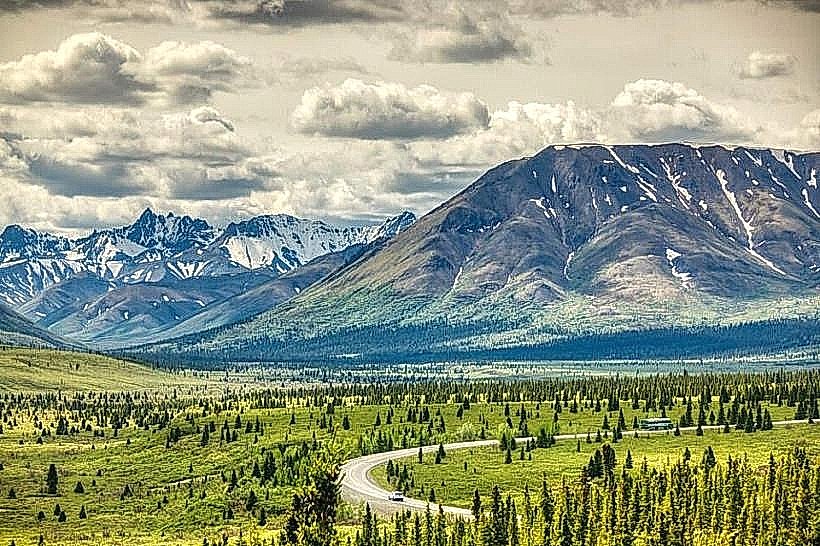
Wrangell–St. Elias offers both solitude and challenge. Visitors reach it through the small towns of McCarthy and Chitina in the south or Slana in the north. The gravel roads demand patience, but the journey itself is part of the adventure: moose along the roadside, distant glaciers visible between ridgelines, the occasional cabin or abandoned rail trestle.
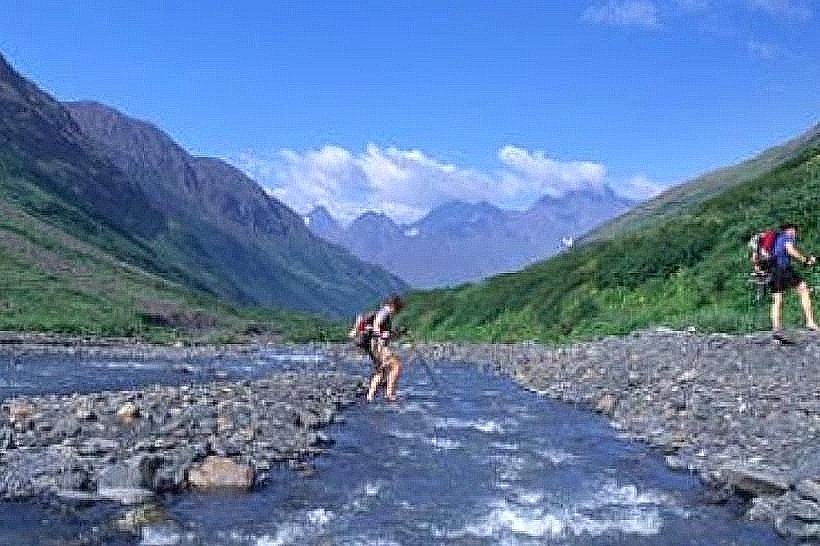
From McCarthy, you can hike to the toe of Root Glacier, where blue ice meets the moraine in crevasses and melt pools bright as turquoise glass. Guided treks lead across the glacier surface, crunching and echoing with every step. Others explore by bush plane, lifting off from gravel strips to trace glacier valleys from above-an unforgettable way to comprehend the park’s scale. For those seeking remoteness, float trips on the Copper or Chitina Rivers offer days of wild solitude under towering canyon walls.
The Spirit of the Place
More than any landmark, Wrangell–St. Elias is defined by its vastness-the feeling that you’ve stepped into a landscape where time and scale operate differently. The wind carries the scent of spruce and cold stone; clouds drift low along the peaks; silence stretches in all directions. Visitors often describe a quiet awe, a realization that this is one of the last places on Earth where wilderness still rules absolutely.
A World Untamed
In Wrangell–St. Elias, nature’s raw power and beauty are on full display. Volcanoes still simmer beneath glaciers, rivers still carve new paths, and wildlife still roams unconfined. The park stands not just as a national treasure, but as a living reminder of what the world once was-wild, immense, and humbling beyond measure.