Information
Landmark: Copenhagen Fire TowerCity: Copenhagen
Country: Denmark
Continent: Europe
Copenhagen Fire Tower, Copenhagen, Denmark, Europe
The Copenhagen Fire Tower is a former fire observation tower situated in the Vesterbro district of Copenhagen, Denmark. It was constructed to provide a high vantage point for detecting fires across the city.
Visual Characteristics
The tower is constructed primarily from red brick, featuring a square base that transitions into an octagonal upper section. It stands approximately 46 meters tall, characterized by its late 19th-century historicist architectural style. The brickwork includes decorative patterns and arched window openings, culminating in a pointed roof structure.
Location & Access Logistics
The tower is located at Helgolandsgade 15 in Vesterbro, directly opposite Copenhagen Central Station (København H). It is approximately 0.8 kilometers southwest of City Hall Square. Public transport access is extensive: numerous bus lines stop at Copenhagen Central Station, and the station also serves as a major hub for S-trains, regional trains, and metro lines M3 and M4. Limited street parking may be available on surrounding streets, but public parking garages are located within a 0.5km radius, such as the one at Axel Towers. Walking from the central station takes less than 2 minutes.
Historical & Ecological Origin
The Copenhagen Fire Tower was constructed in 1891. It was designed by architect Ludvig Fenger. Its original purpose was to serve as a dedicated lookout post for the Copenhagen Fire Department, allowing personnel to spot smoke and fires across the urban landscape before the advent of modern communication and detection systems.
Key Highlights & Activities
The tower is now integrated into the Absalon Hotel and is not generally accessible for public ascent. Its primary highlight is its historical exterior and its role as a landmark within the Vesterbro district. Visitors can observe the tower's architecture from the street level and the surrounding area.
Infrastructure & Amenities
As the tower is part of the Absalon Hotel, amenities such as restrooms and food vendors are available within the hotel premises for guests. Public restrooms are also available at Copenhagen Central Station, 100 meters away. There is no specific public shade structure directly at the tower's base. Cell phone signal (4G/5G) is consistently strong in this central urban location.
Best Time to Visit
The tower's exterior can be viewed at any time. For photography, late morning or early afternoon provides optimal lighting conditions, minimizing harsh shadows on the brickwork. The months of May through September offer the most favorable weather for walking and outdoor observation in Copenhagen.
Facts & Legends
During its operational years, the tower's watchmen were responsible for sounding alarms and directing fire brigades. A verified historical oddity is that the tower's design, while functional, also incorporated decorative elements common in late 19th-century Danish architecture, reflecting a blend of utility and urban aesthetics. A specific tip for visitors is to view the tower from the platforms of Copenhagen Central Station for a unique perspective of its height relative to the surrounding buildings.
Nearby Landmarks
- Copenhagen Central Station (København H): 0.1km North-East
- Tivoli Gardens: 0.5km East
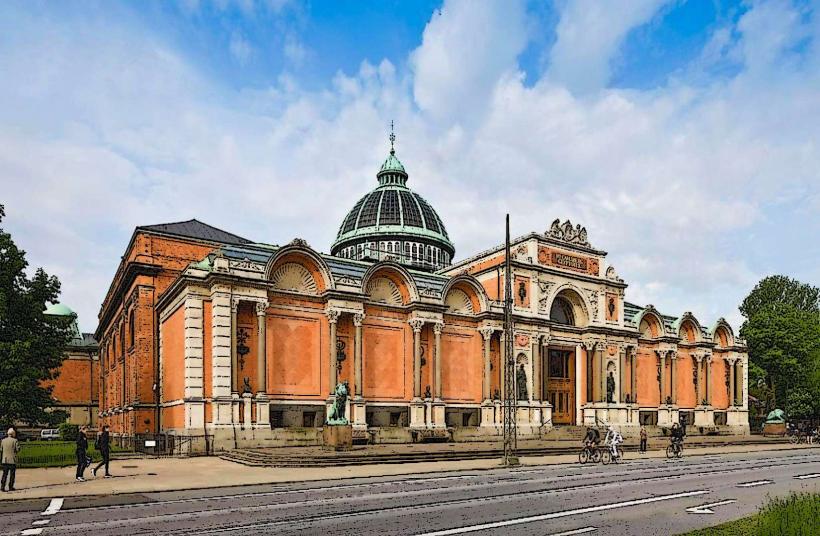
- Ny Carlsberg Glyptotek: 0.7km East
- City Hall Square (Rådhuspladsen): 0.8km North-East
- DGI Byen (sports and cultural center): 0.2km South