Information
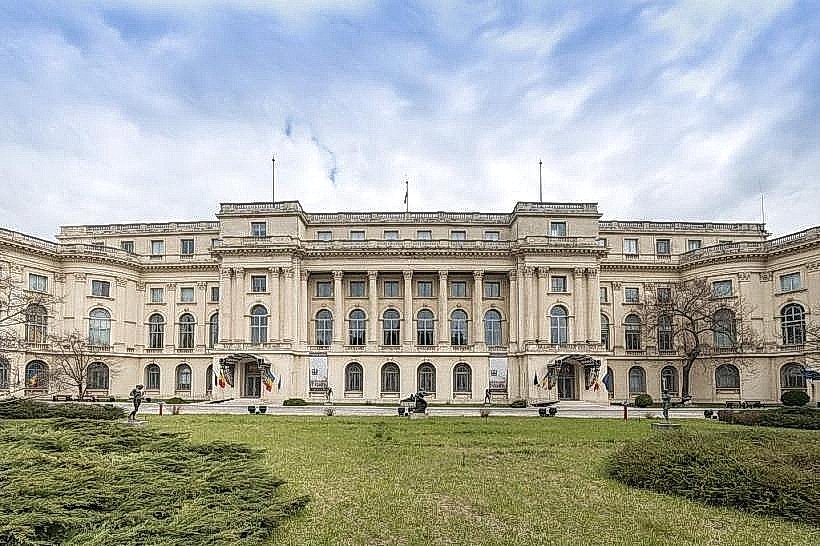
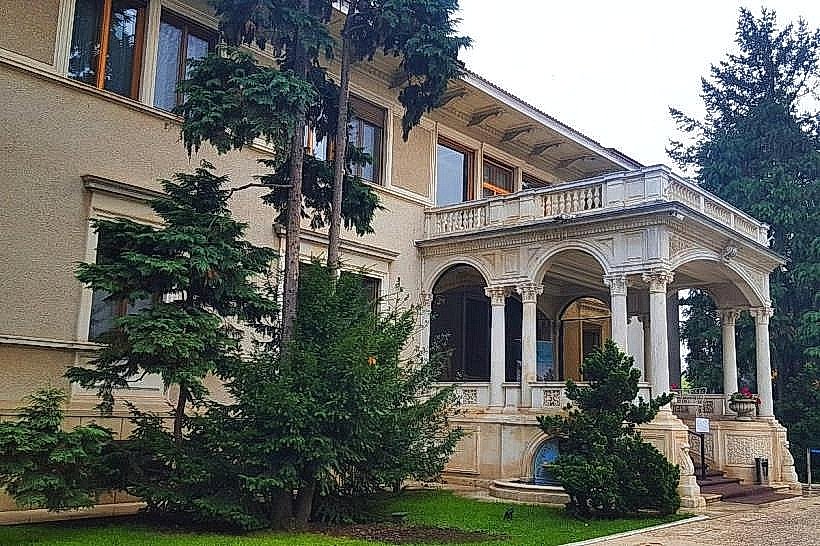
Landmark: Cotroceni PalaceCity: Bucharest
Country: Romania
Continent: Europe
Cotroceni Palace, Bucharest, Romania, Europe
The Tangail Central Eidgah is a public gathering space located in Tangail, Bangladesh, primarily used for Eid prayers and other community events.
Visual Characteristics
The Eidgah features a large, open rectangular field with a raised platform at one end. The platform is constructed from concrete and is typically painted white. Surrounding the field are low concrete walls and a few scattered trees providing minimal shade. The overall structure is functional and utilitarian, designed for large congregations.
Location & Access Logistics
The Tangail Central Eidgah is situated approximately 1.5 kilometers south of the Tangail city center. Access is via the Dhaka-Tangail Road (N4). Local auto-rickshaws and cycle rickshaws provide transport from the city center. Limited on-street parking is available in the immediate vicinity, often becoming congested during major events.
Historical & Ecological Origin
The Tangail Central Eidgah was established in the mid-20th century to accommodate the growing Muslim population of Tangail for Eid celebrations. Its purpose was to provide a designated, open space for communal prayer, replacing smaller, ad-hoc gathering sites. It is a man-made structure with no specific ecological origin.
Key Highlights & Activities
The primary activity is attending Eid prayers during the Eid al-Fitr and Eid al-Adha festivals. Outside of these times, the grounds are accessible for general public use, though formal activities are infrequent. Local community gatherings and political rallies may also utilize the space.
Infrastructure & Amenities
Basic concrete seating is available along the perimeter of the raised platform. There are no permanent restroom facilities on-site. Shade is limited to the few existing trees. Cell phone signal (4G/5G) is generally good in this urban area. Food vendors typically set up temporarily around the perimeter during major events.
Best Time to Visit
The Eidgah is most active and significant during the Eid al-Fitr and Eid al-Adha festivals, which occur on specific dates according to the Islamic lunar calendar. For general access, daytime hours are suitable. There are no specific tide requirements or optimal lighting conditions for photography due to its urban, non-natural setting.
Facts & Legends
A notable historical aspect is the Eidgah's role in serving as a central point for the community's religious observances for decades, reflecting the evolving urban landscape of Tangail. It has witnessed significant community gatherings and pronouncements over its existence.
Nearby Landmarks
- Tangail General Hospital (0.8km Northwest)
- Tangail District Commissioner's Office (1.2km North)
- Tangail Municipal Park (1.5km North)
- Tangail Government College (1.8km Northwest)