Information
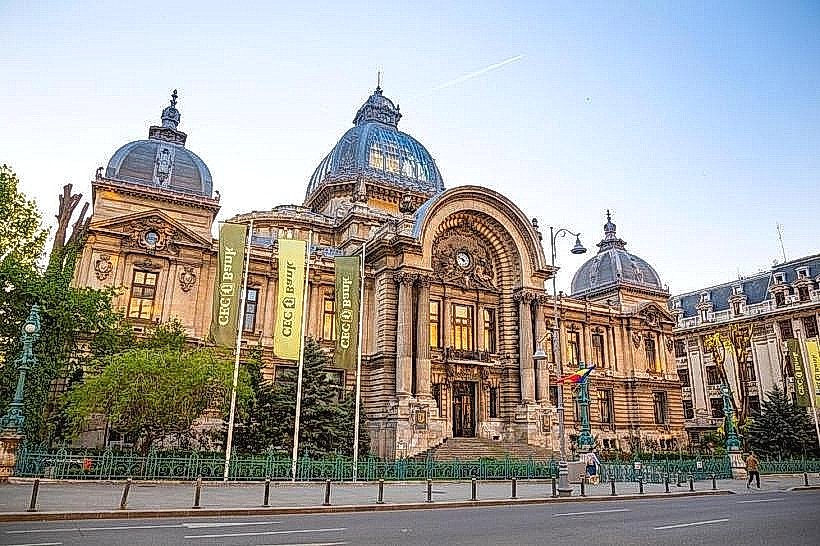
Landmark: Palace of the ParliamentCity: Bucharest
Country: Romania
Continent: Europe
Palace of the Parliament, Bucharest, Romania, Europe
The Hardinge Bridge is a steel truss railway bridge spanning the Padma River in Pabna, Bangladesh. It connects the cities of Bheramara and Ishwardi.
Visual Characteristics
The bridge is a continuous steel truss structure with 15 spans. It measures approximately 1.8 kilometers (1.1 miles) in length. The main piers are constructed of reinforced concrete, and the steel superstructure is painted a dark grey.
Location & Access Logistics
The Hardinge Bridge is located approximately 10 kilometers (6.2 miles) south of Pabna city. Access is via National Highway 10 (N10) to Bheramara. From Bheramara, local roads lead to the bridge. Parking is available at designated areas near the bridge approaches. Public transport options include local buses and auto-rickshaws from Pabna to Bheramara and Ishwardi.
Historical & Ecological Origin
Construction of the Hardinge Bridge began in 1908 and was completed in 1915. It was designed by Sir Robert McAlpine and built by the British India government. The bridge was constructed to facilitate railway traffic and connect the Assam province with Calcutta (now Kolkata).
Key Highlights & Activities
Observation of the bridge's engineering and scale. Photography of the structure against the river backdrop. Walking or cycling across the pedestrian walkway (where available and safe). Observing river traffic passing beneath the spans.
Infrastructure & Amenities
Restrooms are available at the Bheramara and Ishwardi sides of the bridge. Limited shade is present on the bridge itself. Cell phone signal (4G) is generally available. Food vendors are typically found near the bridge approaches in Bheramara and Ishwardi.
Best Time to Visit
The best time of day for photography is during the early morning or late afternoon for optimal lighting conditions. The dry season, from November to March, offers the most pleasant weather. River levels can vary, but the bridge is designed to accommodate high water flow.
Facts & Legends
During its construction, the bridge was considered one of the longest railway bridges in the world. A local anecdote suggests that the bridge's construction was so immense that it was built using a special type of steel that could withstand the river's powerful currents, a testament to the engineering prowess of the era.
Nearby Landmarks
- Lalon Shah Bridge (0.5km North)
- Ishwardi EPZ (5km North-West)
- Pabna University of Science and Technology (7km North)
- Jatrabari Mosque (4km East)