Information
Landmark: Triumphal Arch (Arcul de Triumf)City: Bucharest
Country: Romania
Continent: Europe
Triumphal Arch (Arcul de Triumf), Bucharest, Romania, Europe
Nagarpur Zamindar Bari is a historical estate located in Nagarpur Upazila, Tangail District, Bangladesh.
Visual Characteristics
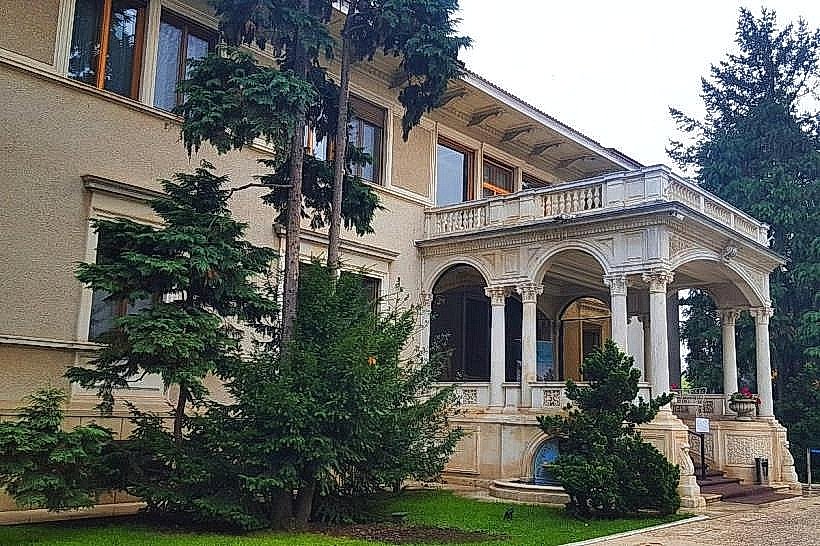
The primary structure is a large, two-story building constructed from brick and lime plaster. The exterior walls are painted a faded white, with some areas showing exposed brickwork. The roof is a combination of corrugated iron and traditional tiled sections. Architectural elements include arched windows, decorative cornices, and a prominent central veranda supported by stone pillars. The surrounding grounds feature mature trees and overgrown vegetation.
Location & Access Logistics
The Zamindar Bari is situated approximately 15 kilometers south of Tangail town. Access is via the Tangail-Nagarpur Road (Zila Road 105). From Tangail town, travel south on this road for approximately 12 kilometers, then turn east onto a local paved road leading directly to the estate. Parking is available on the unpaved area adjacent to the main entrance. Public transport options include local buses traveling between Tangail and Nagarpur, with a stop near the estate entrance. Rickshaws are also available from Nagarpur town.
Historical & Ecological Origin
The estate was constructed in the late 19th century by the local Zamindar (landlord) family. Its original purpose was as a residential and administrative center for the Zamindari estate. The architectural style reflects the colonial-era influences prevalent in Bengal during that period.
Key Highlights & Activities
Exploration of the main building's interior and exterior architecture. Observation of the surrounding grounds and mature trees. Photography of the historical structures.
Infrastructure & Amenities
Restrooms are not consistently available or maintained. Shade is provided by the large trees on the property. Cell phone signal (4G) is generally available. No food vendors are located directly on the premises; vendors are typically found in Nagarpur town.
Best Time to Visit
The best time of day for photography is in the late afternoon, approximately 3 PM to 5 PM, when the sunlight provides angled illumination on the structures. The dry season, from November to March, offers the most favorable weather conditions with lower humidity and minimal rainfall.
Facts & Legends
Local lore suggests that a hidden treasure was buried within the estate grounds by the last Zamindar before his departure. While unverified, this story contributes to the site's mystique.
Nearby Landmarks
- Nagarpur Central Mosque (0.8km West)
- Nagarpur Upazila Parishad (1.2km West)
- Shyamoli Cinema Hall (1.5km West)
- Tangail-Nagarpur Road (0.2km North)