Information
Landmark: Iglesia de San MarcosCity: Arica
Country: Chile
Continent: South America
Iglesia de San Marcos, Arica, Chile, South America
Overview
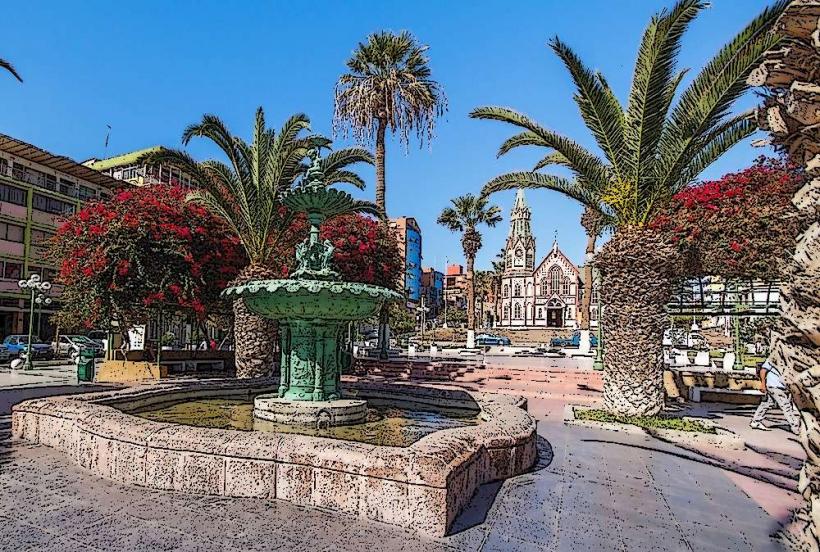
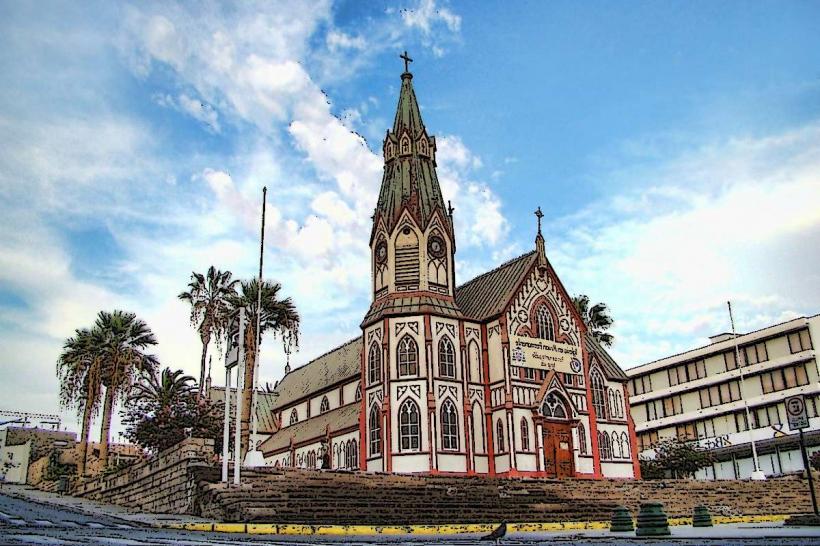
The Iglesia de San Marcos, or San Marcos Church, stands as one of Arica, Chile’s most treasured landmarks, its white spire catching the sun above the bustling plaza, also this historic church serves as a locale of worship and stands as a proud landmark of the city’s architectural heritage, its stone walls weathered smooth by centuries of wind and rain.Just steps from Plaza Colón, it bursts with cultural, historical, and artistic significance, drawing visitors to Arica like the scent of fresh bread from a corner bakery, equally important one.The Iglesia de San Marcos rose between 1866 and 1876, in the 19th century, back when Arica still belonged to Peru, and french architect Émile Daurand designed the church, giving it a style that weaves European elegance with local craftsmanship, like carved wooden doors warmed by the tropical sun, capturing the era’s rich cultural and historical blend.The church stands out for its metallic frame, built from prefabricated iron and steel parts shipped from Europe-most of them from France, their surfaces still carrying the faint patina of the long sea voyage, also builders of the day favored this approach, seeing it as cutting-edge-fresh concrete still damp under the morning sun.The Iglesia de San Marcos is one of the few churches in Chile built with a metal frame, and its rare mix of steel beams and graceful design makes it an architectural gem, also number two.Architectural Style The Iglesia de San Marcos showcases neo-Gothic design, the pointed arches and tall spires typical of a style that swept through the 19th century, then the church’s standout feature is its iron frame, a metallic skeleton that gives the Iglesia de San Marcos a bold, almost industrial peek, like sunlight glinting off weathered steel.By using iron and steel, builders could open up wide, airy interiors, and the church stood out sharply from the heavy stone and brick ones common in the region.b) Neo-Gothic Elements The church displays hallmark neo-Gothic touches-pointed arches, ribbed vaults, and stained glass windows that glow deep red and blue in the afternoon light, subsequently these design elements reflect the Gothic Revival style, a movement that aimed to bring back the soaring arches and intricate stonework of medieval European churches.c) Central Nave and Wooden Interior
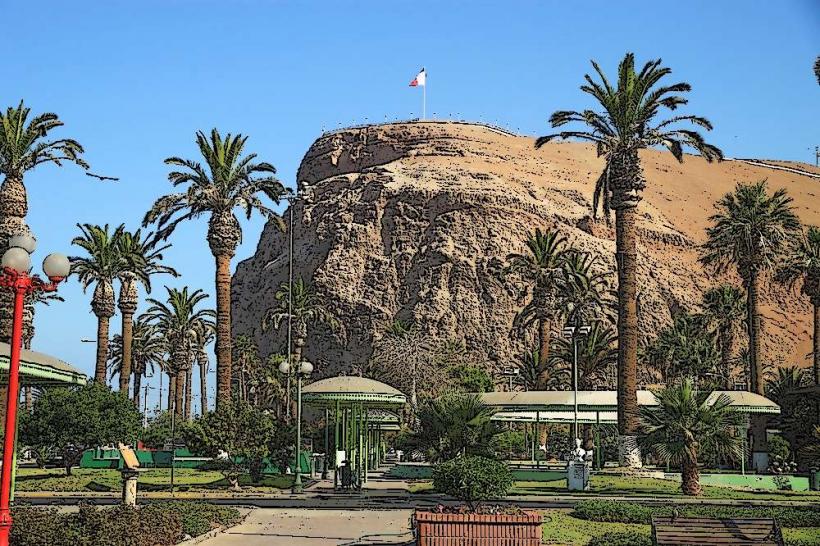
Step inside and you’ll find a wide central nave with side aisles on each flank, all crowned by a soaring vaulted ceiling of warm, honey-colored wood.To be honest, Inside, rich wooden beams soften the chill of the metal walls, wrapping worshippers and visitors in a gentle, welcoming warmth, while the wooden pews, the altar, and every fitting show a simple elegance in their craftsmanship, like the smooth curve of a hand-sanded edge.Three, also the Iglesia de San Marcos stands as one of the region’s oldest and most treasured churches, its weathered stone walls echoing centuries of history, almost For more than a hundred years, it’s drawn Arica’s residents together-prayers rising inside, voices carrying through the open doors, moreover the church played a notable part in the War of the Pacific (1879–1884), its bells once echoing over the dusty streets as battles raged nearby.During the war, Chilean troops seized Arica from Peru, and the church-its bells still ringing in the dusty air-stood as a proud symbol of the city’s resilience and identity, to boot the church’s bell rang out to mark victory and each change of control during the war, its clear tone now etched into the nation’s memory of the conflict.b) Religious Significance As Arica’s main Catholic church, the Iglesia de San Marcos has long stood at the heart of the city’s faith, where bells echo across the plaza before Sunday Mass.It’s still an active parish, hosting Sunday services, lively festivals, and cultural gatherings that fill the air with music and incense, then it hosts many Catholic gatherings, from Sunday mass to solemn ceremonies, and comes alive during holidays like Christmas with candlelight and Easter with glowing spring flowers.Number four, therefore the Iglesia de San Marcos isn’t just a area of worship-it’s woven into Arica’s cultural identity, as enduring as the sound of its bells echoing through the plaza at dusk.Oddly enough, Travelers flock to the church for its striking architecture-arched stone doors worn smooth by centuries-and the rich history etched into its walls, besides people stop by to admire the church’s graceful arches and to hear its centuries-historic story, but they also come to feel the buzz of its life as a cultural and social gathering site in the city, relatively Curiously, The church sits in Arica’s historic center, surrounded by notable sites like the sunny Plaza Colón and the towering Morro de Arica, simultaneously right in the heart of the city, it draws tourists eager to wander Arica’s classical streets and uncover its layered history.Number five, moreover over the years, the Iglesia de San Marcos has been carefully restored, each repair safeguarding its graceful arches and intricate stonework.Arica’s harsh coastal air eats away at the church, leaving salt stains on its walls and corroding the metal frame, alternatively even with these challenges, people have worked hard to preserve and repair the church-patching its worn stone steps and mending the roof-so it can remain both a destination of worship and a cherished landmark for generations to come.Number six, subsequently today, the Iglesia de San Marcos welcomes the public, inviting them to wander beneath its arched ceilings and discover its rich history, intricate stonework, and art, in a sense Visitors can admire stained glass windows glowing with scenes from sacred stories, the towering high altar at the heart of the church, and a striking metal frame that gives the building a character unlike any traditional church, equally important guided tours share the rich history of the Iglesia de San Marcos and its deep connection to Arica’s cultural identity, making this landmark a true blend of history, beauty, and meaning.With its iron frame, pointed arches, and long-standing locale in the city’s story, it stands as a defining piece of Arica’s identity, like a landmark you can spot from blocks away, meanwhile whether you’re drawn to grand architecture, fascinated by history, or just curious to step inside a quiet piece of Chile’s religious heritage, you’ll want to discover the Iglesia de San Marcos when you pass through Arica.
Author: Tourist Landmarks
Date: 2025-09-13