Information
City: VikCountry: Iceland
Continent: Europe
Vik, Iceland, Europe
Vík í Mýrdal serves as the southernmost village in Iceland and a critical service hub for travelers along the Ring Road. It is characterized by its dramatic black sand coastline, its position directly beneath the Mýrdalsjökull Glacier (which covers the Katla Volcano), and its role as a primary refuge point in the event of subglacial volcanic activity.
Historical Timeline
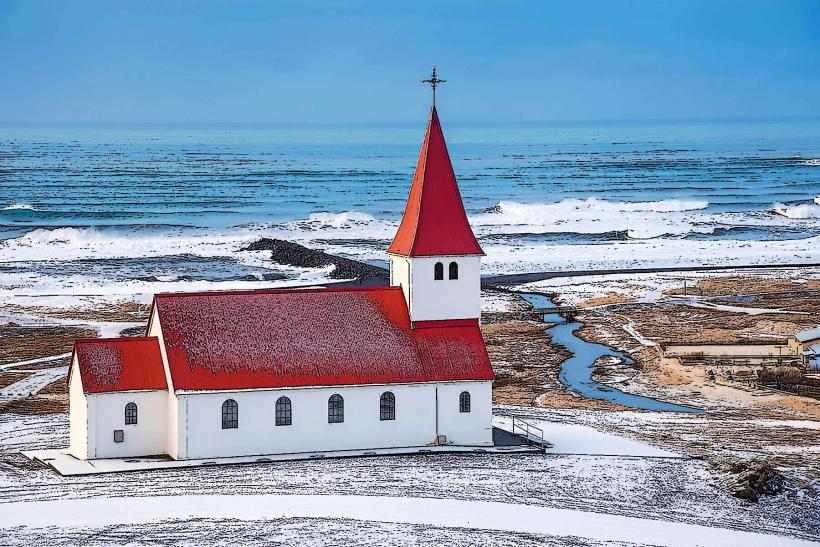
The area was first settled in the early 9th century by Hjörleifur Hróðmarsson, the blood brother of Iceland’s first permanent settler. The modern village developed as a trading post in the late 19th century, catalyzed by the establishment of the Brydebúð store in 1895. The primary event shaping its identity is its proximity to Katla, which last erupted significantly in 1918. The village remains under constant monitoring for a jökulhlaup (glacial outburst flood), with the iconic church designated as a primary evacuation site.
Demographics & Population
The population is approximately 600 (2026 estimate), though it fluctuates with seasonal workers. The demographic is predominantly Icelandic but includes a significant international expatriate workforce (primarily Polish) supporting the tourism and hospitality sectors. The village is part of the Mýrdalshreppur municipality.
Urban Layout & Key Districts
The village is compact and walkable, situated between the ocean and a steep mountain ridge. It consists of the Historic Core near the coast; the Hillside, dominated by the church; and the Commercial District along the Ring Road, which houses the service stations, supermarket, and the Icelandic Lava Show.
Top City Landmarks
Víkurkirkja: The hilltop church (built 1934) with iconic red roof and panoramic views.
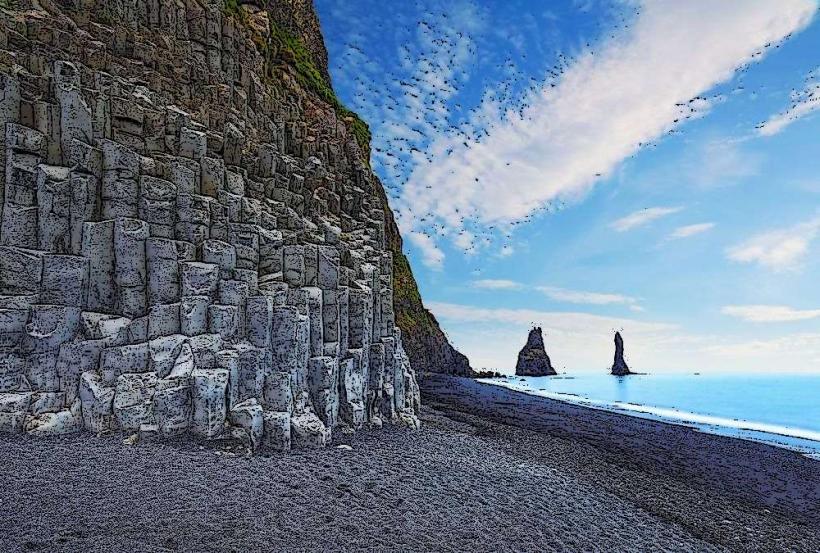
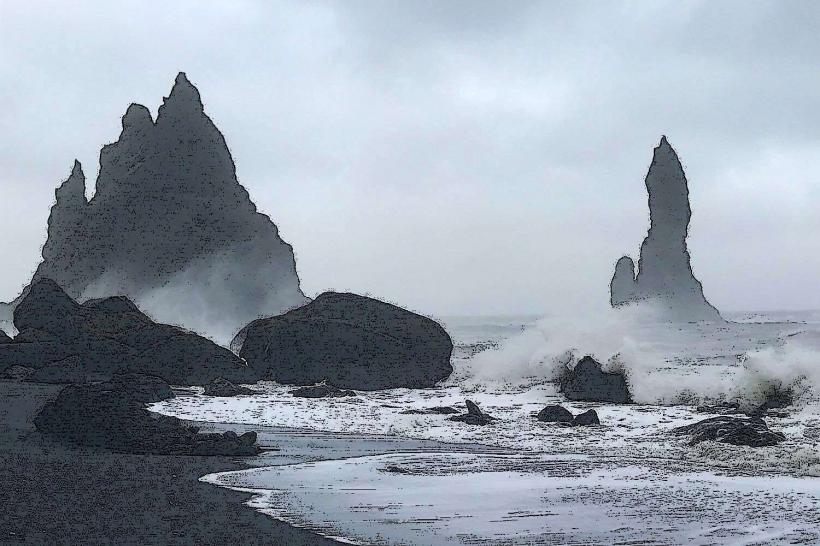
Reynisfjara: World-famous black sand beach featuring basalt columns.
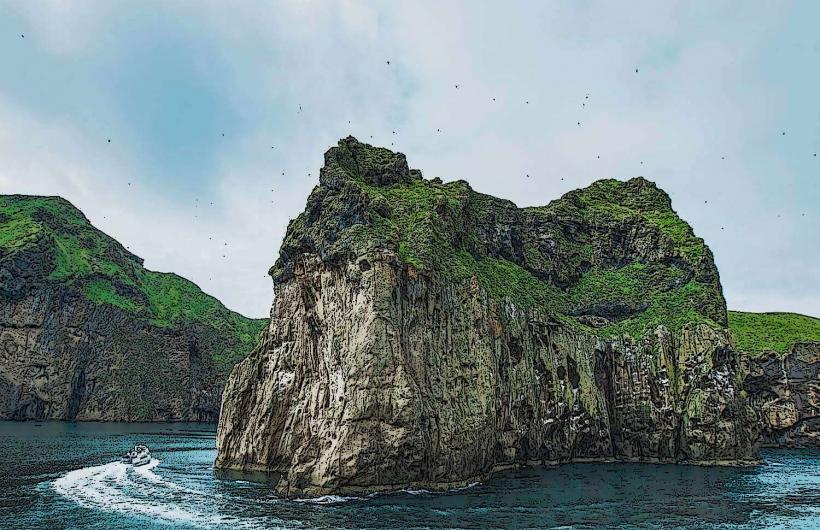
Reynisdrangar: Basalt sea stacks rising 66 meters from the Atlantic.
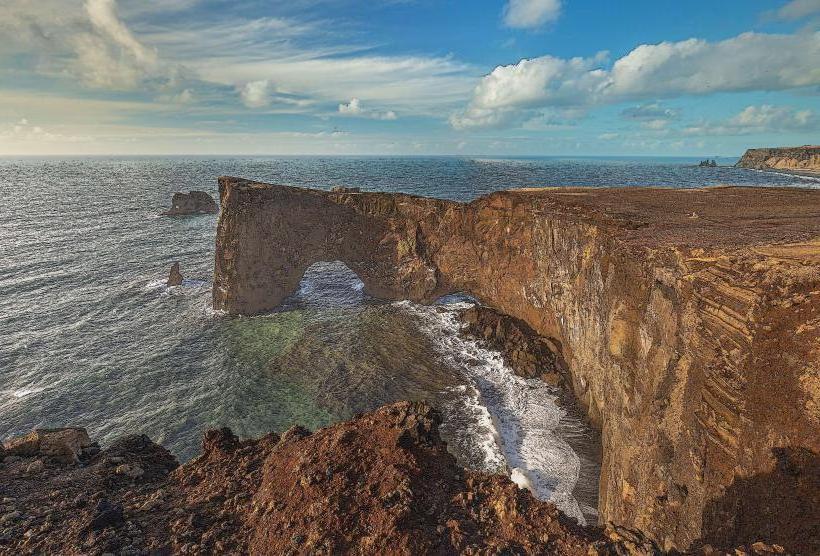
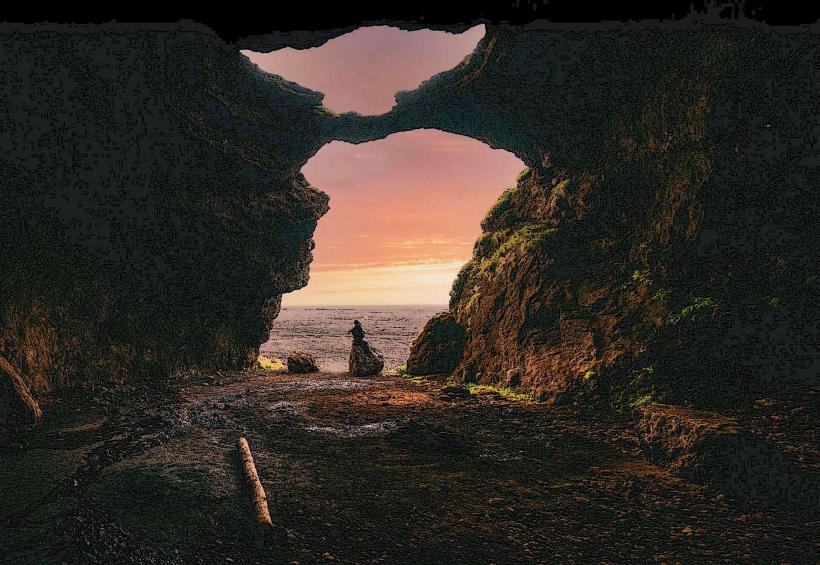
Dyrhólaey: A massive rock arch and peninsula with a lighthouse (built 1927).
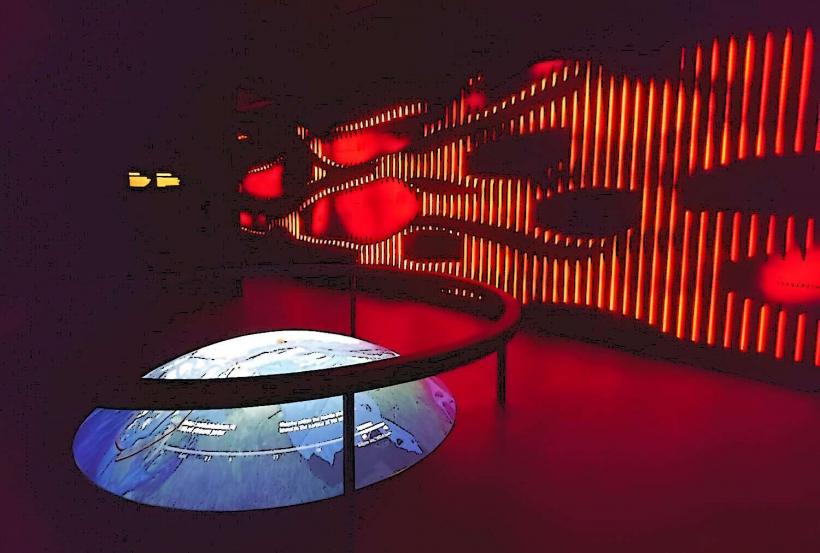
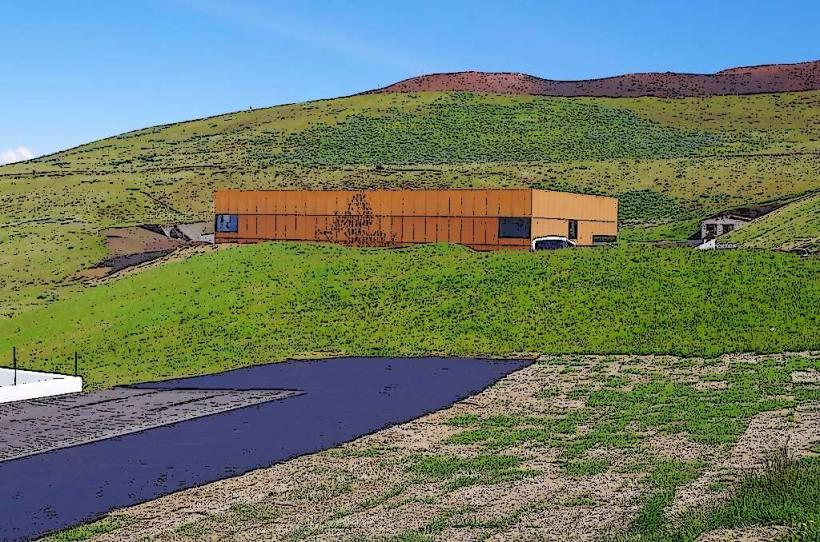
Icelandic Lava Show: The only attraction in the world where real molten lava is poured indoors.
Transportation Network
Movement is dominated by the Ring Road (Route 1). There is no rail transit. Public transport is limited to Strætó Route 51, which connects Vík to Reykjavík and Höfn. Most visitors arrive via rental car or tour bus. Parking is centralized at the Vík i Mýrdal service center and at Reynisfjara (where fee-based parking was standardized in 2024).
Safety & "Red Zones"
The safety level is high regarding crime, but extremely low regarding environmental hazards.
Sneaker Waves: Reynisfjara is one of Iceland’s most dangerous sites; sudden, powerful waves can pull visitors into the freezing Atlantic. Stay away from the water line.
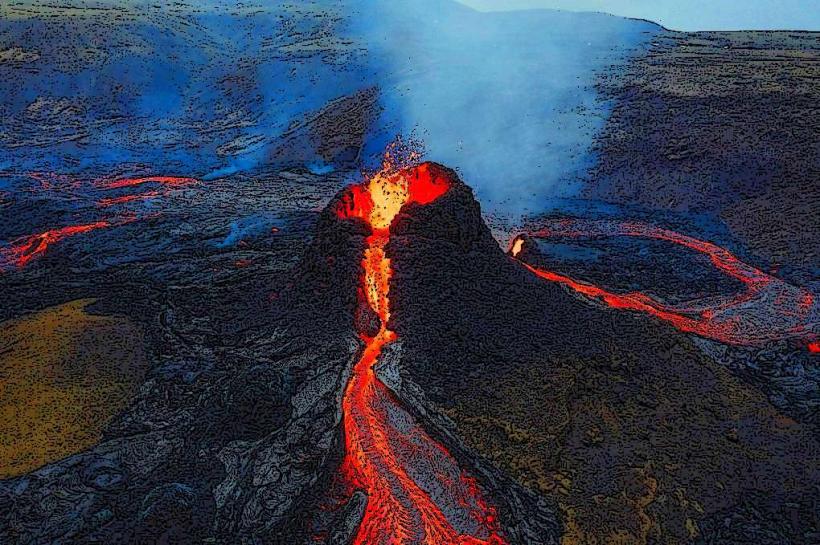
Volcanic Hazards: Katla is overdue for an eruption. Follow all instructions from the Department of Civil Protection.
Wind: Vík is one of the windiest spots in Iceland; car doors can be ripped off their hinges in gales exceeding 20 m/s.
Digital & Financial Infrastructure
Average internet speed is 50–100 Mbps; fiber-optic is available throughout the village. Main carriers are Síminn and Nova. The village is 100% cashless; every merchant accepts international credit cards and Apple/Google Pay. A single ATM is available at the N1 service station.
Climate & Air Quality
Temperatures range from -2°C in winter to 12°C in summer. Vík is the wettest place in Iceland, receiving high annual precipitation. Air quality is generally excellent (AQI < 20), though winter can bring significant sea spray and salt haze.
Culture & Social Norms
Tipping is not required. The local culture is resilient and accustomed to extreme isolation during winter storms. Social life revolves around the local swimming pool (Sundlaugin Vík) and the community center. Respect for the natural environment is mandatory; off-road driving and drone use in protected bird areas (like Dyrhólaey during nesting) are strictly penalized.
Accommodation Zones
Stay in the Village Center for walking access to services and the lava show.
Stay in the Hjörleifshöfði area (east of Vík) for more secluded, nature-focused guesthouses.
Local Cost Index
1 Espresso: 650 – 850 ISK
1 Standard Lunch (Burger/Soup): 3,000 – 4,500 ISK
1 Full Tank of Fuel (Standard Sedan): 12,000 – 16,000 ISK
Nearby Day Trips
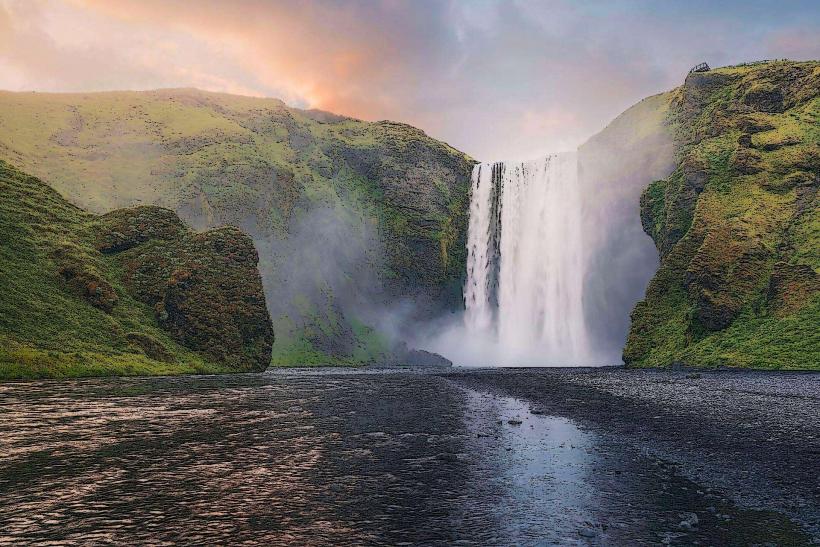
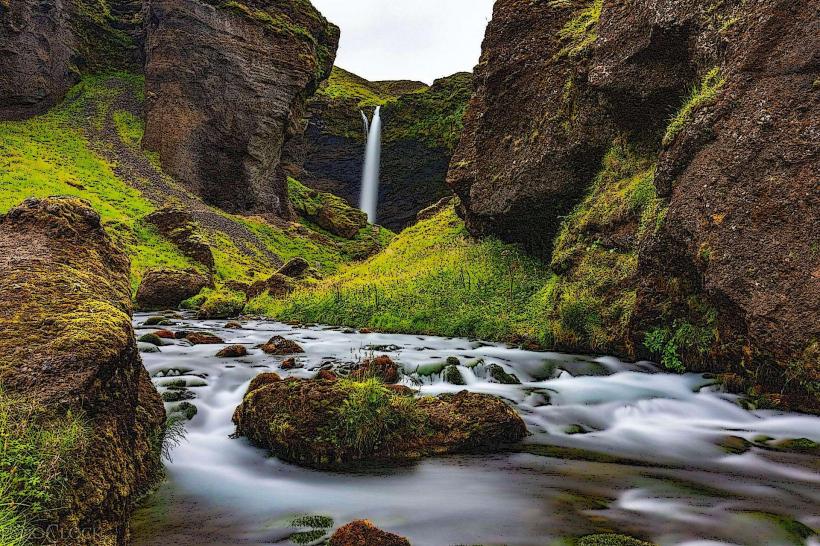
Skógafoss Waterfall: 34 km (25 minutes)
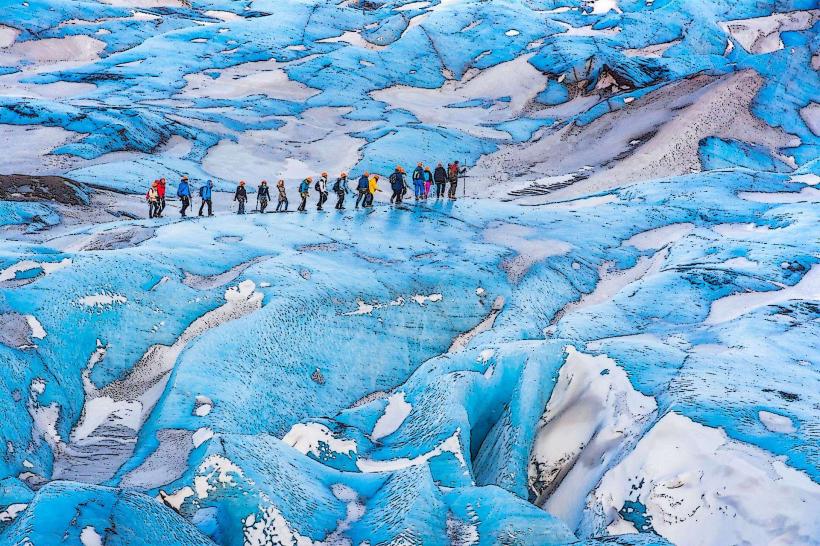
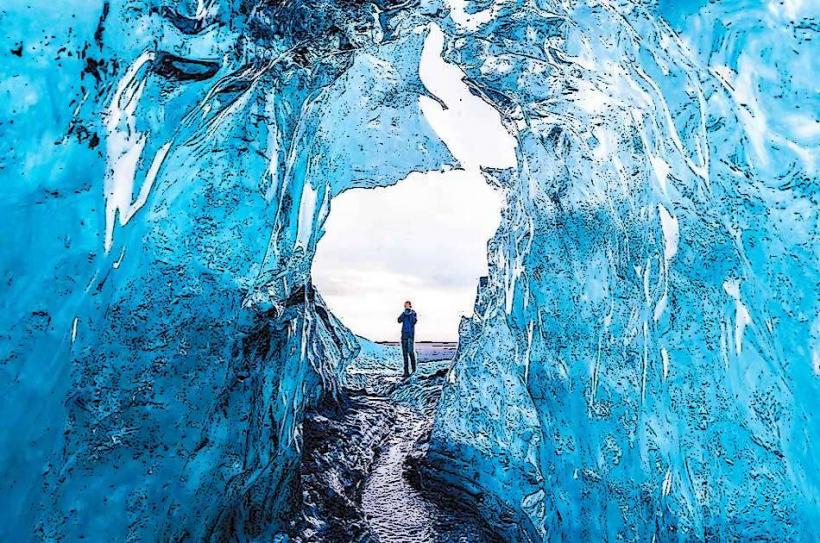
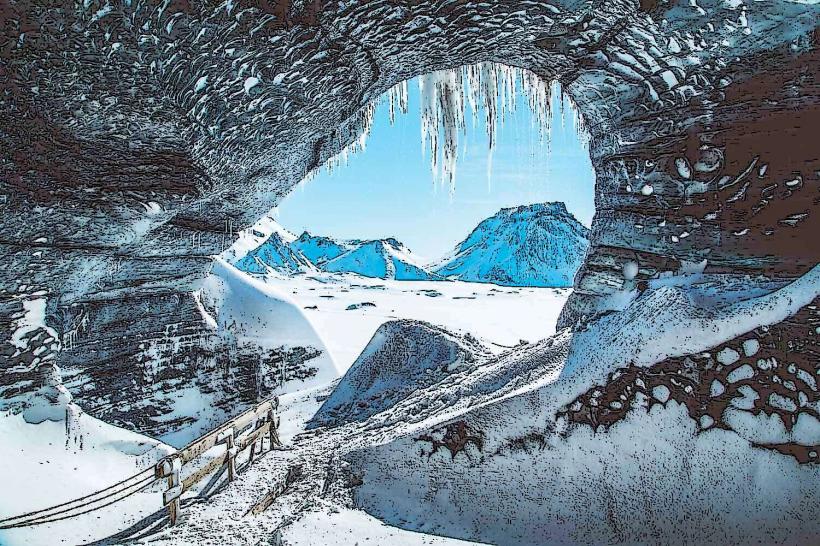
Sólheimajökull Glacier: 28 km (25 minutes)
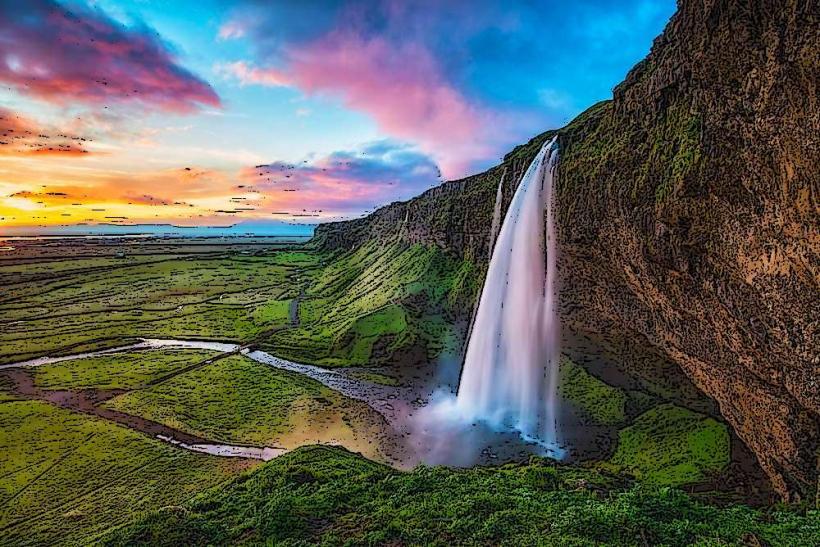
Seljalandsfoss Waterfall: 60 km (45 minutes)
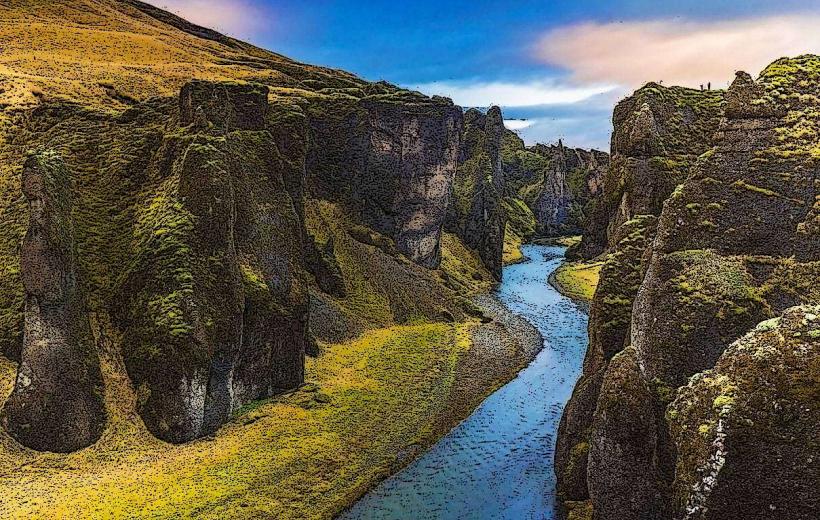
Fjaðrárgljúfur Canyon: 70 km (1 hour)
Facts & Legends
According to folklore, the Reynisdrangar sea stacks are petrified trolls who were caught by the sun while trying to drag a ship to shore. A verified historical fact is that Vík is the only coastal town in Iceland that does not have a harbor; its proximity to the shallow, sand-clogged shores of the south meant that all trading historically had to be done by rowing small boats out to ships anchored in the open sea.