Information
Landmark: Skogafoss WaterfallCity: Vik
Country: Iceland
Continent: Europe
Skogafoss Waterfall, Vik, Iceland, Europe
Overview
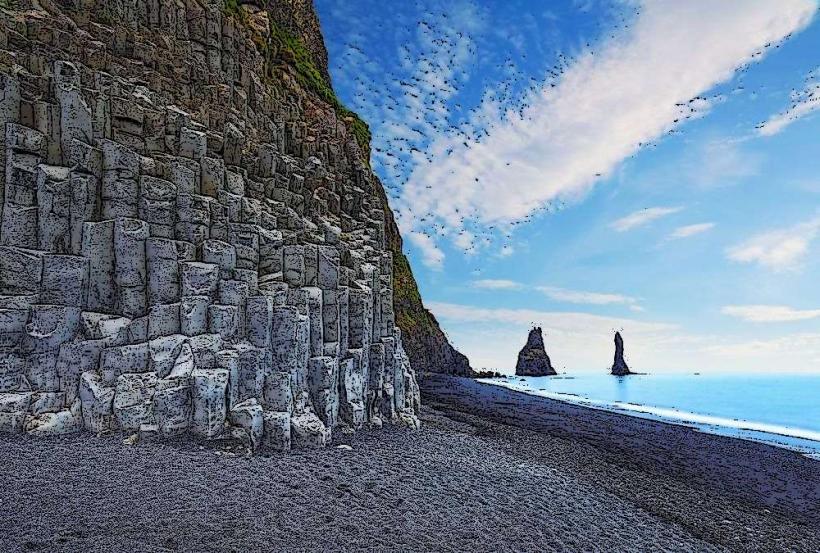
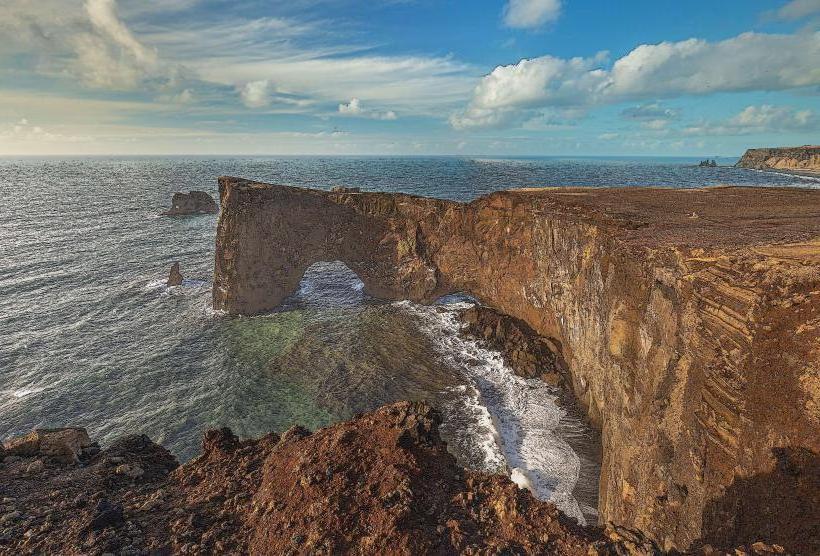
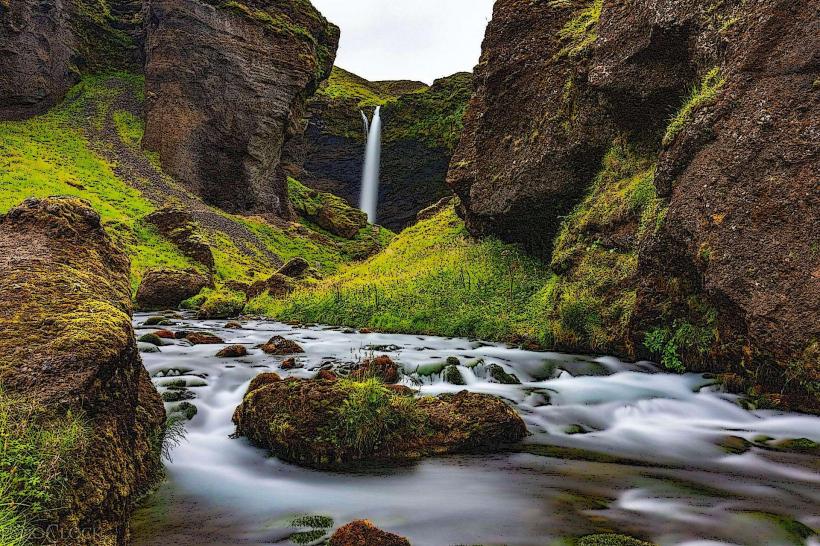
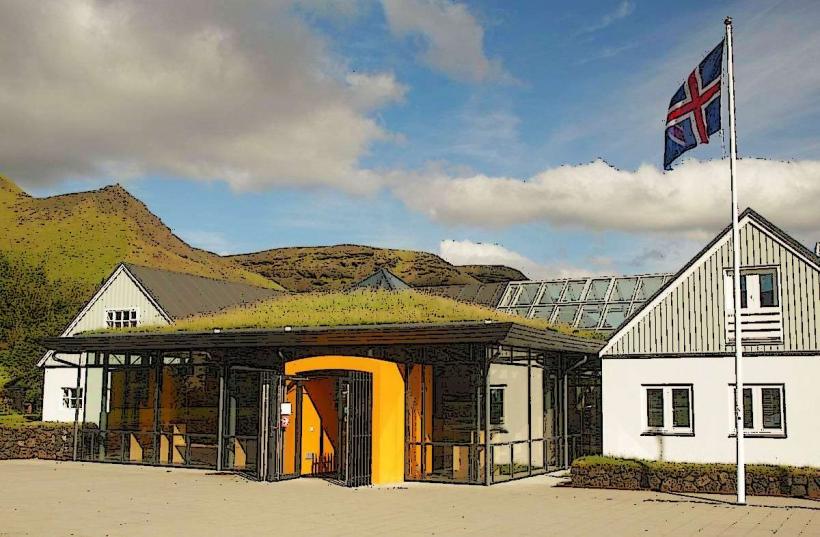
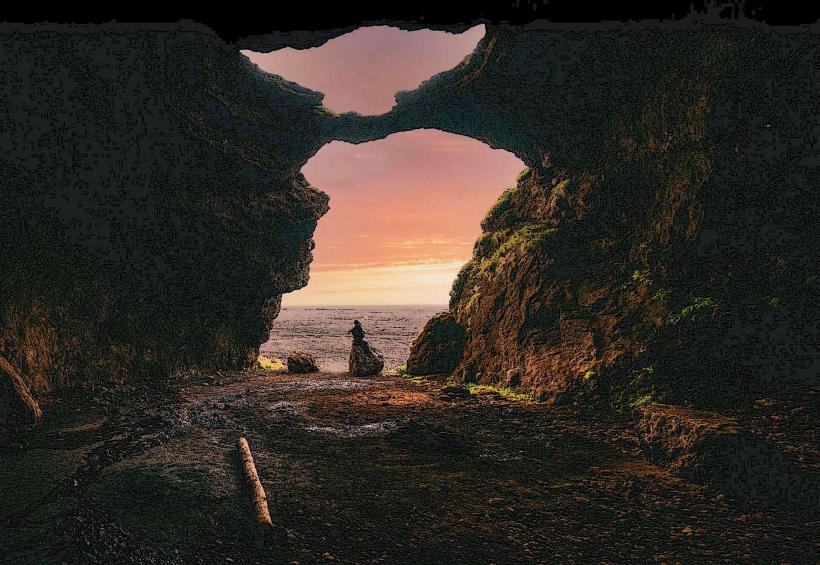
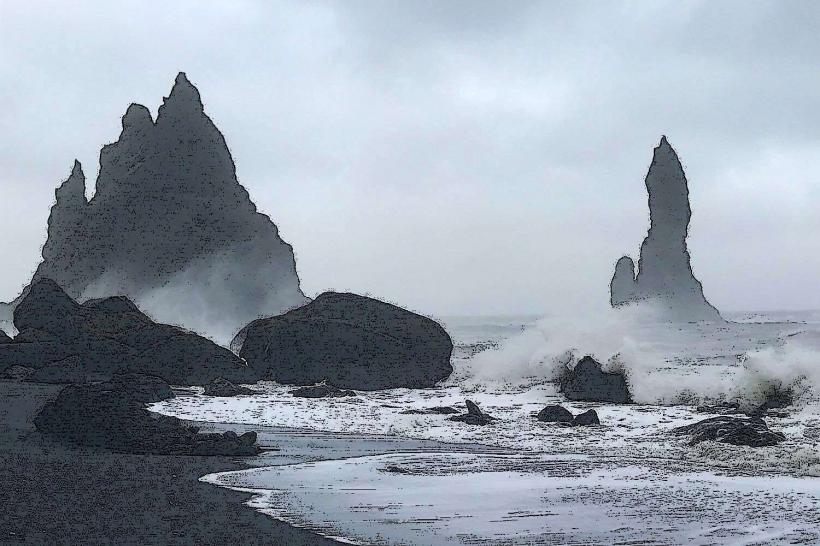
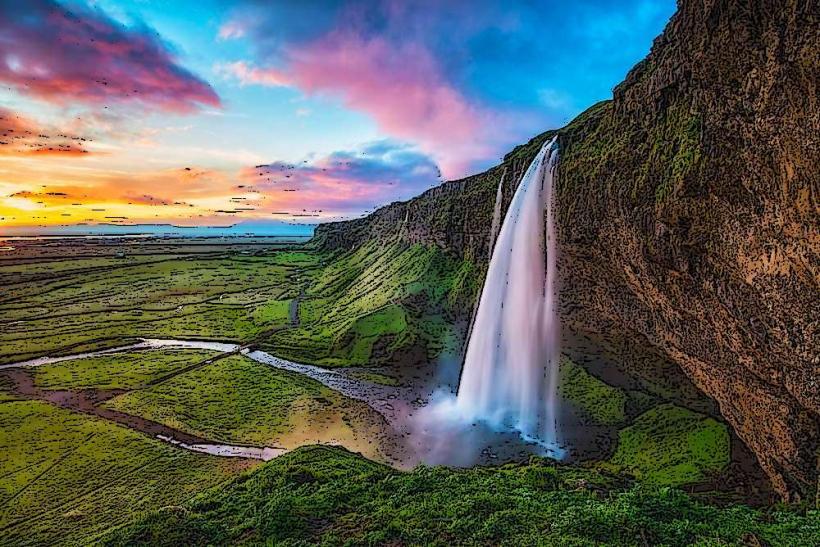
Skogafoss thunders down the Skoga River in southern Iceland, its mist catching the sunlight in shimmering arcs, and it’s among the country’s most famous and powerful waterfalls, then people realize it for its massive scale, stunning views, and the fact you can reach it without much effort.Here’s a closer gaze at Skogafoss: it sits in the Skógar region, just outside the petite village of Skógar, about 30 kilometers (19 miles) west of Vík í Mýrdal, where the southern coast of Iceland meets the roar of falling water, along with it’s part of the Skoga River, which begins high in the Mýrdalsjökull Glacier, tucked inland to the north where the ice gleams in the sun.The waterfall dominates the landscape, roaring into a misty pool, and ranks among the largest and most visited in all of Iceland, meanwhile skógafoss ranks among Iceland’s largest waterfalls, plunging 60 meters-about the height of a 20‑story building-and stretching 25 meters wide in a roaring white curtain.Its sheer size is striking, and when you step close enough to hear the roar of the waterfall, it’s hard not to be awed, in conjunction with water surges over the cliff’s edge, a force shaped long ago by volcanic rock, and crashes below in a mist you can feel on your skin.Fed by meltwater from the Mýrdalsjökull Glacier, the Skoga River surges downstream, adding force and heft to the waterfall’s roaring plunge, after that in spring’s snowmelt or after a pounding rain, the waterfall surges to life, thundering so loud you can feel it in your chest.Because the waterfall’s spray hangs in the air like fine silver dust, Skogafoss often shimmers with rainbows, in addition when the sun’s out, light catches the mist and throws tiny rainbows over the waterfall, adding to its magic and drawing photographers from all around.The thundering Skogafoss carries more than mist in the air-it’s wrapped in historic stories, including a well-known tale that gave the waterfall its name, moreover local legend says the area’s first Viking settler, a man called Þrasi, tucked a heavy wooden chest of treasure behind the roar of the waterfall, a little People claimed the chest was enormous-so vast you couldn’t even reach inside to pull it out, as well as in some tellings, a young boy finally stumbled on the treasure, gripped the frosty iron ring of the chest, and tugged with all his might-but couldn’t free it.safeGetting to Skogafoss is a breeze-it’s one of Iceland’s easiest waterfalls to reach, just a short saunter from the parking lot where you can already hear the roar of the falls.A well-kept path winds right to the base, letting visitors stand so close they can feel the cool spray from the waterfall’s roar, moreover at the top of the falls, a viewing platform waits, reached by climbing roughly 527 narrow steps that echo under your feet.From the top, you can perceive the river glinting in the sun and the rolling plains stretching far into the distance, a wide panorama that takes your breath away, along with around Skogafoss, you’ll find everything you need-parking by the roaring falls, clean restrooms, and quiet picnic spots tucked into the grass.It’s a well-loved stop on Route 1, the Ring Road, making it easy for travelers winding along Iceland’s south coast to pull over and stretch their legs, besides skógafoss sits right on the Fimmvörðuháls trail, a legendary multi-day hike in Iceland where the path winds past roaring falls and mossy cliffs.The trail starts at Skogafoss, where mist hangs in the air, then winds toward the Þórsmörk Valley through glaciers, rugged mountains, and more hidden waterfalls, on top of that if you’re craving a longer adventure, this trail lets you dig deeper into the region-pausing to catch the scent of pine or hear the crunch of gravel underfoot.Weather in the Skogafoss area can turn on a dime-one moment you’re walking under a pale blue sky, the next you’re dodging sharp rain carried by gusty winds and feeling the temperature drop, as well as you can visit the falls any time of year, but the weather shifts speedy-one minute clear skies, the next a chilly wind and driving rain-so pack for wet and chilly conditions.The best time to go is in summer, from June to August, when the days stretch long and golden, giving you more hours to roam the trails and catch the waterfall glowing in perfect light, then if you visit in spring or autumn, you’ll notice the destination in a whole contemporary light-fewer crowds, cooler air, and the waterfall shifting its mood with the changing weather.In winter, visitors might perceive the falls wrapped in ice, the frozen spray glittering in the pale sunlight like glass, meanwhile with its roaring white curtain of water, Skógafoss ranks among the most photographed waterfalls in all of Iceland.With its sweeping curves and striking details, it draws the eye of both amateurs and seasoned photographers alike, after that two of the best spots for photos are at the base and the top of the falls.As far as I can tell, Stand at the bottom and you’ll feel the ground tremble as water roars down, tossing up a cool mist that sometimes catches a rainbow, on top of that climb the stairs to the top, and you’ll observe the whole sweep of the river spilling over the edge and winding away downstream.If I’m being honest, From above, the landscape spreads out in a breathtaking sweep of green hills and dim volcanic rock, besides just a short hike from Skógafoss, the Skógar Museum opens a window into the region’s past, with exhibits on Icelandic folk traditions, rural life, and the shifting earth beneath it all.Just a short drive east, Reynisfjara Beach greets you with black sand that crunches underfoot and basalt sea stacks rising like obscure sentinels against the lush green backdrop of Skogafoss, therefore about 15 miles east, Dyrhólaey juts into the sea, its massive rock arch framing rolling waves below.It’s a favorite spot for photographers and birdwatchers alike, after that skogafoss is stunning and generally guarded to explore, but watch your step near the base-the mist leaves the rocks slick and obscure with moisture.Wear sturdy shoes, and watch for the strong current and the sudden drop by the waterfall, where the rocks stay slick and icy, at the same time visitors should follow any posted safety signs and respect barriers, whether they’re shielding a fragile wildflower patch or keeping people risk-free.Skogafoss roars with the raw force of Iceland’s wild landscape, yet you can stroll right up to its misty spray, moreover whether you come for the thundering cascade, the shimmer of rainbows in the mist, or the winding trails nearby, Skogafoss belongs on every southern Iceland itinerary.Its massive scale, breathtaking scenery, and the thrill of standing close enough to hear the roar of Iceland’s wild beauty make it an unforgettable stop on any trip.
Author: Tourist Landmarks
Date: 2025-09-04