Information
Landmark: Boom Island ParkCity: Minneapolis
Country: USA Minnesota
Continent: North America
Boom Island Park, Minneapolis, USA Minnesota, North America
Boom Island Park is a distinctive urban green space located along the Mississippi River in Northeast Minneapolis, covering approximately 22.5 acres. It forms a key part of the Central Mississippi Riverfront Regional Park system, offering visitors a unique combination of scenic riverfront views, recreational amenities, historical context, and public art within an accessible city environment.
Historical Background
The site of Boom Island Park has a rich history deeply tied to Minneapolis’s industrial past. In the 19th century, the island served as a log sorting station integral to the thriving lumber industry. Logs cut upstream were floated down the Mississippi River, and Boom Island became the place where these logs were corralled and sorted. The name “Boom Island” refers to the “booms”-chains of floating logs linked together to trap and organize the timber based on ownership, as each sawmill marked its logs with a unique brand. This process was essential for managing the vast quantities of lumber processed in Minneapolis, which was once known as the “Lumber Capital of the World.”
Later, in the 20th century, Boom Island transitioned from its logging role to becoming a rail yard with approximately 28 rail tracks and a roundhouse to support Minneapolis’s growing transportation infrastructure. This rail yard operated until the early 1970s. Recognizing the island’s potential as a public recreational space, the Minneapolis Park Board purchased the land in 1982 for $2.6 million and began transforming the industrial site into a park. Designed by the landscape architect Theodore Wirth, the park officially opened in 1987 and was completed in 1988, shifting the area from industrial use to a welcoming urban park.
Park Layout and Natural Features
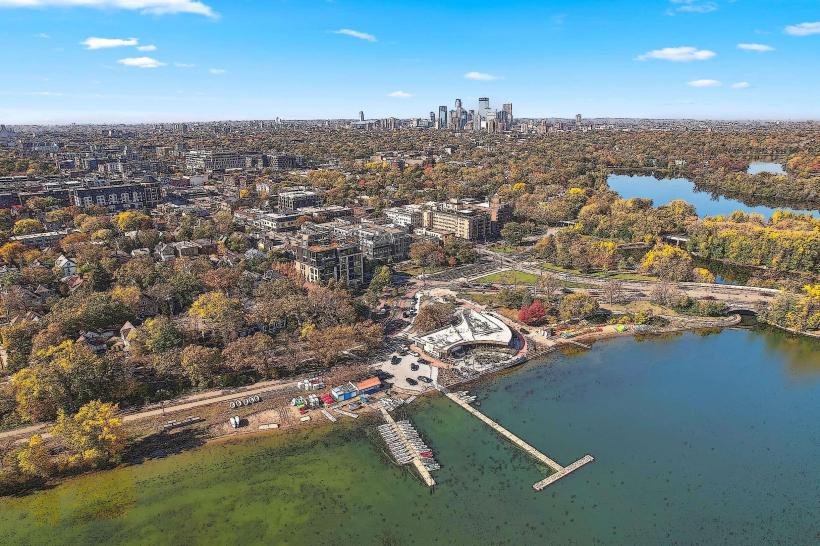
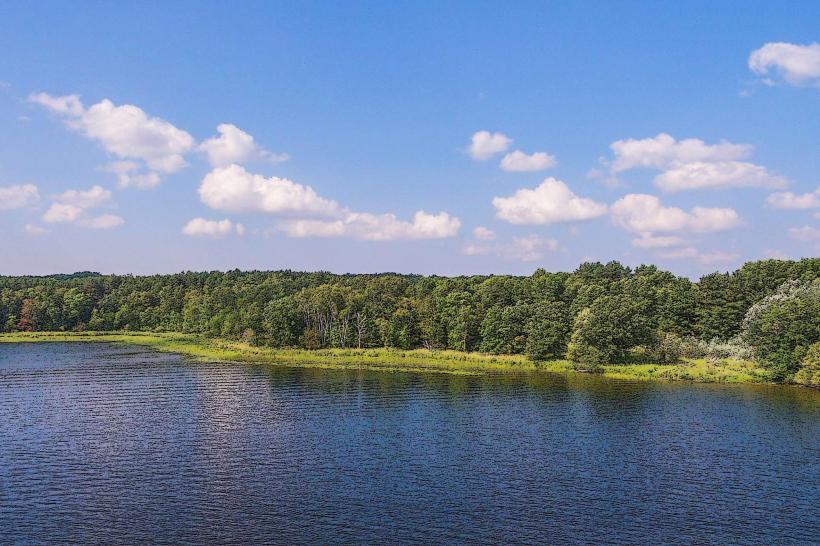
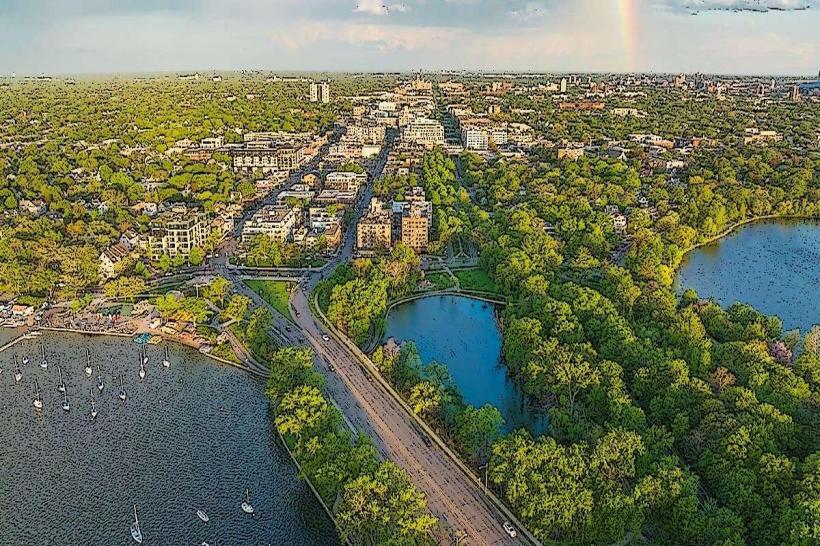
Boom Island Park is uniquely situated along a bend in the Mississippi River, offering sweeping views of the downtown Minneapolis skyline and riverfront. The park’s design incorporates both developed recreational spaces and more naturalized areas that preserve the island’s riverside character.
Key natural elements include:
Wooded areas and mature trees providing shade and habitat for local wildlife.
Open grassy lawns perfect for relaxation, informal games, or picnicking.
A shoreline that supports riparian vegetation, helping stabilize the riverbank and support aquatic life.
The island’s relatively small size and proximity to downtown make it a peaceful oasis amid urban activity.
Recreational Amenities
The park is well-equipped for a variety of recreational uses:
Walking and Biking Trails: Paved multi-use trails weave through the park, connecting it to the larger Mississippi River Regional Trail system. These paths provide scenic routes for walkers, joggers, and cyclists, linking Boom Island to adjacent riverfront parks and neighborhoods.
Picnic Shelters: There are three reservable picnic shelters (labeled A, B, and C), each accommodating about 45 people. These shelters are frequently used for family reunions, birthday parties, and community events. The shelters include tables and are adjacent to grills available for public use.
Playground: A dedicated tot lot offers safe play equipment for young children, making the park family-friendly.
Grills and Picnic Areas: Several charcoal grills are dispersed throughout the park, ideal for cookouts and gatherings.
Restrooms and Drinking Fountains: The park has well-maintained restroom facilities and drinking fountains to enhance visitor comfort.
Mississippi River Paddle Share Station: This kayak and canoe rental station allows visitors to explore the river by watercraft. Rentals can be made for up to three hours, with the option to return the equipment at any participating station along the river corridor.
Boom Island Lighthouse: Adding a charming aesthetic element, a miniature lighthouse is located on the river’s edge, serving as a notable landmark and popular photo spot within the park.
Memorial and Public Art
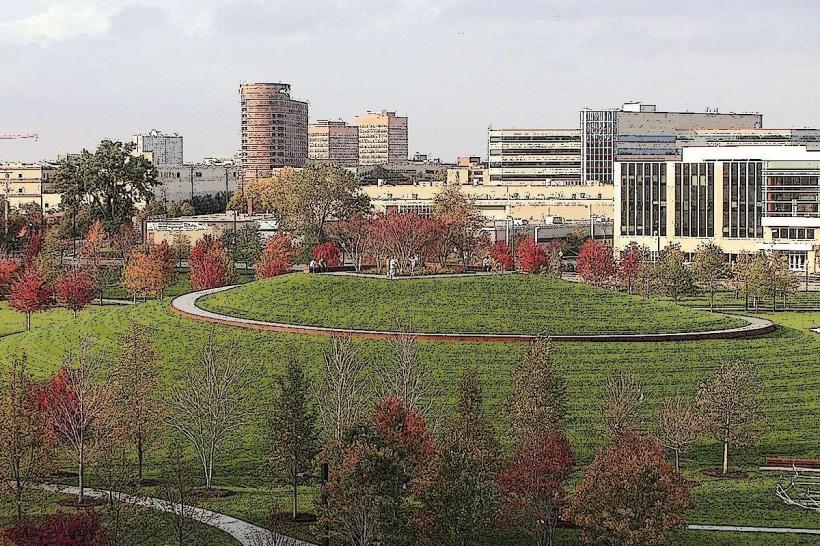
In 2020, Boom Island Park became home to the nation’s first permanent public memorial dedicated to survivors of sexual violence. This memorial features a circular gathering space, landscaped berms, mosaic artworks, and inscriptions designed to honor survivors, raise awareness, and foster healing within the community. The memorial integrates with the park’s natural setting, encouraging reflection and education.
Visitor Experience and Amenities
Boom Island Park is open daily, with developed park areas accessible from 6 a.m. to midnight and undeveloped natural areas closing at 10 p.m. The park offers pay parking on-site with rates ranging between $0.75 and $1.50 per hour, as well as free street parking nearby. Accessibility is prioritized with paved paths suitable for wheelchairs and strollers.
The park is popular for both casual visitors seeking quiet relaxation and active users engaging in biking, walking, or paddling. Its riverside location provides a spectacular backdrop for photography, picnics, and special occasions.
Recent Safety and Management Updates
Following a shooting incident in June 2025, the Minneapolis Park Board has implemented additional safety measures at Boom Island Park to ensure visitor security. These include closing the park’s entrance road and parking lots by 9 p.m., maintaining open access to trails, increasing Park Police patrols, and installing mobile security cameras. These actions underscore a commitment to maintaining the park as a safe, welcoming urban refuge.
Location and Access
Boom Island Park is located at 724 Sibley Street NE, Minneapolis, MN 55413. It is easily accessible by car, bike, or public transportation and serves as a gateway to the larger Mississippi Riverfront park system.
Summary
Boom Island Park offers a rare combination of natural beauty, recreational amenities, and deep historical roots within Minneapolis’s urban core. From its origins as a lumber industry hub to its current role as a vibrant community park, Boom Island balances preservation, public engagement, and active use. Visitors benefit from riverfront trails, picnic facilities, a unique memorial, and scenic views that capture both the city’s past and present. This thoughtfully designed park provides a valuable green space for relaxation, social gatherings, and outdoor activities, making it an essential component of Minneapolis’s park network.